


Ready to start planning your dream elopement in Italy?
By Camilla M — Tuscany Elopement Photographer & Experience Designer
I photograph across all of Italy, but Tuscany is the region I keep being pulled back to for reasons that have nothing to do with its fame. It’s the peace, mostly — the way this landscape slows you down the moment you arrive. And it’s the light: the way it lies flat and gold across the hills in the last hour before sunset, the way a single cypress on a ridgeline can carry an entire photograph. I’ve shot engagements winding through Val d’Orcia in a vintage car, weddings inside frescoed Sienese castles, and quiet honeymoon afternoons in Pienza. Every time, I learn a little more about how this region actually works — which viewpoints empty out by mid-morning, which agriturismo terrace holds the light twenty minutes longer than the hill above it, which back roads the tour buses never find.
What I love most is how serene Tuscany stays, even though half the world wants to see it. It’s one of the most visited regions on earth — and still, if you know where to look, it gives you solitude and a real connection to nature. Its little medieval borghi feel instantly familiar; they carry you into an older, slower world, and there’s a quiet magic to them precisely because they’re small — villages where everyone still knows everyone. The food is honest, simple, and wonderful. And there’s something here for every kind of couple: medieval castles and Renaissance villas at one end, small rented houses with extraordinary views and agriturismi with horses and vineyards at the other.
Tuscany has a reputation built on grand countryside weddings — hundred-guest receptions at Renaissance villas, long tables under the olive trees, budgets to match. That reputation is real, and it’s beautiful. It’s also almost entirely beside the point if what you’re planning is an elopement, or a small, intimate wedding with only the people who matter most. This guide is for that second couple. It’s everything I wish someone had laid out plainly the first time I tried to understand how to actually build an elopement day in this region rather than just admire it in photos.
Read it start to finish before you book anything. It will save you money, spare you a few well-known planning mistakes, and help you work out which corner of Tuscany is genuinely yours — because, as you’ll see, there’s more than one Tuscany.
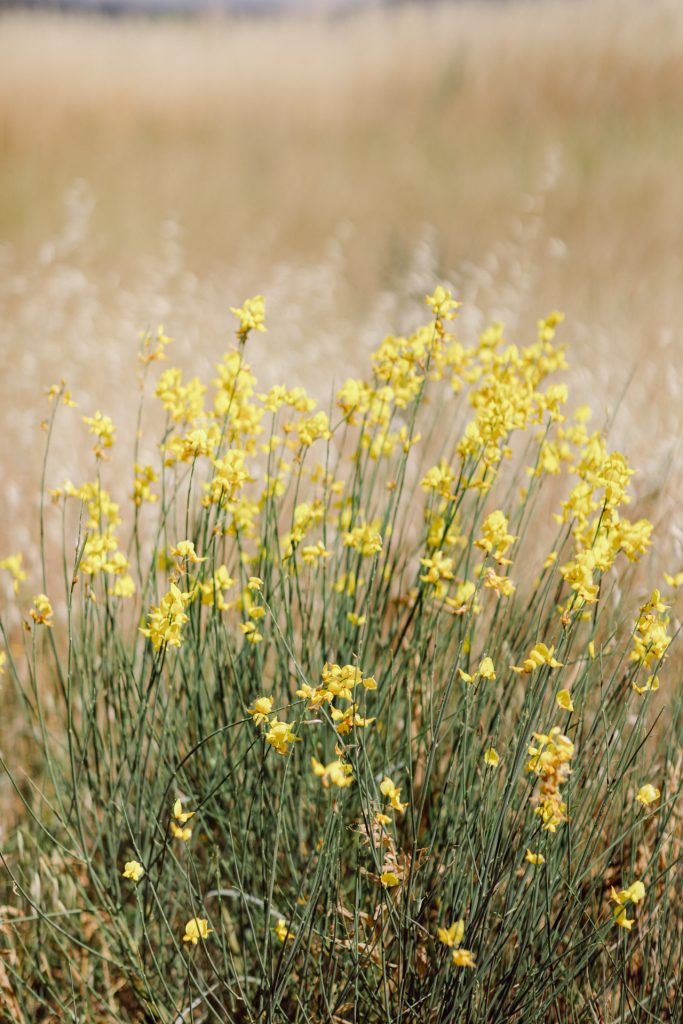
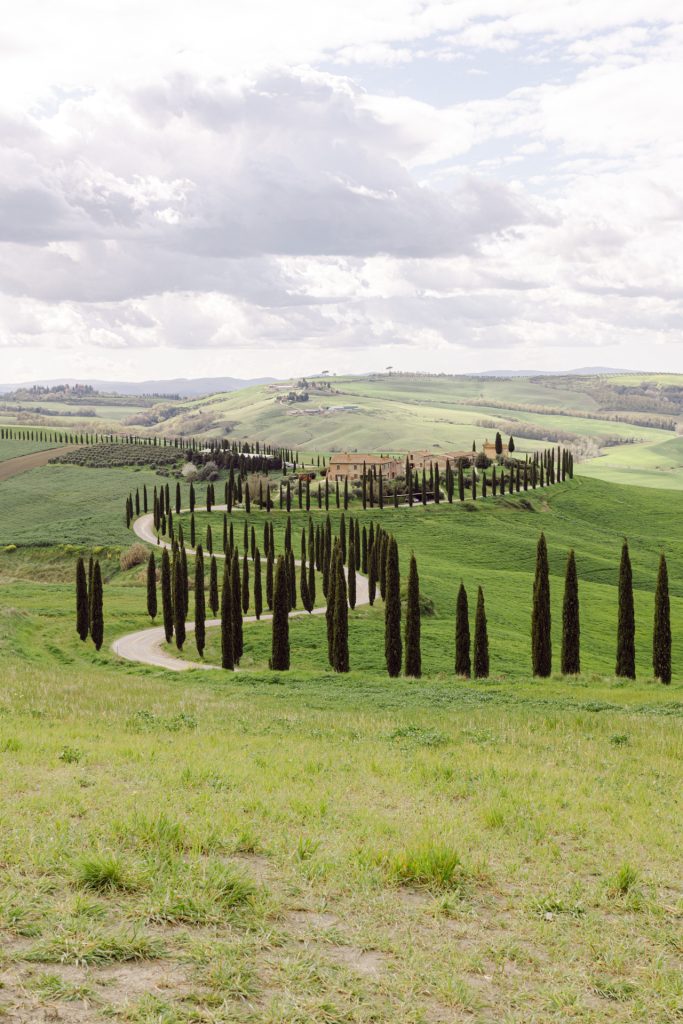
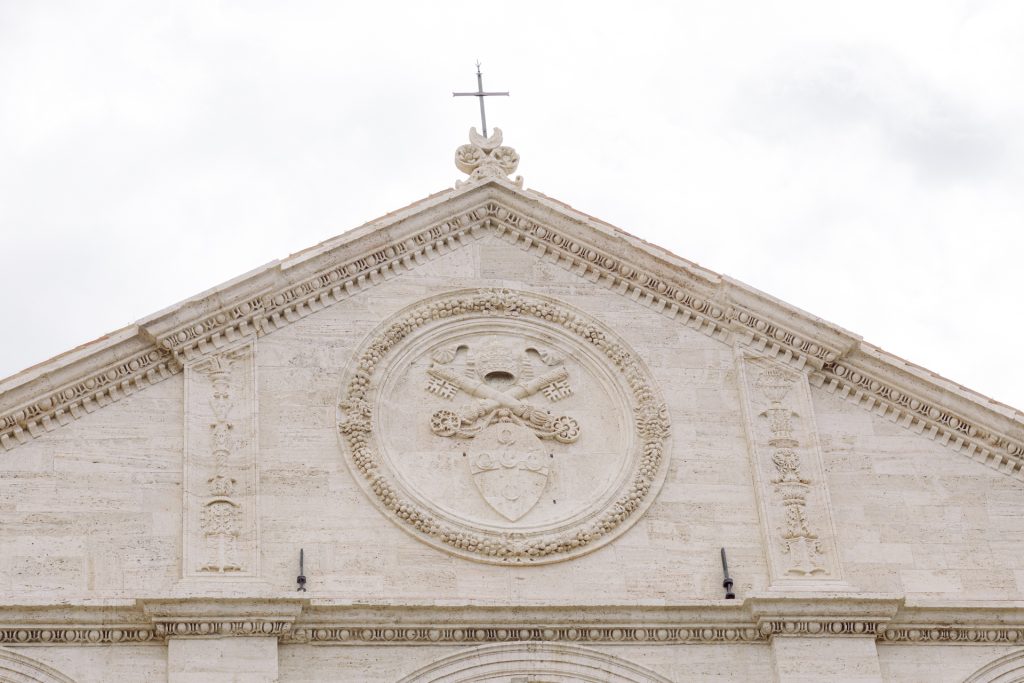
Landscapes and details of Val D’Orcia, Tuscany
1. Why Tuscany Is Made for Elopements
Some places are beautiful in a way you have to hunt for. Tuscany is beautiful in a way that simply arrives — you crest a hill on a back road and the whole valley opens up, vineyards and olive groves and a single farmhouse at the end of a cypress lane, and there’s nothing to do but stop the car.
For an elopement, that ease is the whole gift. You don’t need a spectacular venue here, because the landscape is the venue. Your vows can happen out in the open — a symbolic ceremony in a wheat field at sunrise, on the terrace of the estate where you’re staying, on a hilltop with the Val d’Orcia falling away beneath you — because here the view alone is all you need. None of it requires a rented estate or a guest list. The country does the work. Your day gets to be about the two of you.
Tuscany also gives you something rarer than beauty: variety within a single day. In one unhurried stretch of daylight you can exchange vows in a medieval hilltop village, drive twenty minutes to a vineyard for lunch and a tasting, and finish with portraits on a golden ridge as the sun drops behind Monte Amiata. Few regions in the world let you move between a Renaissance town, a working wine estate, and open wild countryside without ever feeling rushed. The flip side is honest and worth saying: Tuscany asks for a little time, and it asks for movement — this is a region you drive through, not one you take in from a single spot. Far from a drawback, that’s part of the romance. A rental car — or, even better, a vintage one — turns the distances between places into some of the loveliest, least-posed moments of the whole day. (More on getting around in section 3.)
And it offers privacy, if you know where to look. Tuscany is famous, and its most photographed spots — the Gladiator cypresses, the viewpoint below Pienza — are genuinely busy in high season. But the region is enormous, and most of its beauty is not concentrated in the handful of viewpoints that fill Instagram. A back road away from the obvious, a field the tour groups never stop at, a trattoria with no sign and no website — that’s where the best elopement days here actually happen. Knowing where those places are, and when the light finds them, is most of what I do.


A couple in love and a vintage Fiat in Val d’Orcia, near the medieval town of Pienza
2. Understanding the Geography — Tuscany Is Not One Place
This is the single most important thing to understand before you plan, and it’s the thing almost no guide explains clearly: Tuscany is a large, varied region — bigger than some countries — and each part of it has its own character, its own light, and its own logistics. Choosing “Tuscany” for your elopement is a bit like choosing “California.” You still have to choose a place within it, and the places are genuinely different.
Here’s how I think about the parts of Tuscany that matter most for an elopement:
Val d’Orcia — the iconic Tuscany
If you close your eyes and picture Tuscany, this is almost certainly what you see: rolling golden hills, solitary cypress trees, farmhouses at the end of winding lanes, medieval hilltop towns crowning the ridges. The Val d’Orcia is a UNESCO World Heritage landscape in the south of the region, and it is the most cinematic countryside in Italy. Its towns — Pienza (a tiny, perfect Renaissance town and a UNESCO site in its own right), San Quirico d’Orcia, Montalcino (home of Brunello wine), Monticchiello, and the thermal village of Bagno Vignoni — are strung across the hills, close enough that you can visit several in a day. For most couples picturing “classic Tuscany,” this is the answer. It’s also the most photographed, so early mornings and quiet back roads matter here more than anywhere.
Crete Senesi — the lunar hills
Just north and east of the Val d’Orcia, the Crete Senesi is the Val d’Orcia’s wilder, stranger sibling: bare clay hills that ripple like dunes, isolated farmhouses, and a landscape that turns almost lunar in the low light of morning and evening. It’s dramatic, far less visited, and extraordinary for couples who want the epic open-countryside feeling without the crowds that gather at the Val d’Orcia’s famous viewpoints. I am completely in love with this area of Tuscany.
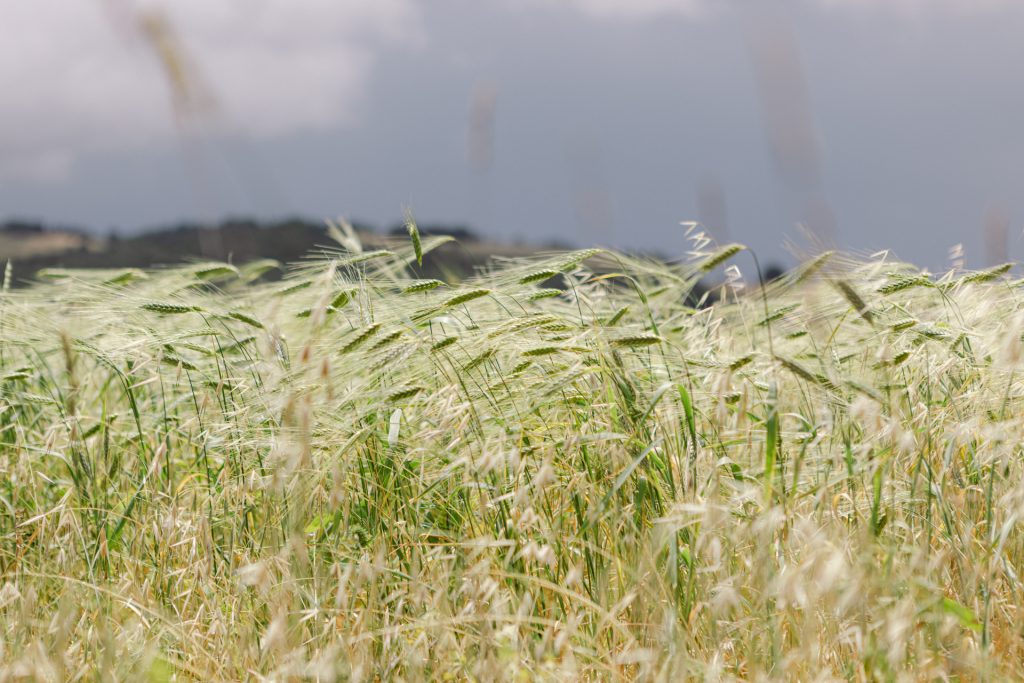
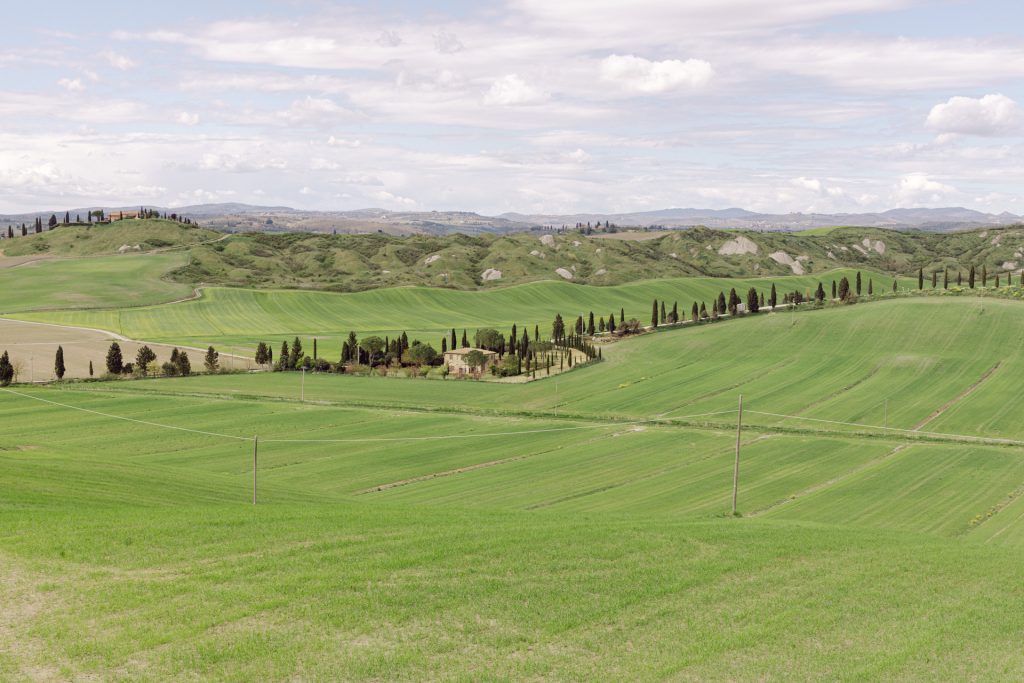
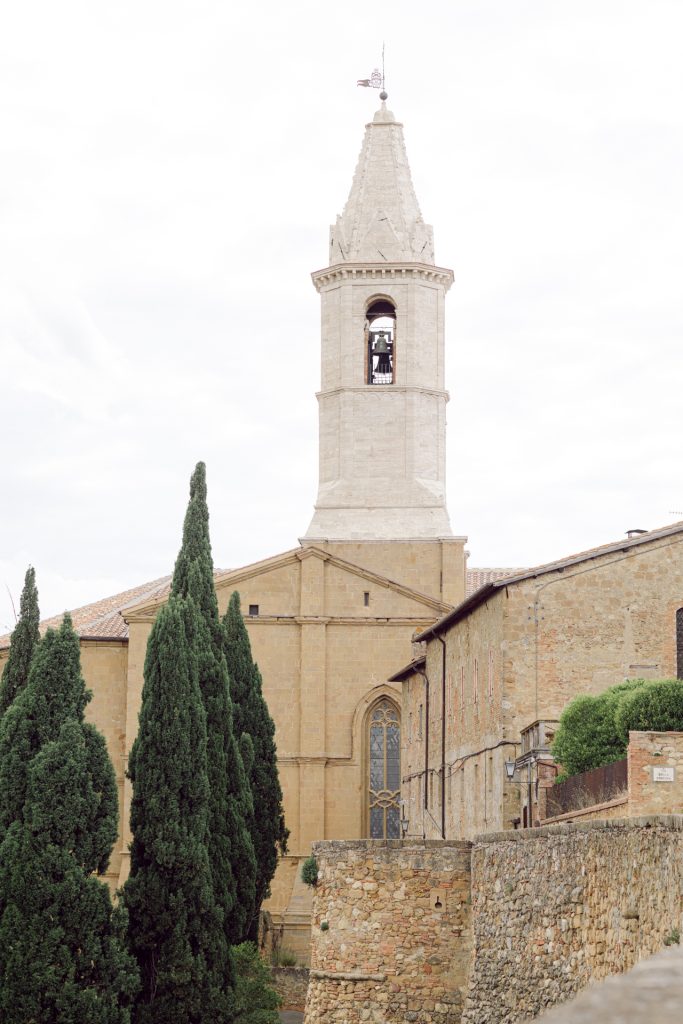
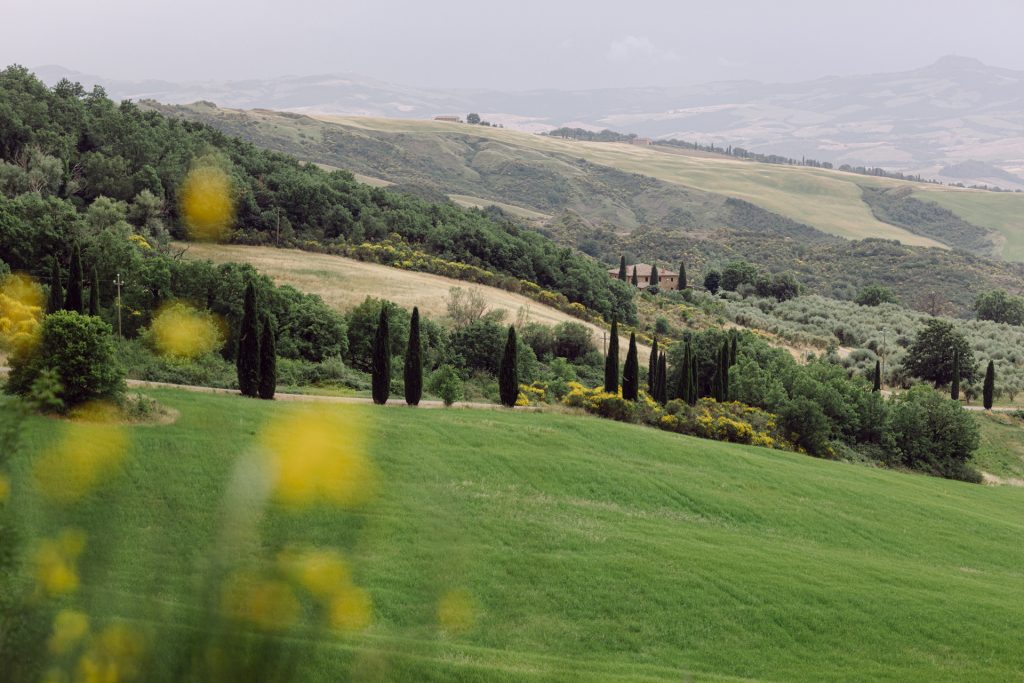
The hills around Siena and south towards Pienza and Val D’Orcia.
Chianti — the vineyard heart
Between Florence and Siena lies Chianti, the region’s wine country: vine-covered hills, stone farmhouses, cypress avenues, and some of the most welcoming wine estates in Italy. Chianti feels more enclosed and green than the open Val d’Orcia — think intimate afternoon sessions among the vines, private ceremonies at family wineries, and long dinners on estate terraces. It’s the natural choice for couples who want their elopement wrapped around exceptional food and wine.


Vines and olives near Bucine, in the Valdarno hills of Tuscany.
Florence and its hills
For couples who want architecture, art, and city romance rather than open countryside, Florence delivers a Tuscany that’s all Renaissance stone and river light: the view over the city from Piazzale Michelangelo, the terraced Bardini and Rose Gardens, the quiet hill town of Fiesole just above. Florence rewards early mornings before the crowds and glows beautifully at blue hour. (I’ve photographed a winter elopement here at Christmas that remains one of my favorite Tuscan stories — the city practically to ourselves.)
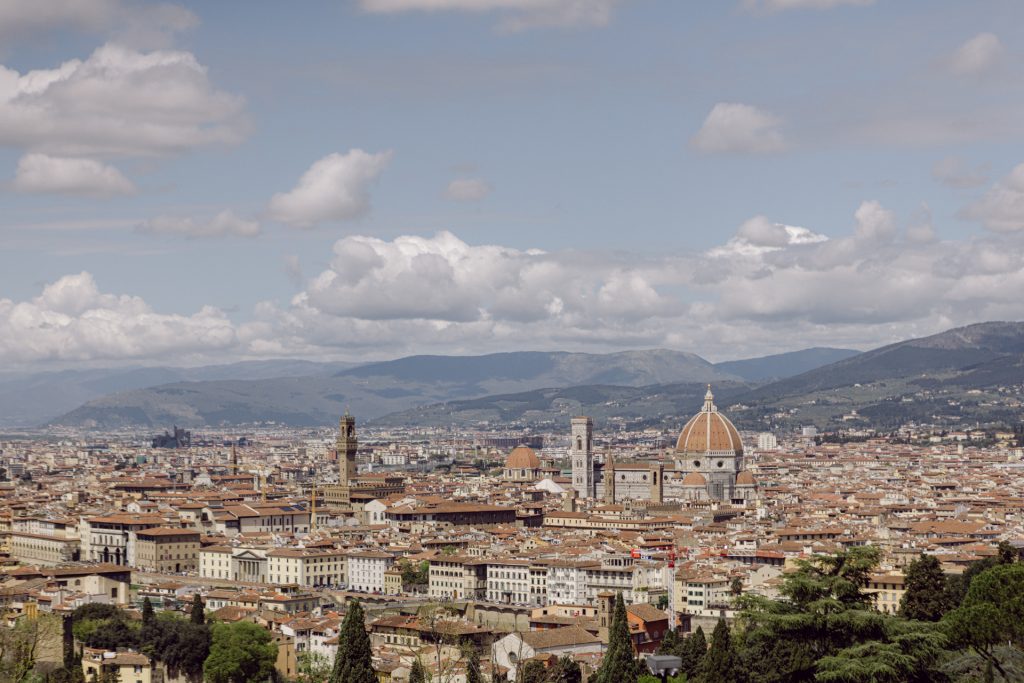
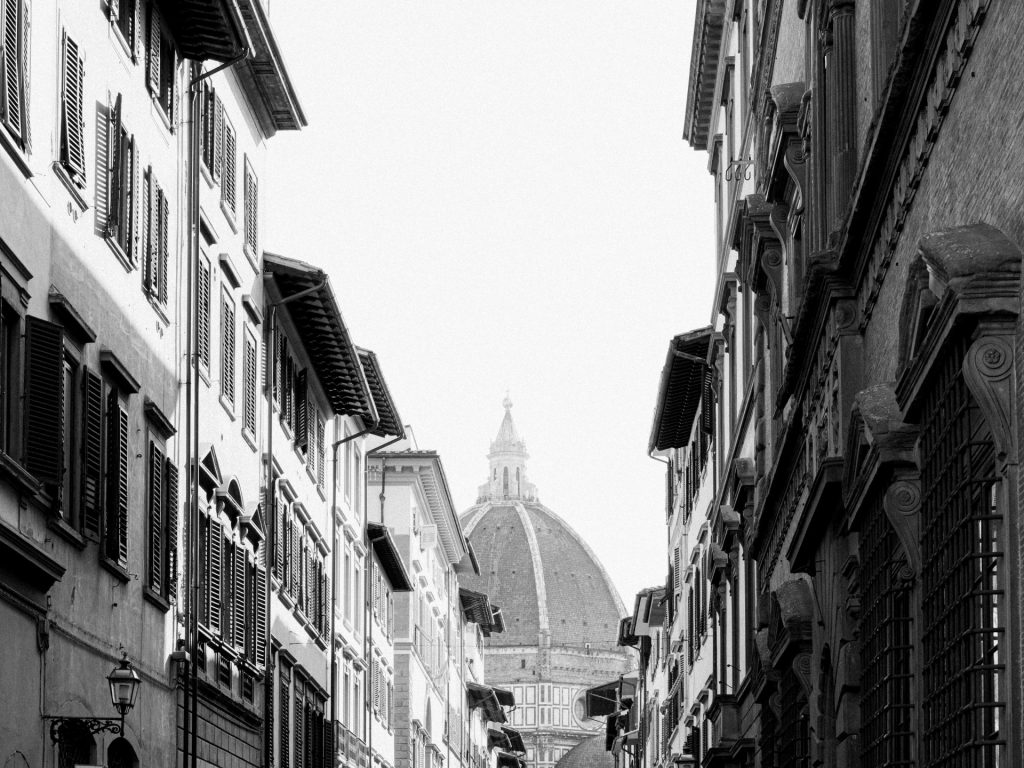
The classic view over Florence from Piazzale Michelangelo — the Duomo and the hills of Fiesole beyond.
San Gimignano, Volterra, and the medieval towns
West of the Val d’Orcia, the landscape gives way to famous walled towns. San Gimignano, with its cluster of medieval towers, is one of the most recognizable silhouettes in Italy — cinematic, and busy, so best at first light or off-season. Volterra is quieter, rawer, and more ancient-feeling, a strong choice for couples who want drama without the tourist association. Monteriggioni, a tiny perfectly-walled hamlet, and Montepulciano, a wine town of steep stone streets, round out the options.
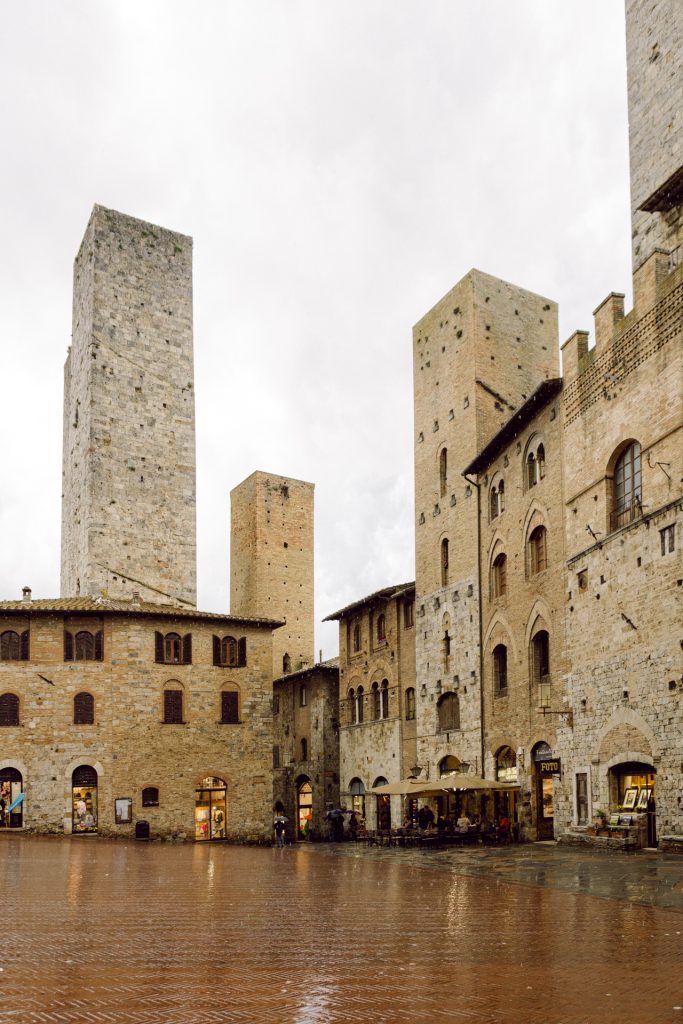
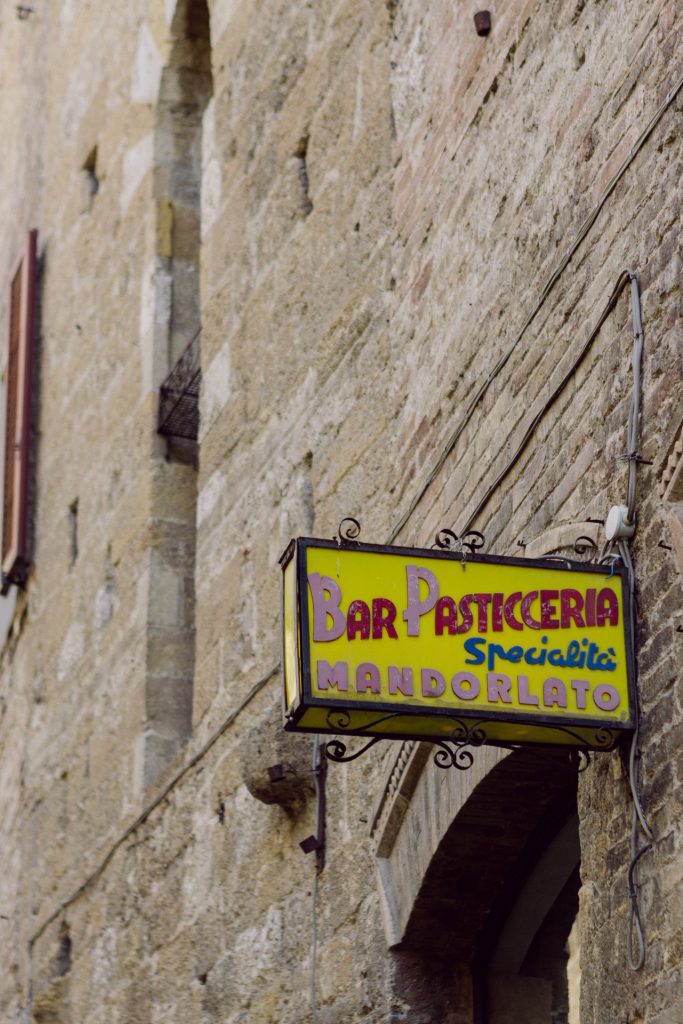
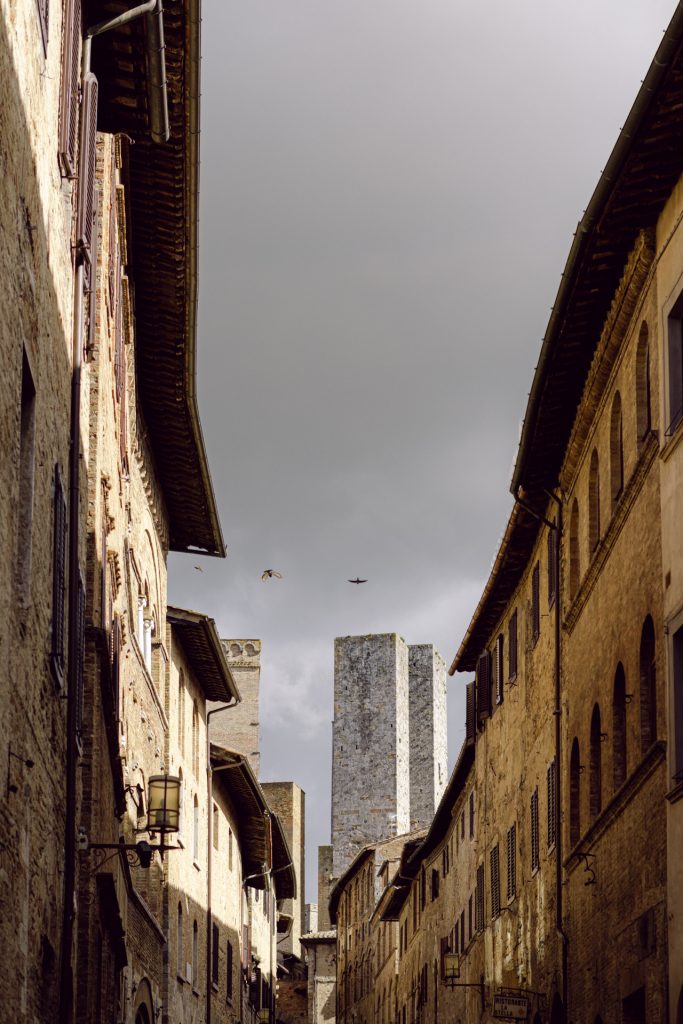
San Gimignano in the rain — its medieval towers and empty piazza, the stone glistening, the crowds gone. Some of the most atmospheric days are the grey ones.
Siena — the medieval city
One of Italy’s most beautiful medieval cities, Siena offers narrow lanes, a Gothic cathedral, and the great shell-shaped Piazza del Campo — a completely different, more urban texture than the countryside around it, and a joy to photograph in the early morning quiet.
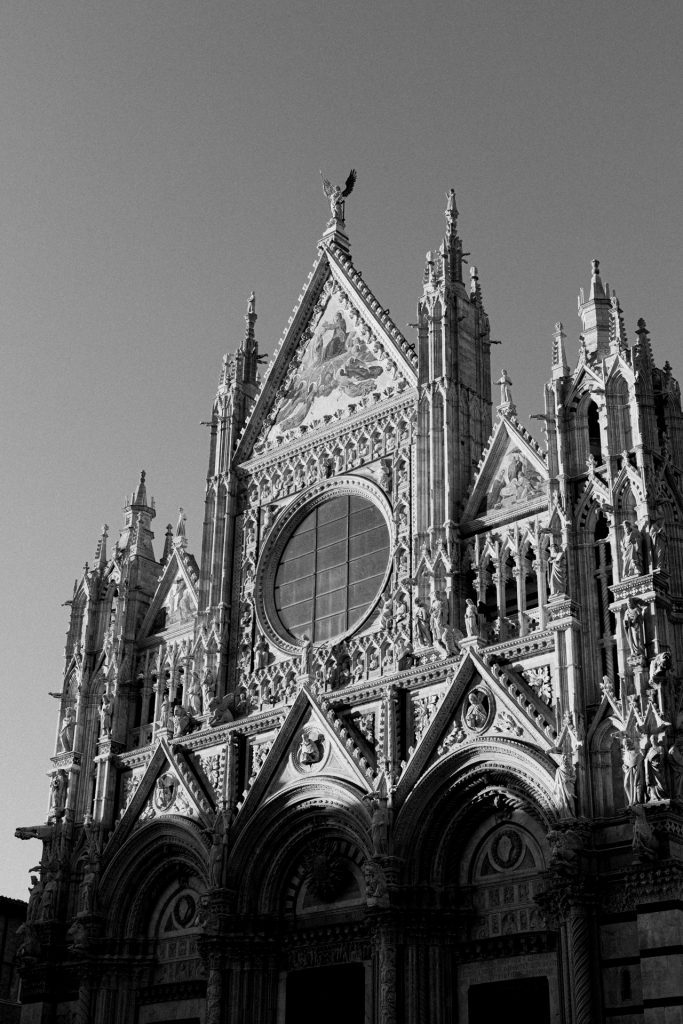

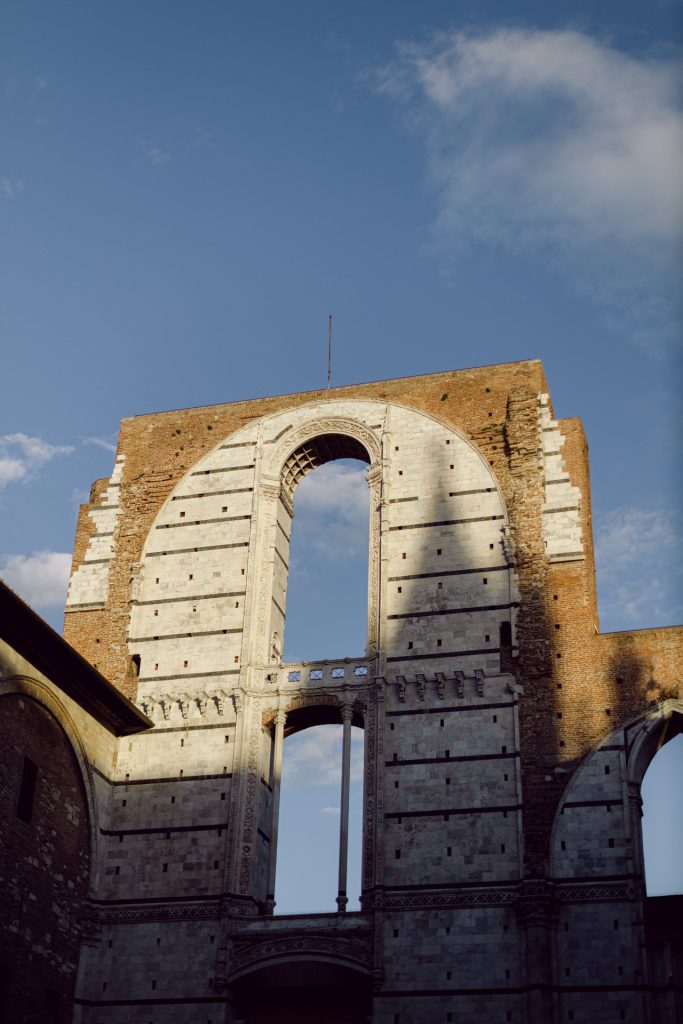
Siena’s medieval monuments and a jewel-like Renaissance fresco — centuries of art in a single city.
The coast and the Maremma
Less expected, and worth knowing about: southern Tuscany reaches the sea. Monte Argentario, the Etruscan Coast, and the island of Elba offer a Mediterranean, sea-and-cliffs version of a Tuscan elopement — a strong option for couples who want water without the formality of the Amalfi Coast.


The wild, open Maremma — the Tuscany fewer couples know, all olive trees, big skies and golden light.
The takeaway: before you fall for a single farmhouse or town, decide what you actually want — iconic open countryside (Val d’Orcia), wild and empty hills (Crete Senesi), vineyard intimacy (Chianti), city and architecture (Florence, Siena), medieval drama (San Gimignano, Volterra), or the sea (Maremma, the coast). That one decision shapes everything else about your day, including where you base yourselves and how far you’ll drive.
3. How You Actually Move Around Tuscany
Where Lake Como is a region you cross by boat, Tuscany is a region you cross by car — and understanding that changes how you plan the entire day.
A car is essential. The magic of a Tuscany elopement lives on the back roads: the cypress lane, the field with no name, the agriturismo at the end of a gravel track. None of it is reachable by train or bus, and the whole point of this landscape is being free to stop wherever the light does something. For your elopement day itself, almost every couple I work with uses either a private driver or a car with me guiding the route, so that neither of you is navigating or parking on your wedding day.
Distances are deceptive — plan by region, not by map pins. Within a single area like the Val d’Orcia, everything is close: you can move between Pienza, San Quirico, and a handful of viewpoints in a relaxed day. But between regions, distances add up. Florence to the Val d’Orcia is around 1.5–2 hours; Chianti sits roughly midway between Florence and Siena. The most enjoyable elopement days stay anchored in one region rather than sprinting across the whole of Tuscany. When we build your timeline, keeping the driving short and beautiful is one of my first priorities.
Mind the ZTL. Tuscany’s historic city centers — Florence, Siena, Volterra, and others — have restricted-traffic zones (ZTL, Zona a Traffico Limitato) where driving without authorization triggers an automatic fine that arrives, quietly, weeks later. Most hotels inside these zones arrange access for their guests; if you’re coming in from outside for a city session, I’ll brief you in advance on where to stop and park so it never becomes a problem.
A vintage car is the region’s signature add-on. What a private boat is to Lake Como, a vintage Fiat 500 or a convertible is to Tuscany: a classic car, top down, along a cypress-lined road with the hills rolling past — no destination, just the drive. It’s the kind of thing that sounds like a nice touch and turns out to be one of the moments you remember most. Several local operators deliver the car to you for the day, and it’s one of my most-recommended experiences here. (I’ve built an entire engagement session around exactly this, winding through the Val d’Orcia in a classic Fiat Spider.)
My honest advice: treat the drive as part of the day, not the gap between the good parts. Some of my favorite Tuscan photographs happen on the road — windows down, dust in the light, the two of you laughing between one place and the next.
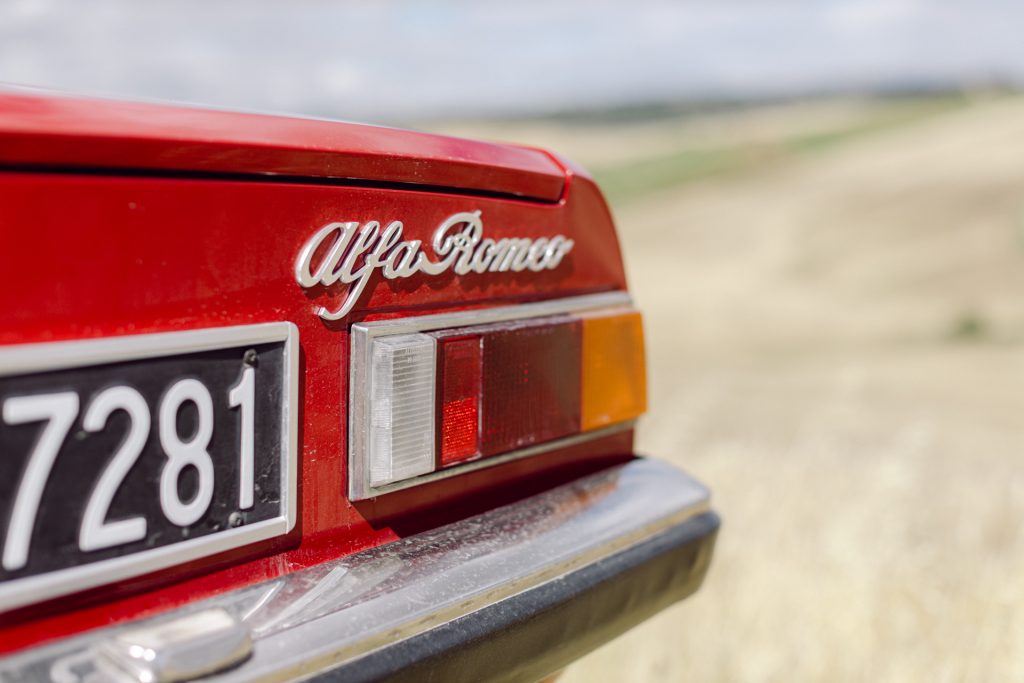
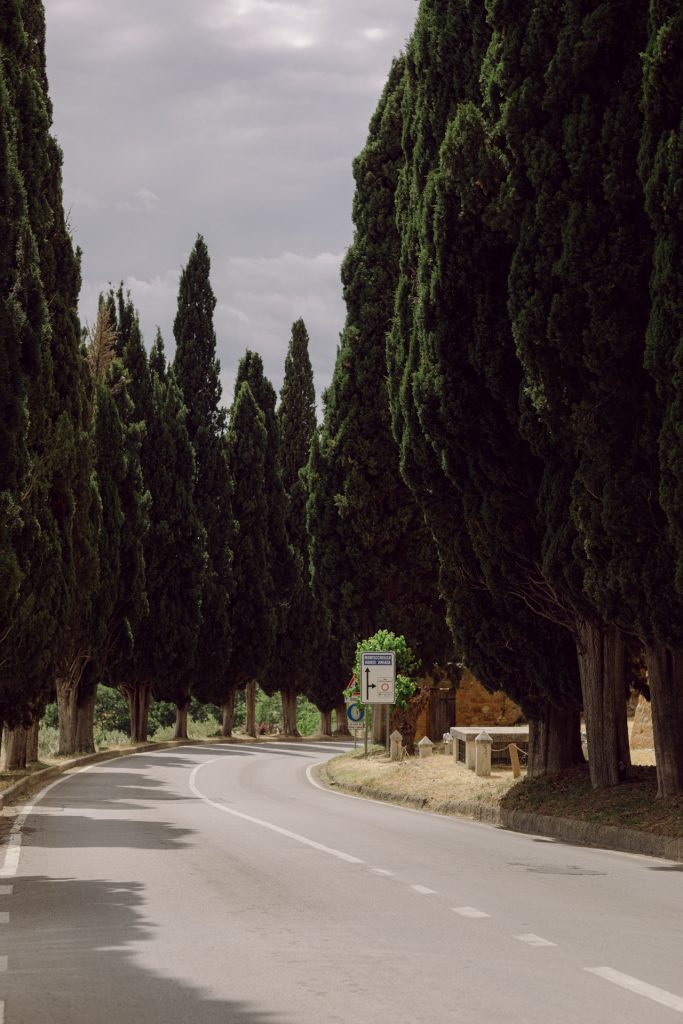
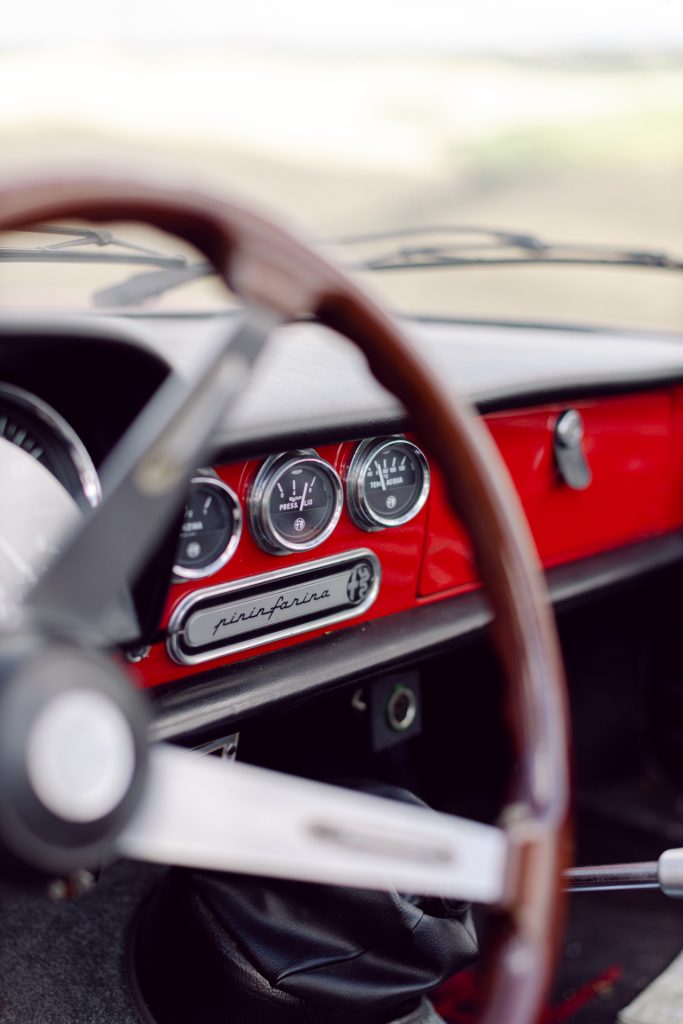

A few ideas for your elopement: a motorbike, a vintage car, freedom and empty quiet country roads.
4. Symbolic vs. Legal Ceremony: What You Need to Know
As everywhere else in Italy, most couples who elope in Tuscany choose a symbolic ceremony — not legally registered in Italy, with the legal marriage completed quietly at home either before you travel (so you arrive already married) or afterward. This removes essentially all the bureaucracy: no Certificate of No Impediment, no apostilles, no Italian municipal paperwork, no required notice period, no translator or witnesses required by law. You exchange your vows wherever and however you want — an open field, a hilltop, a vineyard, a rooftop over Florence — with a celebrant of your choosing or simply between the two of you.
One of the quiet advantages of Tuscany is how free a symbolic ceremony is here. Open countryside requires no permit for a symbolic ceremony — the fields, the ridgelines, the cypress roads of the Val d’Orcia are unrestricted for private vows and photography, UNESCO landscape or not. Private venues — wine estates, agriturismi, historic villas — set their own access policies, which I coordinate directly as part of your planning.
Legal civil ceremonies are also possible in Tuscany, in town halls and at a number of venues with the appropriate agreements. San Galgano Abbey, for example, can host civil ceremonies because it’s used for municipal functions (arranged through the Comune di Chiusdino). The legal route requires a Certificate of No Impediment from your home country, apostilled and translated, submitted to the relevant Italian comune well in advance, plus two witnesses and, if you don’t speak Italian, an official translator on the day. It’s entirely doable — it simply isn’t spontaneous, so start at least six months ahead and bring in a local planner early.
My honest recommendation, as with everywhere I work in Italy: if what matters most is the meaning and the images, a symbolic ceremony gives you total freedom to design the day around the light and the landscape. If legal recognition specifically in Italy matters to you, build in the extra time and the extra help — it’s worth it, and it’s very achievable.
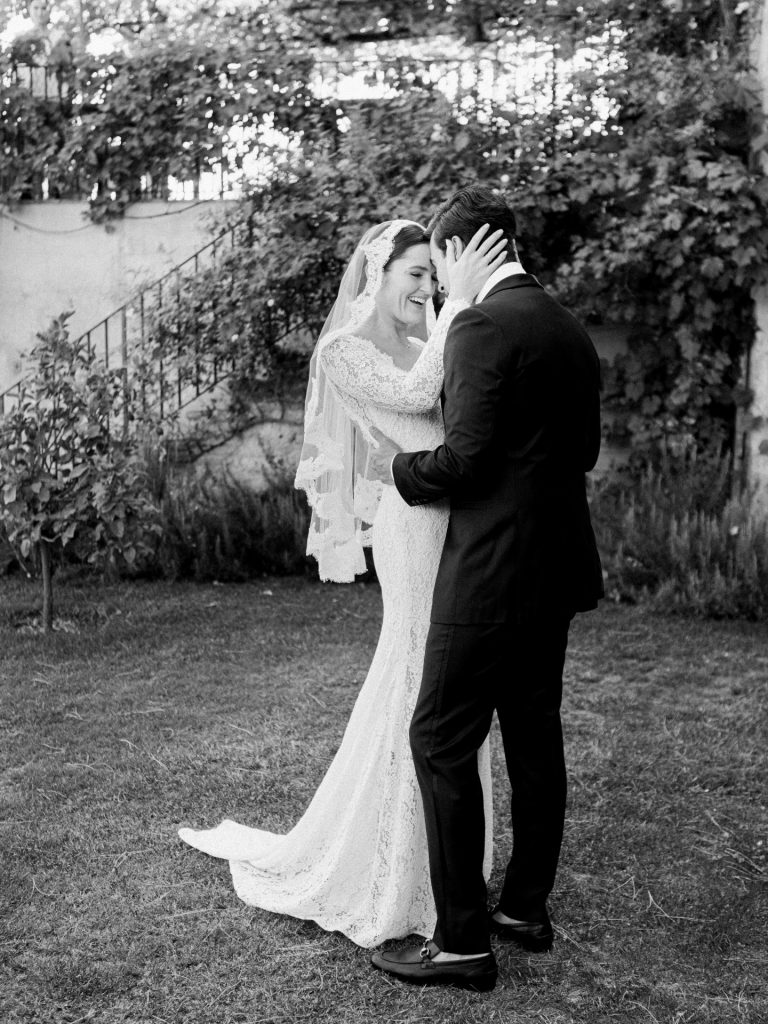
5. The Best Time of Year for a Tuscany Elopement
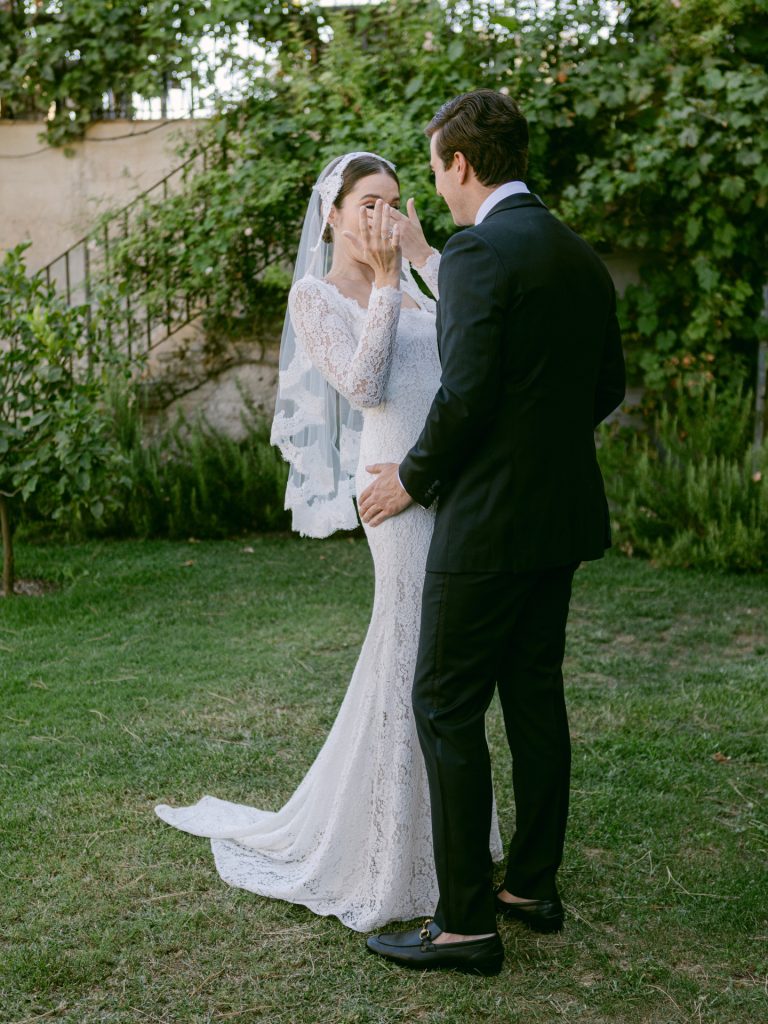
There’s no single “best” month — and the honest answer is more useful than the one most guides give. The right season depends entirely on where you want to shoot and what colours you want in your photographs, because the same Tuscan landscape looks completely different across the year. The region’s most famous scenery — the open hills of the Val d’Orcia and the Crete Senesi — is genuinely at its best for only part of the year. This is where a lot of couples are misled: they’re promised golden rolling hills in a month when those same hills are bare and brown. So the first thing we’ll do is match your season to the landscape you’re actually dreaming of.
Spring (April to June) — green and gold open hills
The season the open countryside is at its most iconic. Through April and May the Val d’Orcia and the Crete Senesi are green and rolling — the lush, wildflower-dotted version everyone pictures. Then, around late May into June, the wheat ripens and the hills turn briefly, spectacularly gold: the classic golden-fields image, and a narrow window worth planning around. The light is soft, the temperatures gentle, and the summer crowds haven’t arrived. It’s the most changeable season for weather, with the occasional passing shower — but that’s exactly what keeps everything this lush. If open, rolling, green-or-gold hills are your dream, this is your season, full stop.
April around Siena, the green of new crops growing and the tender landscape of Crete Senesi

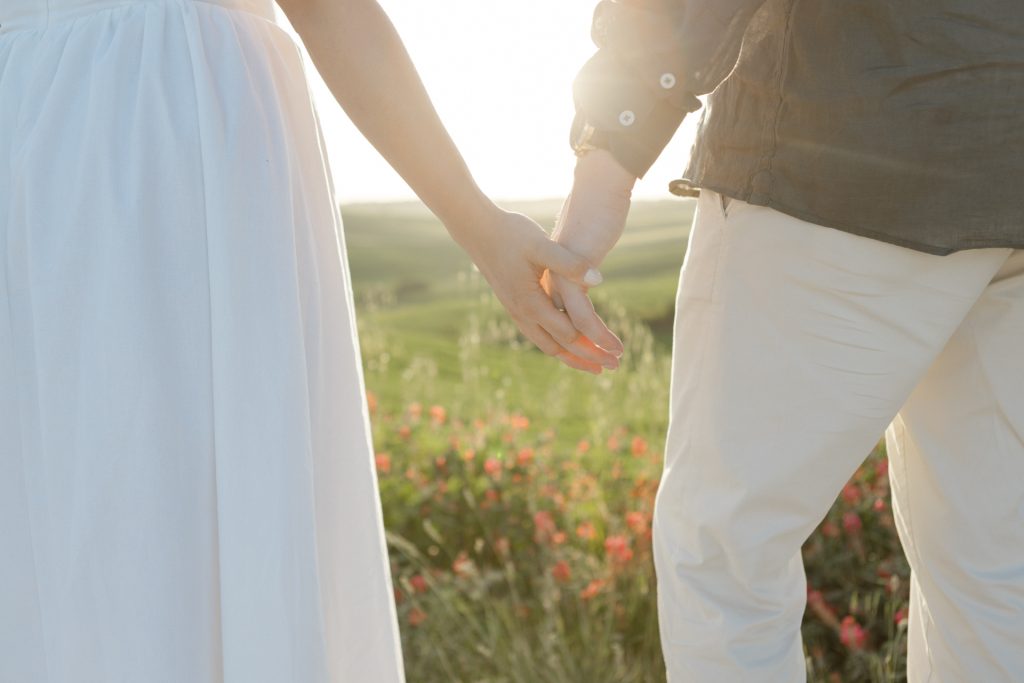
Sunset in Val D’Orcia in May: rich colors, flowers and green fields.
Summer (late June to August) — golden light, but bare fields and heat
By late June the wheat is harvested, and through July and August the open valleys turn to brown stubble and bare earth — the postcard hills are gone until the following spring. What summer still offers beautifully: the green vineyards of Chianti and Montalcino, long warm evenings, and extraordinary light in the last hour before sunset. But it’s genuinely hot — often into the mid-30s Celsius — and it’s peak season at the famous viewpoints. If you marry now, we build the day around sunrise and sunset: a cool, empty, gold-lit ridge at dawn is a completely different (and far more private) experience than the same spot at noon in August. Midday is for a long lunch in the shade, not for standing in a field.
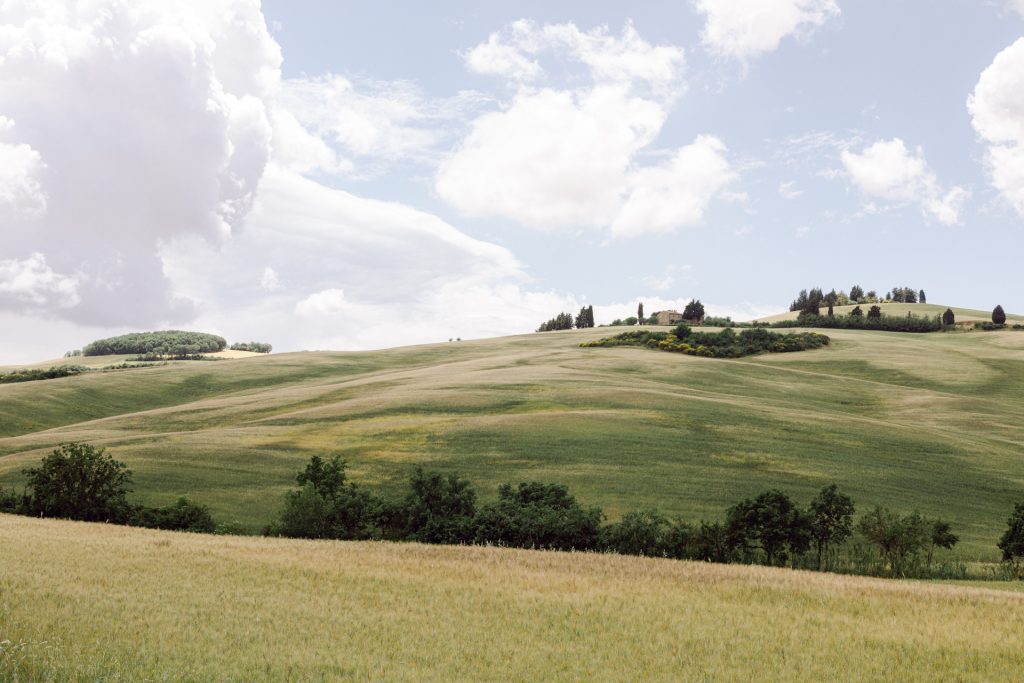
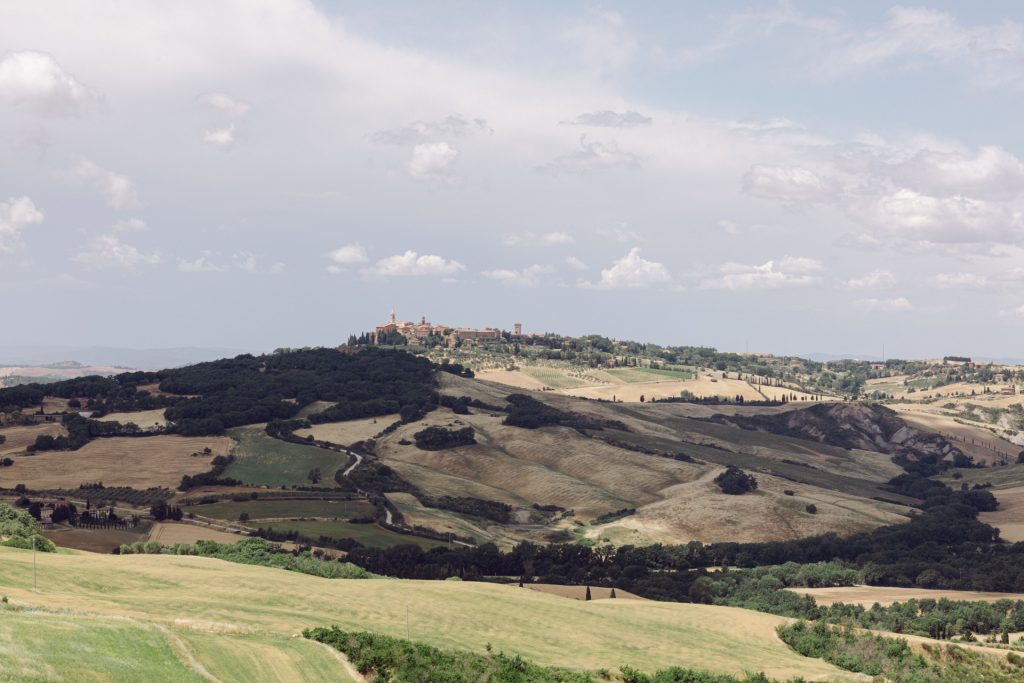
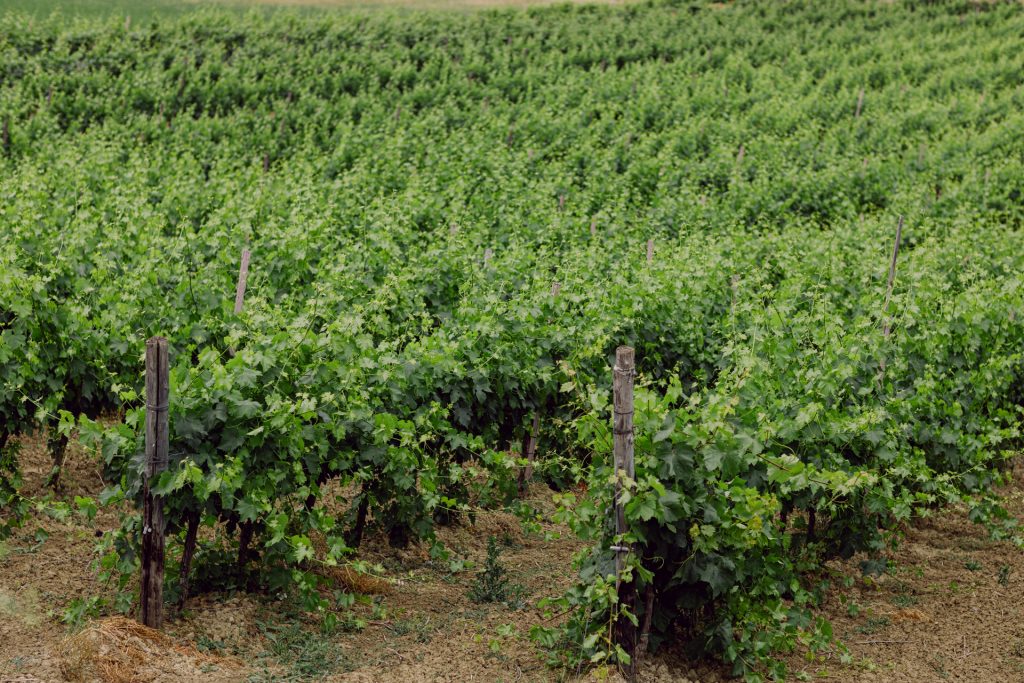
Autumn (September to November) — vineyards, foliage, and villages (not the open hills)
Here’s the thing most guides get wrong, and I’ve seen it through my own lens: by September the Val d’Orcia and the Crete Senesi are brown and empty — beautiful in a spare, minimal way, but not the green-or-gold rolling hills you might be picturing. Autumn’s real magic in Tuscany lives somewhere else, and it’s spectacular if you point the day at it: the vineyards of Chianti and the wooded hills turning red and gold, the grape harvest bringing the estates to life in September, the olive harvest through late October and November, and the medieval towns wrapped in autumn colour. So autumn is a wonderful season to elope — we simply build it around vineyards, woods, and villages rather than the bare southern valleys. If foliage is what you want, we head into Chianti and the wooded countryside, not the open Val d’Orcia.


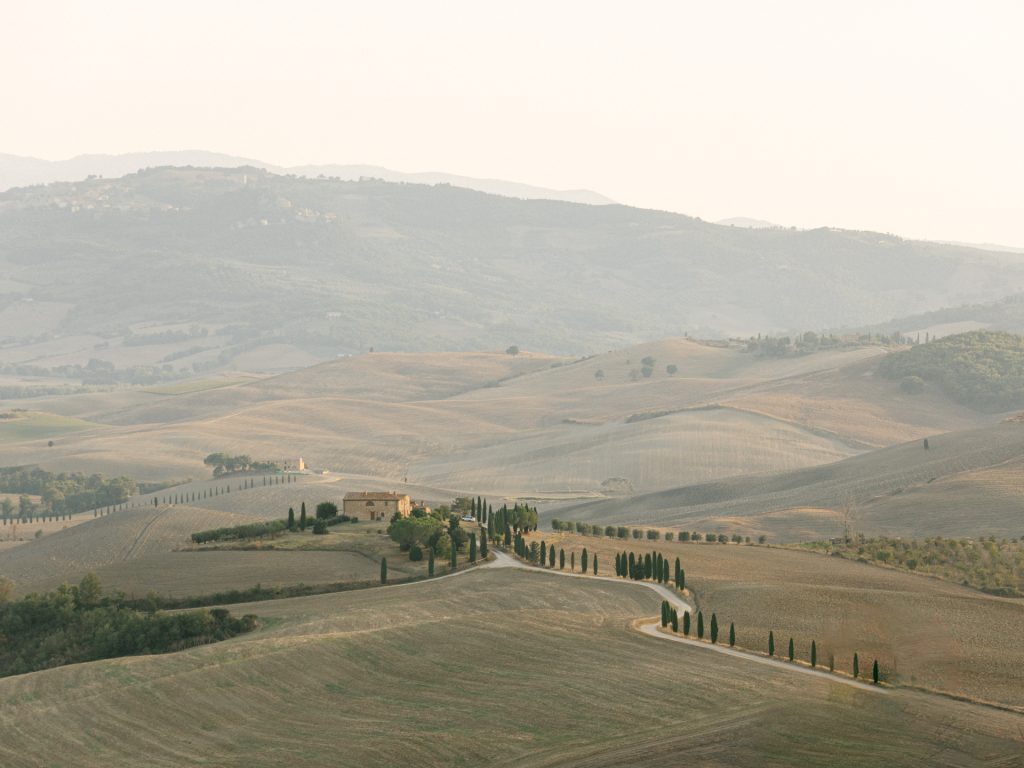

Early September in Val D’Orcia with soft colors and bare fields. You can expect colorful foliage in other areas of Tuscany, like Chianti.
Winter (December to March) — cities and medieval stone, misty and cinematic
Genuinely overlooked, and quietly magical for the right couple — but, again, entirely location-dependent. The open countryside is bare and often wrapped in mist; winter’s beauty here belongs to the cities and the medieval towns. Florence at Christmas is a particular kind of romantic, and the season I know best — I’ve photographed it with the city almost to ourselves, and it was unforgettable. Empty piazzas, frost on the stone, a stripped-back stillness you simply cannot get in July. Some seasonal venues and agriturismi close or reduce hours in winter, so this season asks for more flexibility and more advance research — but for couples drawn to quiet over spectacle, and to city and stone over open fields, it’s extraordinary.
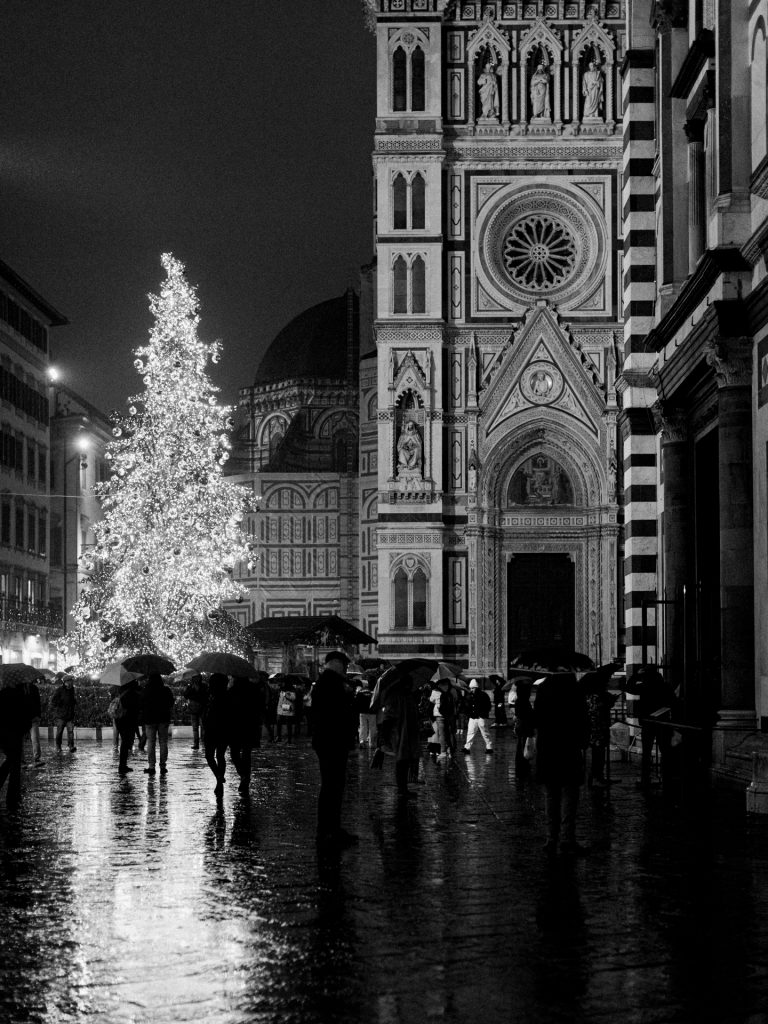
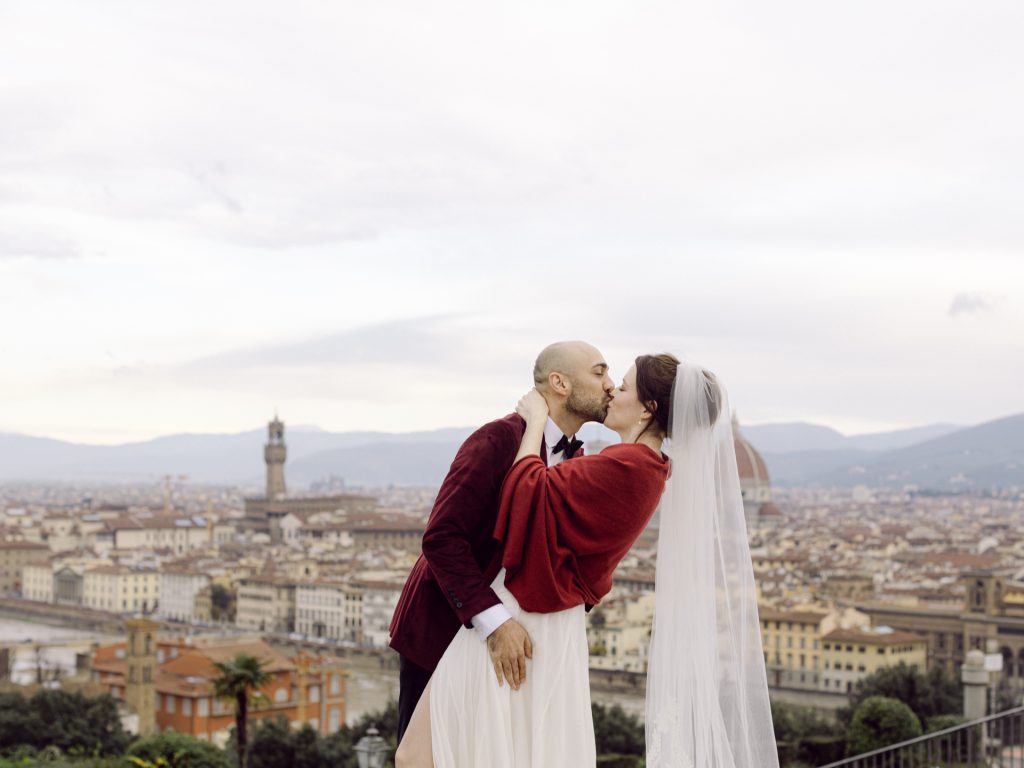
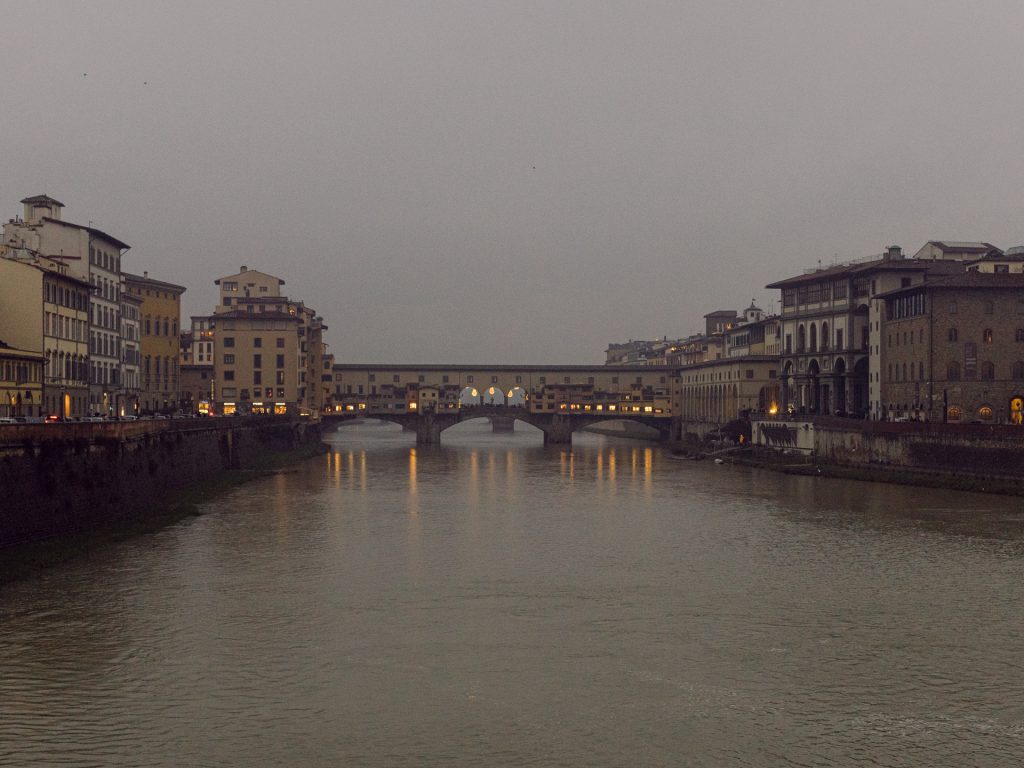
Florence in December: a magical Christmas elopement.
The short version
If your heart is set on the classic open rolling hills, come in spring (green) or the brief early-summer golden-wheat window. If you want vineyards and autumn foliage, come in autumn and base yourself in Chianti and the wooded hills. If you want cities, medieval towns, or misty, cinematic stillness, the shoulder seasons and winter in Florence are yours. Tell me the palette you’re dreaming of and I’ll tell you the month — and the corner of Tuscany — that delivers it.
A practical note on light and heat
Whatever the season, the light is the thing we plan around. In summer especially, the harsh midday sun is the one thing to design away from — roofless spots like San Galgano become uncomfortably bright and hot in the middle of the day, and the open countryside flattens out under a high sun. The answer is always the same: we work with the early morning and the golden hours, when Tuscany looks like the version of itself you fell in love with, and we keep the middle of the day for shade, food, and rest.
A practical note on weekdays
Choose a weekday if you possibly can, regardless of season. Weekday mornings at the famous viewpoints and in the hilltop towns are dramatically quieter than weekends, and many venues and vendors are easier to book — and sometimes more affordable — Monday through Thursday.
6. The Best Locations and Venues for an Elopement or Intimate Wedding
This is the section most guides get wrong. Most “Tuscany wedding venue” lists are built for hundred-guest receptions and default to the same enormous, expensive estates every time. Those are wonderful venues — for a different kind of wedding. For two people, or for an intimate group of ten to thirty, the right approach is completely different.
Here’s how I think about it, organized by what each option is actually good for.
You don’t necessarily need a venue at all
Here’s the thing almost no Tuscany guide says plainly: an elopement doesn’t require a rented venue, and in Tuscany more than almost anywhere, it truly doesn’t. The open countryside is free to use for a symbolic ceremony. Your vows can happen in a wheat field at sunrise, on a public ridge overlooking the Val d’Orcia, on a quiet cypress-lined road, or on the terrace of the beautiful farmhouse where you’re staying. No venue fee, no events office, no minimum spend — just the landscape, the light, and the day we design around it.
The simplest, most beautiful version of a Tuscany elopement is often built around a stay at a lovely agriturismo or countryside hotel, with the surrounding hills as the rest of the day. I’ll say more about where to stay in section 15.
The most iconic open-countryside spots
- The Val d’Orcia viewpoints — the cypress groves, the winding roads, the ridgelines below Pienza and around San Quirico. Free, unrestricted for symbolic ceremonies, and unbeatable at sunrise and sunset. The trade-off is popularity; the answer is timing and knowing the quieter alternatives.
- The Crete Senesi — the empty clay hills for couples who want the epic open feeling without the crowds.
- A wheat or sunflower field in June/July — quintessential summer Tuscany, and completely private if you know which fields and which hour.
- A cypress-lined road — the region’s signature image, and a beautiful setting for a first look or a walk together.
The unforgettable ceremony locations
- San Galgano Abbey, near Chiusdino, about 40 minutes south of Siena. A roofless 13th-century Gothic abbey — soaring stone walls open straight to the sky. It’s one of the most dramatic ceremony settings in all of Italy, and it hosts both symbolic and civil ceremonies (civil arranged through the Comune di Chiusdino). Plan it for the softer light of morning or late afternoon, never harsh midday, since there’s no roof.
- A Renaissance hilltop town — Pienza, Montepulciano, or Monteriggioni for vows with medieval stone and panoramic valleys as your backdrop.
- Piazzale Michelangelo or a garden terrace in Florence — for couples who want the city and its skyline as the setting.
Wine estates and agriturismi (for an intimate ceremony, meal, and stay in one place)
These are the venues most “Tuscany wedding” guides skip, because they aren’t built for 150-person receptions. They’re built for exactly the day you’re planning: a private ceremony in the vineyard or garden, a long celebratory meal on the terrace, and rooms to stay the night — often all on one property. Chianti and the Val d’Orcia are full of family-run estates and agriturismi that welcome intimate elopements and micro-weddings warmly, many of which never appear on the big venue lists at all. Finding the right one for your group and your vision is part of what I do in planning.
Castles and historic villas (for something grander)
If your heart is set on a fairytale backdrop, Tuscany’s castles and historic estates are extraordinary — think medieval towers, frescoed interiors, and formal Italian gardens. Some welcome truly intimate celebrations; others make more sense at full-wedding scale. I’ve photographed weddings inside places like Castello di Celsa and Villa Catignano near Siena, and I’m glad to point you toward the ones that fit an elopement rather than a large reception. (If you’re planning a larger celebration, my separate guides to Tuscany’s best wedding villas and borghi and dreamy castles for a Tuscan wedding go deeper on those.)
What I’d steer you away from at elopement scale
The region’s grandest estates — the ones built for 100+ guests, with required in-house vendor lists, large minimum spends, and full multi-day buyouts — are genuinely spectacular and genuinely the wrong tool for an elopement. At two people, or even at twenty, you’d be paying a premium for infrastructure you don’t need. Save those for a future big celebration, and let your elopement live somewhere built to its size.


7. Things to Do — Building a Full Elopement Day
Whether you’re booking four hours or a full sunrise-to-sunset day, here’s the menu of experiences I draw from when designing a Tuscany elopement. The best days treat these not as gaps between the “real” moments but as part of the story itself.
- A hot-air balloon at sunrise over the Val d’Orcia — floating over the hills as the light comes up, drifting silently above the cypresses and farmhouses. One of the most extraordinary things you can do in this landscape.
- A helicopter or private-plane tour — lifting off near Florence or Siena to see the castles, the medieval towers, the rolling countryside and even the coast from above. Pure spectacle, and an unforgettable way to grasp the scale of where you’ve come to marry.
- A private wine tasting at a family estate — Brunello in Montalcino, Chianti Classico between Florence and Siena, Vino Nobile in Montepulciano. Often with the winemaker, often in the cellar, always better than any restaurant list.
- A vintage car drive through the cypress roads of the Val d’Orcia — a classic Fiat 500, an Alfa Romeo Spider, or a convertible, top down, no GPS. (A vintage Vespa or sidecar is the playful, cinematic alternative.)
- A private cooking class with a local chef — handmade pasta, ribollita, wild boar ragù, cantucci — then eating what you made, slowly, with wine. A place like Locanda Demetra‘s cooking school near Montalcino, with its own garden and a view over the hills, does exactly this.
- A truffle hunt in the woods near San Miniato with a hunter and their dogs, followed by a tasting (autumn especially).
- A cheese and wine tasting — Pecorino di Pienza paired with local reds, guided by someone who actually makes it.
- Live music at your ceremony or dinner — a solo violinist inside the roofless walls of San Galgano, a guitarist on the terrace at golden hour, an opera singer at your candlelit dinner. Few things transform a moment the way live music does.
- A soak in the thermal springs — the free natural pools below Bagno Vignoni, the surreal white travertine terraces of Bagni San Filippo, or the famous cascades of Saturnia further south. Bring towels, flip-flops, and a bottle of prosecco.
- An early-morning walk through a hilltop town — Pienza, Montepulciano, or Volterra before the day-trippers arrive, coffee and pastries in a quiet piazza.
- A picnic on a private ridge at golden hour — local cheeses, prosciutto, a bottle of something regional, the valley below you.
- A horseback ride through the vineyards or the sculptural hills of the Crete Senesi, for couples who want a little adventure.
- A private chef dinner under the stars — a long table on your farmhouse terrace, cooked just for the two of you (or your small group), no driving afterwards, the valley going dark around you.
- Sailing the Tuscan coast — for couples heading to the sea, a private boat out around Monte Argentario or the island of Elba, swimming off the deck in the late afternoon light.
- Chasing the cinematic locations — the Gladiator cypresses, the film and Renaissance-art spots scattered across the region, for couples who want their day to feel like a scene from a movie (because here, it genuinely can).
- Taking part in the grape or olive harvest if your date falls in September–November — a beautiful, hands-in-it, distinctly Tuscan experience.
- An evening aperitivo on a terrace as the sun drops behind the hills, then a long dinner as the light turns to honey and dark.
Not every experience suits every season or every corner of Tuscany — a harvest belongs to autumn, a wheat-field picnic to early summer, the coast to the south — and part of what I do is match the right ones to your date, your locations, and the pace you want. A long day works best when it isn’t built as one continuous photoshoot. The most memorable Tuscany elopements I’ve photographed weave the tasting, the drive, the meal, and the slow walk through town into the day — so that when you look back, you remember not a series of poses but an actual day, lived.


8. Where to Eat: Food & Wine for Your Elopement
Food isn’t a footnote to a Tuscan elopement — for many couples it’s half the reason they chose the region. The good news is that eating extraordinarily well here doesn’t require a famous name; some of the best meals in Tuscany happen in village trattorias with no sign, no website, and a handwritten menu that changes with what the kitchen found that morning. Part of my planning is pointing you toward the right table for the kind of celebration you want.
First, what you’ll actually eat and drink
Tuscan cooking is famously cucina povera — peasant food, raised to an art. It’s simple, seasonal, and built on extraordinary ingredients rather than elaborate technique. A meal often opens with crostini neri (chicken-liver pâté on toasted bread), fettunta (garlic bread under good new olive oil), and a board of local cured meats like finocchiona (fennel salami) and pecorino di Pienza. Then the hand-made pastas: pici, the thick, chewy hand-rolled Sienese noodle, served cacio e pepe, all’aglione (garlic and tomato), or alle briciole; and pappardelle with wild boar (al cinghiale) or hare (alla lepre). In winter come the great bread soups — ribollita — and in summer pappa al pomodoro and the cold bread salad panzanella. The region’s most prized dish is the bistecca alla fiorentina: a thick T-bone from Chianina cattle, grilled rare over embers with just salt, pepper, and oil — traditionally ordered for two, and never well-done. To finish, cantucci (almond biscuits) dipped in sweet Vin Santo.
And the wine. Tuscany is one of the great wine regions of the world, and its three legendary reds each belong to a landscape you might be marrying in: Chianti Classico from the hills between Florence and Siena, Brunello di Montalcino from the Val d’Orcia, and Vino Nobile di Montepulciano. San Gimignano even gives you a celebrated white, Vernaccia. In a country trattoria, the house red by the carafe is often all you need. Building a tasting or a dinner around the wine of the exact place you’ve come to marry is one of the loveliest ways to root your day in Tuscany.
Broadly, there are three directions for the celebration meal itself:
A true celebration meal — fine dining and Michelin
Tuscany has one of Italy’s most serious fine-dining scenes — dozens of Michelin-starred rooms spread across Florence, the Chianti estates, the Val d’Orcia, and the coast. A few that are especially suited to a celebration, for their setting as much as their cooking:
- Campo del Drago, at Rosewood Castiglion del Bosco near Montalcino — a two-Michelin-star room with a terrace over the hills of Montalcino and the Val d’Orcia. (Its relaxed sister, Osteria La Canonica, shares the same view for a more casual lunch.)
- Arnolfo, in Colle di Val d’Elsa — two Michelin stars, refined, with panoramic countryside views.
- Da Caino, in Montemerano in the southern Maremma — a two-star institution known for deeply traditional Tuscan cooking.
- Il Falconiere, near Cortona — a Michelin-starred restaurant in a 17th-century villa, romantic and intimate.
- Enoteca Pinchiorri, in Florence — the region’s grande dame, one of the very few three-star tables in Italy, for couples who want a true haute-cuisine occasion.
This is the direction for couples who want a multi-course tasting menu with wine pairings as the centrepiece of the day. Book as far ahead as you can — the best tables go months out in high season.
The heart of it — countryside trattorias, osterie, and tables with a view
For most elopement couples, the most memorable meal isn’t the fanciest — it’s a long, unhurried lunch or dinner at a family-run trattoria or osteria in the hills, ideally with the valley in front of you. A few that are widely loved for exactly this:
- Locanda Demetra, near Montalcino — a place with a story worth telling: a group of friends on holiday stumbled on a forgotten farmstead for sale and decided to change their lives, turning it into a restaurant, cooking school, and small working farm. What arrives on the plate comes from their own garden and orchard just steps away, alongside the finest local produce, and the menu changes every week — fresh pasta always the star, served against a breathtaking view over the hills. One I love to point couples toward.
- Boccon DiVino, just outside the walls of Montalcino — one of the most beautiful panoramic terraces in the Val d’Orcia, run by the same family since the early ’90s, with a vast Brunello list.
- Relais Il Chiostro di Pienza — a restaurant set in a former convent in the heart of Pienza, with a hanging garden terrace that opens straight onto the Val d’Orcia; tables laid under the lime trees in the warm months.
- Podere Il Casale, an organic farm near Pienza — a farm-to-table agriturismo with a panorama straight across the Val d’Orcia.
- Osteria di Passignano, in the Chianti countryside beside an ancient abbey — for a vineyard-country lunch among the vines.
- Antica Macelleria Cecchini, in Panzano in Chianti — the theatrical eight-generation butcher-restaurant, for meat lovers wanting something unforgettable.
These are the kinds of tables I steer couples toward based on where the day is anchored — and part of planning is finding the one that fits your corner of Tuscany and reserving it early.
Private dining — on the estate or at your farmhouse
If you’re staying at an agriturismo or wine estate, one of the loveliest options is a private dinner right where you are: a chef cooking for just the two of you (or your small group) on the terrace, a long table under the pergola, the valley going dark around you. No driving afterwards, complete privacy, and often the most emotional meal of the whole trip.
A practical note: the best countryside restaurants are small and book out well ahead in peak season, and some require a deposit — plan your celebration dinner when you confirm your date, not the week before. And if a favourite is inside a ZTL (Florence, Siena), factor in where you’ll park or arrange a driver.


9. Cars, Drivers, and Getting Around for the Day
Getting to Tuscany
The two main gateways are Florence Airport (FLR), right beside the city with a tram into the centre in about 20 minutes, and Pisa Airport (PSA), served by the budget carriers, about 80 km west with a direct train into Florence in around an hour and fifteen. Depending on which part of Tuscany you’re heading to, Bologna (BLQ), Rome (FCO), and Perugia (PEG) can also be convenient — Perugia and Rome are actually closer for the southern Val d’Orcia than Florence is.
Renting a car vs. hiring a driver
Here’s my honest take: you don’t need a private driver, and most couples drive themselves quite happily. A rental car gives you total freedom to explore, costs relatively little, and is genuinely useful if you’re combining your elopement with a wider trip through Tuscany. The one thing to manage is the ZTL zones in the historic city centres (see section 3), and the fact that most characterful cars here are manual.
A private driver is a lovely luxury — comfortable, relaxing, no navigating or parking on your wedding day — but it’s a real added cost, and it isn’t essential. Think of it as a question of how relaxed you want to be. If neither of you loves driving, you have two easy options: hire a driver for the day, or keep the car and simply plan a gentler route — fewer, shorter hops, spread across more days, so no single day feels like a lot of driving. Both work beautifully; it’s entirely about your pace.
Before you drive: your licence and what to check
The paperwork is simple, but it’s worth sorting out before you fly — an International Driving Permit can’t be issued once you’re already in Italy.
- EU / EEA licences are valid in Italy exactly as they are — nothing extra needed.
- UK licences (post-Brexit) are valid for tourist driving; an IDP isn’t legally required, though some rental companies still ask for one as supplementary ID.
- US, Canadian, Australian, New Zealand, Japanese and other non-EU licences need an International Driving Permit (IDP) carried alongside your physical licence. Italian law requires it, and while rental desks don’t always ask, traffic police can — and driving without one can mean a fine of several hundred euros, especially in the event of an accident. It’s a small, cheap piece of paperwork that saves a lot of potential trouble.
Get your IDP in your home country before you travel — in the US it’s issued by AAA (around $20, valid one year); it’s a physical booklet that can’t be emailed or issued abroad, so allow a couple of weeks. Always carry your physical licence (not a photo or app), your passport, and the IDP if it applies to you.
A few more things worth checking before you arrive:
- Minimum age and experience — most companies rent from age 21, add a young-driver surcharge under 25, and ask that you’ve held your licence for at least a year.
- A physical credit card in the main driver’s name, for the security deposit (debit cards are often refused).
- Manual vs automatic — the vast majority of cars in Italy, and effectively all vintage cars, are manual. If you need an automatic, book it early and confirm it in writing; they’re scarcer and pricier.
- ZTL access — if your hotel is inside a historic centre, ask them to register your car so you don’t pick up an automatic fine (see section 3).
- What your rate includes — insurance excess, mileage, and second-driver fees vary a lot between the cheap headline price and the full cost.
(Requirements can change, so it’s always worth a quick check with your rental company and your home motoring association close to your trip.)
Plan the day by area — Tuscan distances are bigger than they look
This is the one planning rule that makes or breaks a Tuscany day. The region is large, and the roads through the hills are slow and winding — what looks like “an hour” on a map is often closer to two. So the golden rule is: build each day around one area of Tuscany, or at most two adjacent ones — never three. Trying to see too much means spending the day in the car instead of in the landscape.
In practice, that looks like:
- One area, one relaxed day: the whole of a day inside the Val d’Orcia — Pienza, San Quirico, a Montalcino tasting, and a couple of viewpoints, all within about 30 minutes of each other. Or a full day in Chianti, moving between two or three wine villages and an estate.
- Two adjacent areas, comfortably: Val d’Orcia + Montepulciano, or Val d’Orcia + the Crete Senesi (neighbours, ~30–40 minutes apart). Or Chianti + Siena. Or Florence + Fiesole just above the city.
- What to avoid: pairing places that are far apart in a single day — Florence in the morning and the Val d’Orcia in the afternoon, for instance, is roughly 1.5–2 hours each way and eats the whole day in transit. If you want both, give each its own day (this is exactly what the Custom 2-Day Experience is designed for).
When we plan your timeline, keeping each day anchored to one beautiful area — with short, scenic drives between stops rather than long motorway stretches — is one of the first things I get right.
The vintage car
As covered in section 3, a vintage convertible is the signature Tuscan add-on — roughly a few hundred euros for a half-day with delivery to your accommodation, through several trusted local operators. Most are self-drive (and manual), though some offer a chauffeur if you’d rather just sit back. It’s transportation that becomes part of your photographs, and I recommend it more than almost anything else here.

10. What a Tuscany Elopement Day Actually Looks Like
The hours you book with me run start to finish — one unbroken thread, from the first quiet moment of the morning to the last frame after sunset. I don’t photograph the ceremony and disappear until golden hour. The drive along the cypress road, the first glass in the cellar, the slow lunch through the heat of the afternoon — none of it is downtime. It’s the day itself, and it’s the part I love photographing most.
What changes from one couple to the next isn’t whether I’m with you — it’s when your hours fall and how they’re spread. Because I build every elopement around the light, timing is the whole craft. In June the sun is up before six and lingers past nine, giving us a long, unhurried day; in the shoulder seasons the light is softer and shorter. Either way, I design your timeline so the most beautiful light of the day lands on the moments that matter most.
There are four ways to shape it:
- The Mini Elopement Experience — 4 hours, one location. A single, beautifully timed window: your ceremony and portraits in one extraordinary place, at the best hour of the day. Sunrise or sunset, just the two of you.
- The Half Day — 8 hours. The one most couples choose. Enough time to explore two or three places, say your vows somewhere quiet, and finish on the most magical light Tuscany has to offer.
- The Full Day — 12 hours. The whole story in a single day, beginning to end — a slow morning, a real adventure, the ceremony, and a long candlelit dinner as the last color leaves the hills.
- The Custom 2-Day Experience — 16 hours across two days. For couples who want the unhurried version, and often a second Tuscany entirely — the open Val d’Orcia one day, Florence or the coast the next.
Here’s what three of those can actually look like. These are illustrations, not scripts — your day is built entirely around the two of you and the light, and I always leave room to breathe.
The Half Day · 8 Continuous Hours, One Day
The collection most couples choose. It opens where you wake up — a ceremony with a view, right where you got ready — and closes with dinner in a hilltop hamlet as the light turns to honey. Timed here for June; the exact clock shifts with the season.
1:00 PM — Coverage begins. Getting ready at your agriturismo or B&B — the dress, the details, the valley through the open window.
2:00 PM — Your ceremony, right there. If where you’re staying has a view — and I’ll help you choose one that does — there’s nothing lovelier than saying your vows on its terrace, just the two of you, with a violinist or harpist playing softly beside you. No convoy, no venue, no audience. Only the hills, the music, and each other.
2:45 PM — Your first toast. A glass of something cold and a little something to eat — the quiet, giddy first half-hour of being married.
3:15 PM — A vintage spider collects you for a slow drive along the cypress roads — top down, no destination, the hills rolling past.
4:00 PM — A private tasting at a family wine estate, the winemaker pouring in the cool of the cellar.
5:30 PM — A wander through a hilltop town — Pienza or Monticchiello — the stone lanes, a gelato, the day-trippers thinning out.
6:45 PM — Golden hour. The open fields and a cypress-lined ridge as the hills turn amber and Monte Amiata catches the last light — the portraits that hold the whole day.
8:00 PM — Sunset, then dinner. A terrace table in a magical little hamlet — somewhere like Osteria La Porta in Monticchiello, its view stretching clear across the Val d’Orcia to the Amiata — as I catch the last quiet frames and leave you to your first dinner as a married couple.
9:00 PM — Coverage ends.
The Full Day · 12 Continuous Hours, One Day
The whole story, dawn to dark, at a gentler pace — the day with room for two areas of Tuscany and both of its best lights, sunrise and sunset. This is where something unique like a hot-air balloon experience can find its place. Timed here for early October, when the day fits neatly inside twelve hours; in high summer, when dawn and dusk are far apart, the balloon-and-sunset combination is where the 2-Day Experience truly shines.
7:00 AM — Coverage begins before the day wakes. A sunrise hot-air balloon over the Val d’Orcia, lifting off as the sun comes up — the hills, the cypresses and the farmhouses laid out silver-gold beneath you. (Sunrise only, and weather permitting; we plan a beautiful alternative if the wind won’t allow it.)
9:15 AM — Back to earth, and a slow breakfast — coffee and pastries, the morning still cool.
10:15 AM — Getting ready at your agriturismo — details, the dress, the valley beyond.
11:15 AM — Your ceremony on the terrace where you’re staying, a violinist or harpist playing, the view falling away below — then a first toast, a glass and a bite in the late-morning sun.
12:45 PM — A vintage car along the cypress roads to lunch — a long, unhurried table through the heat of the day, or a private cooking class if you’d rather make it yourselves.
3:00 PM — Into a second area — over to the wine streets of Montepulciano, or the sculptural, empty hills of the Crete Senesi — for a tasting and a wander somewhere new. Your breathing room, out of the midday sun.
5:00 PM — Golden hour on the open hills, the light long and amber.
6:15 PM — Sunset.
6:45 PM — Dinner begins on a hamlet terrace with a view — somewhere like Boccon DiVino above Montalcino — as the last colour leaves the sky.
7:00 PM — Coverage ends (or dinner carries on without me).
The Custom 2-Day Experience · 16 Hours Across Two Days
This isn’t a longer version of the day above — it’s a different thing entirely. Two contrasting Tuscanies, two completely different lights and moods, the wedding itself on one day and pure, unhurried exploration on the other, with a whole night in between. It’s the closest thing to a mini honeymoon film: nowhere to rush, nothing left out, and two places that will mean completely different things when you look back years from now. Sixteen hours, split however suits you — two 8-hour days, or one long 12-hour day and one short 4-hour one. Below, the version I love most: the wild southern hills, then the sea.
Day One — The Wild South · 8 continuous hours: the wedding day.
Anchored in the open, sculptural countryside of the Val d’Orcia and the Crete Senesi, and timed to run from afternoon all the way into the dark — including something none of the single-day collections can give you: night portraits under the stars.
2:00 PM — Coverage begins. Getting ready at your farmhouse, the valley through the window.
3:00 PM — Your ceremony on the terrace, or on a wild private ridge with the hills falling away — a violinist or harpist playing, just the two of you — then a first toast, a glass and a bite in the afternoon sun.
4:00 PM — A vintage car out into the Crete Senesi — the bare, rippling clay hills, top down, not another soul in sight.
5:30 PM — A picnic on a private ridge — local cheeses, prosciutto, a bottle of Brunello, the hills beginning to glow.
7:00 PM — Golden hour into sunset — the frames that hold the whole day.
8:30 PM — A candlelit dinner under the pergola back at the farmhouse.
9:30 PM — Night portraits under the stars. The Val d’Orcia has some of the darkest skies in Italy — the two of you beneath the Milky Way is an image nothing else on this list can give you.
10:00 PM — Coverage ends.
Day Two — A Different World Entirely · 8 continuous hours: the sea.
After a day in the hills, the coast is a deliberate shock of contrast — blue water instead of gold fields, salt air instead of vineyard dust. No ceremony today; you’re already married. This day is pure adventure, just the two of you exploring somewhere completely different.
10:00 AM — Coverage begins at the harbour — boarding a private boat as the sea opens up around Monte Argentario.
11:00 AM — Anchoring in a quiet cove — swimming off the deck, the two of you in the water, the cliffs rising behind you.
1:00 PM — A long seafood lunch at a table right by the water.
3:00 PM — Ashore to explore — a pastel fishing village, a walk along the coast road, a gelato in the shade.
4:30 PM — Golden hour on the cliffs and the beach as the light goes soft and pink over the water.
6:00 PM — Coverage ends. Total across the two days: 16 hours.
Prefer stone to sea? Day Two works just as beautifully as a continuous day in Renaissance Florence — the empty city at first light, Piazzale Michelangelo and the Bardini Garden, golden hour across the Arno, and blue-hour portraits on a quiet bridge as the lamps come on — or as a day in another region entirely, paired with the Dolomites or Lake Como if you’re travelling on. Two days, two worlds, one continuous story on each.
My Mini Elopement Experience (4 hours, one location, from €3,800) is built for a single, beautifully timed window — often a ceremony plus one location. My Half Day Elopement Experience (8 continuous hours, from €6,200 — the collection most couples choose) covers a full day exactly like the one above. My Full Day Elopement Experience (12 continuous hours in a single day, from €8,000) tells the whole story from first light through post-sunset. And my Custom 2-Day Elopement Experience (16 hours across two days, from €10,400) is built for couples who want the unhurried, two-region version — including the option of pairing Tuscany with Florence, the coast, or elsewhere nearby — with full experience design across both days.
A note on all of these: they’re built to inspire, not to schedule you to the minute. The best elopement days have space in them — room to change your mind, sit longer over lunch, pour another glass, or simply be still together. When we plan yours, I’ll design the timeline around the two of you and the light, keep the transitions easy, and leave you free to just be in it. That’s the whole point.

11. Planning Logistics, Vendors, and What to Arrange
The loveliest part of a Tuscany elopement is how little you actually have to carry. When you book me, the planning is the offer — so this section is less a list of chores and more a look at how the day comes together, and the small, curated team that makes it effortless.
How far in advance to plan
Tuscany books up earlier than couples expect, especially for the moments that make the day. As a rough guide:
- Six to twelve months ahead for peak-season dates (late spring, and September–October around the harvest), for any named estate or agriturismo, and for a legal civil ceremony (the paperwork in section 4 needs the lead time).
- Three to six months is often workable in the quieter shoulder months — though the pieces with only a handful of slots still deserve more notice: a sunrise balloon, a vintage car, and the tiny, celebrated hill-town restaurants (a place like Monticchiello’s Osteria La Porta seats only a few tables and takes bookings well in advance).
The short version: once your date and your corner of Tuscany are set, the rest falls into place quickly — but the earlier we start, the more of the very best is still open to you.
What’s already handled when you book me
For an elopement — just the two of you — you don’t need a separate planner. Location scouting, designing the timeline around the light, choosing the areas so the driving stays short and beautiful, recommending and coordinating vendors, and keeping the whole day running on the day itself are all built into every collection. You arrive to a day that simply unfolds — so that the only thing left for you to do is be married and be present with each other.
The small team you might add
Most Tuscany elopements need only a handful of people beyond me, and I’ll help you find and book each one:
- A celebrant, for a symbolic ceremony — I’ll connect you with English-speaking celebrants who craft personal, non-religious ceremonies. Many couples skip this entirely and simply exchange their own vows, just the two of them.
- Live music — a violinist or harpist for your ceremony or dinner is one of the most transformative touches in the whole day, and one of the least expected. If it moves you, it’s worth every euro.
- Hair and makeup — skilled artists work throughout the region, based mostly around Florence, Siena, and the Val d’Orcia towns. Book early for summer weekends.
- Florals — Tuscany’s landscape does so much of the visual work that less is genuinely more here: a single beautiful seasonal bouquet, rather than a full installation, is usually all the day wants.
- A vintage car and/or private driver — reserve these as soon as your date is set; the best operators fill up for peak dates (see section 9).
- Your celebration dinner — the small, memorable countryside restaurants book out and often take a deposit, so we secure the table when you confirm your date, not the week before.
If you’re bringing guests
There’s an important line here worth being clear about. For a true elopement, everything above is mine to handle. But if you’re planning an intimate wedding — even a small group of ten or twenty — my role is the photography, and I’d recommend pairing me with a dedicated Tuscany wedding planner to manage the venue, catering, and guest-side logistics. I’m glad to introduce you to planners whose work I trust, so the two of us can look after you together. (More on eloping with a small group in section 14.)
12. How Much Does a Tuscany Elopement Cost?
The honest answer is: it depends entirely on the day you want to create. A quiet sunrise ceremony on a public ridge, an afternoon of tastings and a private farmhouse dinner, and a two-day story across the hills and the sea are three very different days — and they carry three very different budgets. So rather than a single number, here’s what actually shapes it, and what things really cost.
What goes into the budget
Beyond photography, most couples are budgeting for where they stay, how they move (a car, a driver, often a vintage one), the experiences they choose, a celebrant if they want one, hair and makeup, simple seasonal flowers, and a memorable meal to toast the day. Very little of it is compulsory — the countryside is free, the two of you are the guest list — and that’s what makes Tuscany so flexible. You can build a day that’s beautifully simple or genuinely lavish, and both feel like you.
As a broad guide, a thoughtfully planned Tuscany elopement for two typically runs between €6,000 and €20,000 all-in, with luxury private-estate celebrations and multi-day experiences going beyond that.
Typical Tuscany elopement costs (2026)
| Element | Typical range |
|---|---|
| Photography & full planning (my collections) | €3,800–€10,400 |
| Ceremony location | €0 (open countryside) – €5,000+ (private venue) |
| Agriturismo / estate hire, if any | €0–€8,000+ |
| Accommodation (2–3 nights) | €400–€2,500+ |
| Private driver (per day) | €400–€900 |
| Vintage car | €150–€500 (self-drive to wedding package with delivery) |
| Sunrise hot-air balloon (per person, shared) | €250–€360 (private, considerably more) |
| Wine tasting / experiences | €150–€600+ each |
| Live music (violinist or harpist) | €400–€900 |
| Celebrant | €300–€700 |
| Hair & makeup | €200–€450 |
| Seasonal florals | €100–€400 |
| Celebration dinner | €80–€350+ per person |
Figures are guides to help you plan, not quotes — the right team for your day depends on your date, your locations, and the experience you’re after.
Why the photography is the part you’ll live with
Here’s the thing worth saying plainly, because it’s easy to miss when you’re comparing numbers: nearly everything else on that list happens once and is gone by morning. The photographs are what’s left — the thing you’ll hold in your hands in fifty years, the only part of the day your future family will ever see. That’s why I don’t think of it as buying a photographer.
My collections begin at €3,800 for an intimate four-hour experience and go up to €10,400 for a fully customised two-day adventure — and every one of them includes far more than someone with a camera. Together we design the whole day: choosing locations that suit your vision and the season, building the timeline around the very best light, knowing when a famous viewpoint will actually be empty and which back road leads somewhere better, recommending and coordinating the small team around you, and handling the logistics so nothing falls to you on the morning of your wedding.
Because planning a Tuscany elopement was never really about finding a beautiful place — the whole region is beautiful. It’s about the hundred small decisions that turn a beautiful place into your day, unhurried and effortless and entirely yours. That’s the part I’m here for. So that when you look back, you remember not just how your wedding looked, but exactly how it felt.
13. Is Tuscany Actually the Right Fit for You?
Tuscany is famous enough that couples sometimes fall for the name before they’ve thought about the place — so it’s worth a quiet moment to check that it’s really the day you’re dreaming of. It so often is. But not always, and I’d always rather point you to the region that fits than book you into the one that doesn’t.
Tuscany is a wonderful fit if you want:
- Rolling, painterly countryside — golden hills, cypress lanes, hilltop villages — rather than dramatic peaks or a coastline as the star.
- A day that weaves together landscape, food, wine, and history in a way no other Italian region quite matches. If a private Brunello tasting or a long lunch in a hill-town trattoria feels as essential to you as the ceremony itself, this is your place.
- The freedom of open-air ceremonies with little or no bureaucracy — vows in a wheat field, on a terrace, on a wild ridge, with nothing to arrange but the light.
- A warm, golden, romantic aesthetic — soft and cinematic rather than stark or grand.
- A slow, generous pace, where much of the magic happens on the back roads between one beautiful place and the next.
One honest thing that’s specific to Tuscany: more than almost anywhere, it rewards couples who care which version of it they get. The iconic green-and-gold open hills belong to spring and early summer; autumn’s magic lives in the vineyards and woods, not the bare southern valleys; winter belongs to the cities and the medieval stone. If you have a very particular picture in your head, the season and the corner have to match it — which is exactly what section 5 is there to help you get right.
And it might be someone else’s region if you’re really picturing:
- Mountains and alpine drama — then the Dolomites are calling you.
- A dramatic lake and villa gardens — that’s Lake Como.
- A floating city, all water and stone — the timeless romance of gliding down a quiet canal at dawn, vows in a hidden campo, a private boat instead of a vintage car. If it’s atmosphere and architecture over open countryside you’re after, that’s Venice — and as a Venetian myself, it’s a city I know down to its smallest, least-photographed corners.
- A coastline as the undisputed star — the Amalfi Coast, though Tuscany’s own quieter Maremma coast can give you a beautiful version of that (it’s the second day of the 2-Day Experience for a reason).
- Somewhere wild and truly remote rather than gentle and cultivated — Tuscany is many things, but its beauty is a lived-in, human one.
If any of that gives you pause, here’s the happy news: Tuscany pairs beautifully with the rest of Italy, and plenty of couples give it two days and spend two more somewhere completely different. But most couples who come to me asking specifically for Tuscany are picturing exactly what it delivers — golden light, extraordinary food and wine, and a slow, romantic day with nothing to prove. They’ve simply not yet worked out which corner of it is theirs. That’s what the rest of this guide, and our first conversation, is for.
14. Bringing a Few Guests to Your Tuscany Elopement
Not every couple wants to be completely alone. Some want the intimacy and freedom of an elopement, but with a handful of the people who matter most actually there — parents, a sibling, one or two closest friends. Tuscany is arguably the best region in Italy for exactly that, because so much of it is already built to this scale.
Family-run wine estates, agriturismi with a cluster of rooms, farmhouses you can take over entirely — these are made for a small circle, not a hundred-guest reception. A private ceremony in the vineyard or on the terrace, a long table under the pergola, and rooms for everyone to stay the night, often all on one property: no driving after dinner, no logistics pulling you away from each other, just a slow, personal day with your favourite people around you. It’s a warmth a big wedding simply can’t reproduce.
One practical distinction, because it shapes how I work with you:
- Just the two of you? Everything is mine to handle — locations, timeline, vendors, the day itself — all built into your collection.
- A few guests coming? Then it becomes a small wedding, and my focus is the photography. Once there are people to seat, feed, and look after, I’d recommend pairing me with a Tuscany wedding planner to manage the venue, catering, and guest side of things — and I’m glad to introduce you to planners I trust, so the two of us can look after you together.
If you’re picturing a small group, tell me early in our conversation — it changes the places I’d suggest and the shape of the day we design together.


15. Where to Stay — and How Many Nights to Plan For
Where you stay matters more in Tuscany than almost anywhere — because, as you saw in section 10, the loveliest elopement days often begin right where you’re staying: getting ready, then vows on the terrace with the valley falling away below. Your accommodation isn’t just a bed for the night; it can be your ceremony venue, your first-toast spot, and the backdrop to the quietest, most personal frames of the whole day. So it’s worth choosing with a little care.
How many nights: plan for at least three. One to arrive and settle in, so jet lag doesn’t dictate your ceremony morning; one for the elopement day itself; and one buffer — for weather, for a missed connection, or simply for not wanting to rush off the morning after you got married. Couples combining Tuscany with another region (Florence, the coast, the Dolomites, Venice) usually stretch to five to seven nights across the trip.
What to look for: an agriturismo, wine estate, or small countryside hotel with a view and a private terrace or garden — somewhere you’d be happy to say your vows without going anywhere at all. Waking up already inside the landscape you came for, rather than driving to it each morning, is one of the simplest ways to make the whole trip feel like the celebration it is. Tuscany runs the full range, from working farms with horses and vineyards to design-led estates and quietly luxurious boltholes — there’s a version at almost every budget.
Where to base yourselves depends on which Tuscany you’ve chosen (and, as section 5 explains, on your season):
- The Val d’Orcia — Pienza, San Quirico, Montalcino and the countryside around them: the best base for iconic-countryside couples, and where the terrace-ceremony-with-a-view is easiest to find.
- Chianti — for wine and vineyard scenery, and the best choice for an autumn elopement; base yourselves at a family estate between Florence and Siena.
- Florence — for the city-and-architecture version, stay in the historic centre (near the Duomo, the Oltrarno, or just above the city in Fiesole) so the best spots are a short walk away.
- Siena or a nearby borgo — a beautiful medieval base with easy reach into both Chianti and the Val d’Orcia.
- The Maremma or the coast — for the sea version of Tuscany, and the natural base for the second day of the 2-Day Experience.
I keep a running shortlist of the stays I love in each of these areas — from simple to spectacular — and matching you to the right one, with the view and the terrace your day deserves, is part of what we do together in planning. (More of them in my dedicated locations & venues guide.)
16. What to Wear
Tuscany’s warm, golden, slightly rustic elegance shapes everything here — and so does the fact that you’ll be moving: cypress lanes, a wander through a hill town, a field at golden hour, a vintage car with the top down. The most beautiful elopement outfits here look effortless and let you forget you’re wearing them.
For the dress: flowing fabrics that catch the breeze are made for this landscape — silk, chiffon, crêpe, anything with movement against the open hills. Ivory, soft white, and warm neutrals sit perfectly among the stone and the gold. Structured, heavily beaded gowns photograph beautifully too, but think about the heat and the walking before you commit to one for a summer day in the fields.
For the suit: Tuscany is less formal than a lakeside villa and more forgiving of texture. A lightweight linen or summer-weight wool in a warm or earthy tone — sand, olive, soft grey, warm brown — looks wonderful against the countryside, and breathes when it matters. Save the heavy black three-piece for a winter city day in Florence.
A second look is worth it. Because the day moves through several settings, many couples bring a second, simpler outfit — a lighter dress or a shirt-sleeves change for the vintage-car drive, the picnic, or dinner. It’s practical, and it quietly gives you two completely different sets of photographs from one day.
For your feet: the countryside means gravel tracks, uneven fields, and cobbled lanes. Bring flats or sandals for the walking and the fields, and save any heels for the terrace. Whatever you choose, wear them in first — your wedding day is not the day to discover a blister.
A few Tuscan specifics:
- In summer, plan for real heat — breathable fabrics, a hat for the middle of the day, and water always to hand. Getting married early or late, rather than at noon, does as much for your comfort as your photos.
- In the shoulder seasons and evenings, bring a layer you love — a wrap, a jacket, a knit. The countryside cools beautifully once the sun drops, even after a warm day, and a good layer becomes part of the look rather than a compromise.
- In winter, or for a city day, lean into it — richer fabrics, deeper tones, a beautiful coat. Florence in December rewards a more dressed, cinematic wardrobe.
And a gentle reminder: whatever you wear, it should feel like you. The couples who look most themselves in their photographs are the ones who chose clothes they felt wonderful and completely comfortable in — not the ones chasing a trend. I’m always happy to talk it through, and to point you toward the light, the setting, and the season your outfits will live in, so it all comes together.
17. How to Choose Your Tuscany Elopement Photographer
Choosing your photographer is one of the most important decisions you’ll make — because the person behind the camera doesn’t just document your day, they shape how it feels. For an elopement especially, they’re often the only other person there. So it’s worth choosing for more than a pretty feed.
A few things I’d gently encourage every couple to look for:
Someone who truly knows Italy — and this region.
Tuscany is breathtaking, but it’s large and deceptively complex: the famous viewpoints crowd at predictable hours, the light transforms with the season, the open valleys are golden in spring and bare in autumn, and the city centres have driving restrictions. A photographer who knows the region intimately — ideally an Italian one — steers you toward the places, and the hours, that fit the day you’re actually dreaming of, not just the spots you’ve seen a hundred times online. This is the single biggest difference between a beautiful location and a beautiful day.
Someone who plans, not only photographs.
The most meaningful elopements aren’t improvised on the morning — they’re quietly designed in advance. Ask whether your photographer will help you find the private ceremony spot, build the timeline around the light, recommend the wine estate and book the vintage car, or whether they’ll simply arrive once every decision is already made. Full planning built into the photography is rare, and it’s the difference between a day you organise and a day you get to simply live. (It’s built into every one of my collections — it’s the heart of what I do.)
Someone whose eye tells the whole story.
A feed shows a photographer’s ten best frames. Your day is everything in between — the quiet of getting ready, the vows, the light changing, the last dance of the evening. Ask to see at least one complete elopement, start to finish, so you can see how someone documents an entire story rather than a handful of highlights. My own eye comes from years as a cinematographer, so I tend to think in scenes and light and emotion — a whole film of a day, not just its postcards.
Someone you actually connect with.
You’ll spend more of your wedding day with your photographer than with almost anyone. When you feel at ease with them, you relax, you laugh, you forget the camera is there — and that’s when the honest, tender, real images happen. A short video call before you book tells you almost everything. If it feels warm and easy, that’s your answer.
Beautiful photographs are only part of what you’re choosing. The right person leaves you feeling supported, understood, and completely free to be present for one of the most beautiful days of your lives — whoever you are, and however you love.

— Louise & Tim
“Camilla really listened to us and understood what we were trying to achieve rather than just stick to a typical routine. She was extremely helpful with suggestions and made the whole experience really enjoyable. We 100% recommend her.”
18. Frequently Asked Questions
Can we elope in Tuscany if we’re coming from abroad?
Yes — nearly every couple I photograph here travels in from another country. Most choose a symbolic ceremony, which carries no Italian paperwork and gives you total freedom over where and how you say your vows. A legally binding civil ceremony is also possible, with documents arranged well in advance.
Do we need a permit to get married in the Tuscan countryside?
For a symbolic ceremony out in the open — a field, a ridge, a cypress lane — no permit is needed; the countryside is free to use. Private venues set their own terms, and a legal civil ceremony is arranged through the local town hall. I take care of all of this as part of your planning.
Can same-sex couples elope in Tuscany?
Absolutely — and you are so welcome here. A symbolic ceremony has no legal restrictions of any kind: any couple can marry anywhere, exactly as they wish. (For a legally binding union, Italy currently offers civil unions rather than marriage, so many same-sex couples complete the legal step at home and hold their real, meaningful ceremony here in Tuscany.) I would be honoured to tell your story.
Where is the best place to elope in Tuscany?
It depends on the feeling you’re after: the Val d’Orcia for iconic golden hills, the Crete Senesi for wild, empty countryside, Chianti for vineyards and wine, Florence for city and architecture, San Gimignano or Volterra for medieval drama, and San Galgano Abbey for an unforgettable ceremony. In our first call, we’ll find the corner that’s yours.
What’s the best time of year to elope in Tuscany?
It depends on the landscape you’re dreaming of — the open hills are green in spring and golden in early summer, autumn belongs to the vineyards and woods, and winter to the cities. Late April to June and September to mid-October are the loveliest all-round windows for gentle weather and beautiful light.
How much does a Tuscany elopement cost?
Most all-in elopements here run between €6,000 and €20,000, depending mainly on where you stay, the experiences you choose, and your celebration meal. My photography-and-planning collections run from €3,800 to €10,400, with everything from location design to day-of coordination included.
How many days should we plan to be in Tuscany?
At least three nights — one to arrive and settle in, one for your elopement itself, and one as a buffer for weather or simply not rushing off the morning after you marry. Many couples stay longer and pair Tuscany with another Italian region.
Do we need to rent a car?
For the countryside, yes — the most beautiful places are on the back roads, so a car (or a private driver for the day) is how you reach them. In Florence itself, the historic centre is walkable. If you’re driving, note that non-EU licences need an International Driving Permit alongside your own.
Do we need a wedding planner?
For a true elopement, no — location scouting, timeline design, vendor recommendations, and day-of coordination are all built into my collections. If you’re bringing a few guests, it becomes a small wedding, and I’ll pair you with a Tuscany planner I trust for the venue and catering side, so we look after you together.
Do you speak English?
Yes — I work with international couples all the time and speak fluent English, alongside a few other languages. As an Italian, I become your bridge to the country throughout: the vendors, the small logistics, and all the local details only a local would ever know.
What happens if the weather turns?
I always have a beautiful plan B ready. I watch the forecast closely, know the sheltered corners and the loveliest covered settings, and adjust the timeline moment by moment, so you never have to worry about a thing. Some of the most atmospheric photographs of all happen in soft rain and drifting mist.
When should we book?
As early as you can. For peak dates — late spring and autumn — and for the best places to stay and experiences like a sunrise balloon or a vintage car, six to twelve months ahead is ideal. Once your date and your region are set, everything else falls into place quickly.
19. Let’s Plan Your Tuscany Elopement
If this guide has made Tuscany feel not just beautiful but possible — and a little more specifically yours — then you’re exactly where I hoped you’d be by the end of it. Here’s how we begin.
Tell me what you’re picturing. The corner of Tuscany that’s caught your heart, the season, whether you’re drawn to open golden hills or vineyard afternoons or Renaissance city stone — and whether it’s just the two of you or a small circle of the people you love most. The more you share, the more precisely I can design the day around you.
Let’s check your date. The loveliest dates — and the best stays, vintage cars, and sunrise experiences — are booked six to twelve months ahead. If you have a date in mind, or even a rough season, that’s the perfect place to start.
Then let me take it from here. Locations, the timeline, the drive, the tasting, the ceremony, the dinner with a view — experience design is the heart of what I do, so that the only thing left for you is to arrive, marry the love of your life, and be fully present for every moment of it.
Tuscany is, without much competition, one of the most romantic places on earth to do this — golden light, extraordinary food and wine, and a slow, unhurried day with nothing to prove and no one to perform for. Whoever you are, and however you love, I would be honoured to tell your story here.
Let’s find the corner of Tuscany that’s yours.
→ Book your free elopement consultation call
Camilla is an Italian elopement and intimate-wedding photographer, working across Tuscany, Venice, Lake Como, Sicily, and the Dolomites — with full experience design and all travel within Italy included in every collection.
→ View elopement collections & pricing
→ Read the complete guide to eloping in Italy
→ Explore eloping in the Dolomites or on Lake Como



Leave a Comment
Your email address will not be published. Required fields marked *