


Ready to start planning your dream elopement in Italy?
By Camilla M — Lake Como Elopement Photographer & Experience Designer
I started photographing on Lake Como the way most people fall for it — by accident, on a day trip, completely unprepared for how it would feel to stand at the water’s edge with the mountains rising straight out of it. Since then I’ve come back season after season, for weddings, for elopements, and simply to keep learning the lake: which villages get crowded by 10am, which villas will actually answer an email about a two-person ceremony, where the light does something different than everywhere else.
Lake Como has a reputation — and most of it is built around enormous villas, 150-guest receptions, and six-figure budgets. That reputation is true for a certain kind of wedding here. It is almost completely irrelevant if you’re planning an elopement or a small, intimate wedding with a handful of people you love. This guide is for that second couple. It’s everything I wish someone had handed me the first time I tried to figure out how this lake actually works.
Read it start to finish before you book anything. It will save you money, save you from a few well-known planning mistakes, and help you figure out which corner of this lake is actually yours.
1. Why Lake Como Is Made for Elopements
Lake Como doesn’t look like a postcard. It looks like several different postcards stitched together, and that’s exactly the point.
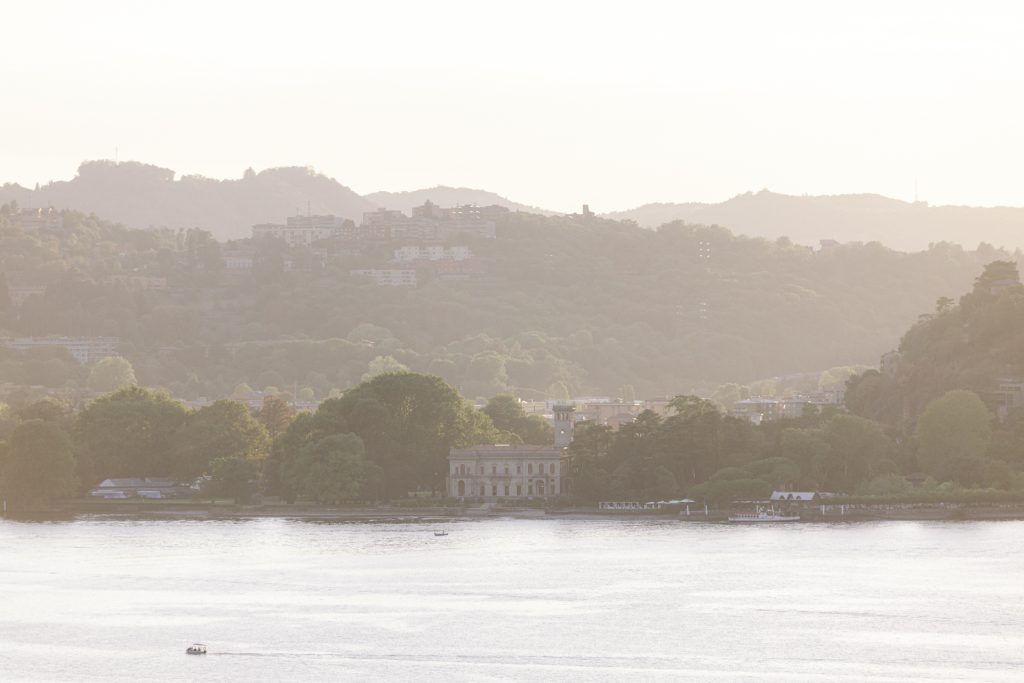
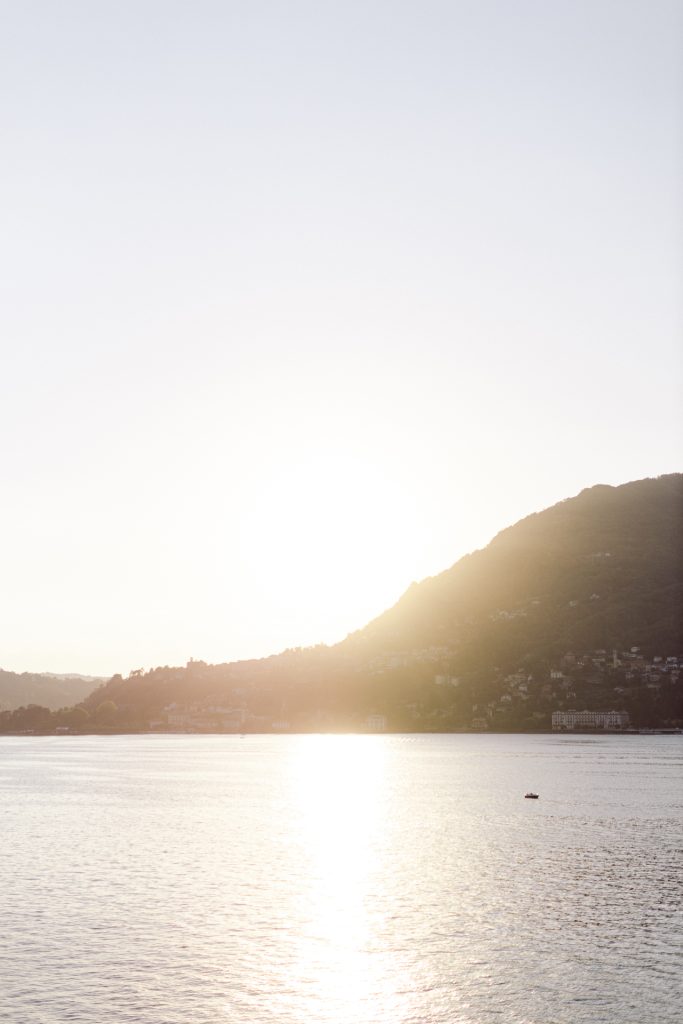
The lake sits in the shape of an upside-down Y, hemmed in on every side by the foothills of the Alps. Cypress trees lean over the water next to centuries-old villas, fishing villages cling to the shore below mountains that still have snow on them in May, and the light — genuinely, this isn’t just a photographer’s line — changes constantly as it moves across the water and bounces off the peaks. Mornings here are soft and a little hazy. Evenings turn gold and then a deep blue that photographs like nothing else in Italy.
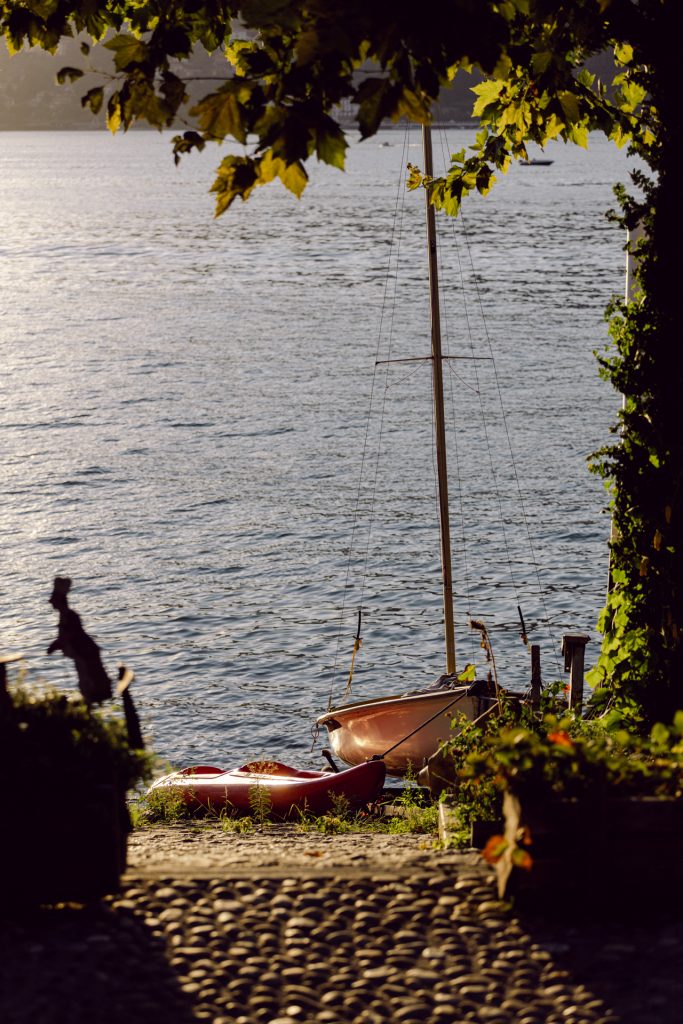
For an elopement, the lake offers something that’s surprisingly rare: variety within a tiny radius. In a single morning you can go from a quiet stone garden, to a private dock, to a wooden boat in the middle of the water, to a cobblestone village alley — without ever driving more than twenty minutes. Few places in the world let you build that much visual range into one day without genuinely traveling.
It also offers privacy, if you know where to look for it. Lake Como is a famous, busy destination — Bellagio in July is not a quiet place. But the lake is large, and most of its beauty is not concentrated in the three or four towns everyone has seen on Instagram. A short drive or boat ride away from the obvious spots, you’ll find gardens, hidden coves, and small villas that very few tourists ever reach. That’s where the best elopement days on this lake actually happen.
2. Understanding the Geography — Lake Como Is Not One Place
This is the single most important thing to understand before you start planning, and it’s the thing almost no one explains clearly: Lake Como is roughly 50 km (31 miles) long, and each part of it has its own character, its own logistics, and its own pace. Choosing “Lake Como” as your destination is a bit like choosing “California.” You still need to choose a place within it.
The lake branches into a Y shape, with the town of Como at the southwestern tip and the city of Lecco at the southeastern tip. Here’s how I think about the different stretches:
The Southern Basin (Como town, Cernobbio, Blevio)
The widest, most accessible part of the lake, closest to Milan (about 45 minutes by car or train). Como town itself is a real working city with a beautiful old center, a cathedral, and a funicular up to Brunate for sweeping views — but it’s not where most couples picture their elopement. Just north of it, Cernobbio is genuinely special: home to Villa Pizzo and Villa d’Este, one of the most celebrated hotels in the world, and a string of elegant, less-touristy lakefront corners. This area is the easiest to reach and the most livable as a base, but it’s also the busiest with day-trippers and traffic in summer.

The Western Shore — Tremezzina (Tremezzo, Lenno, Mezzegra, Ossuccio)
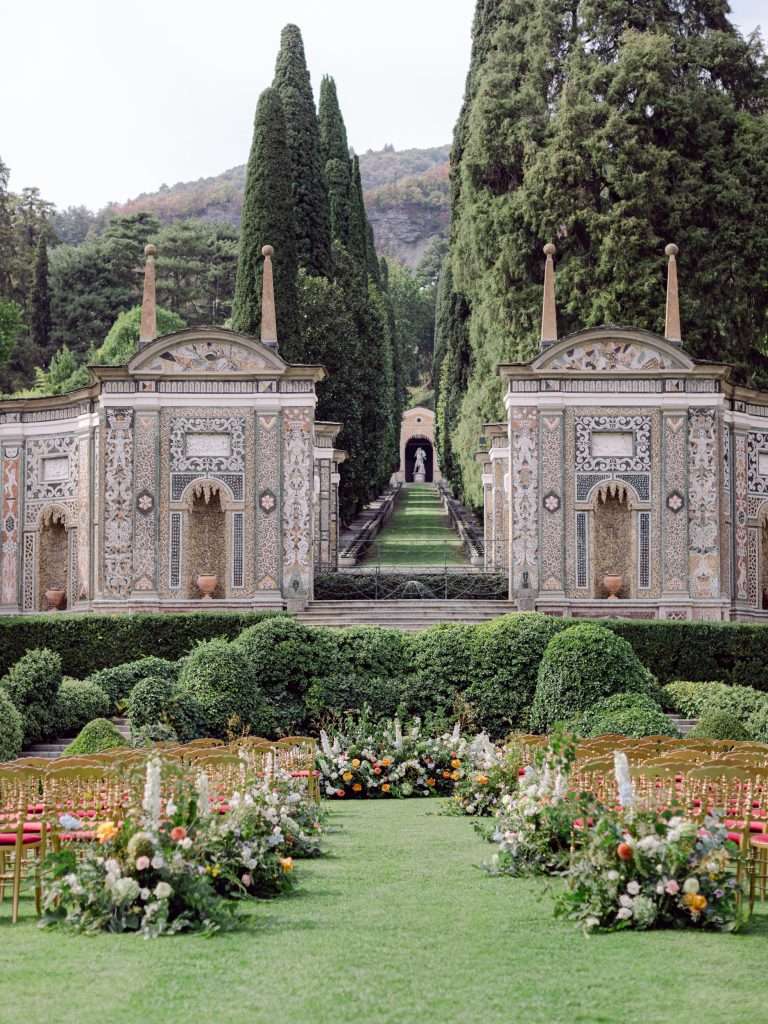
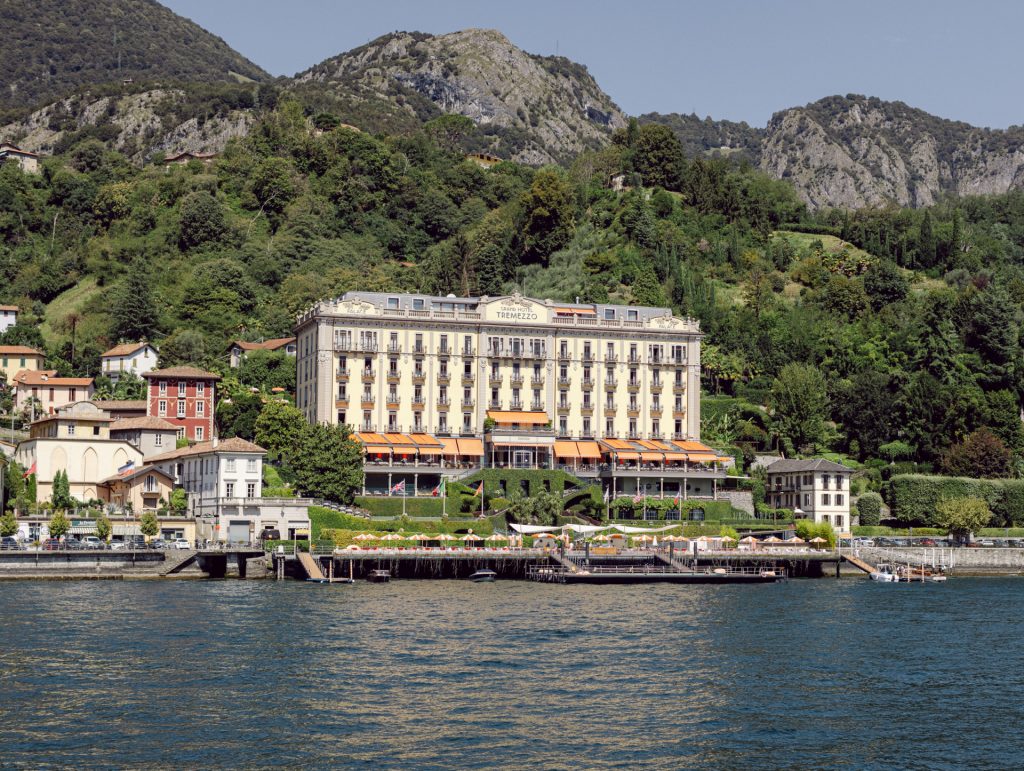
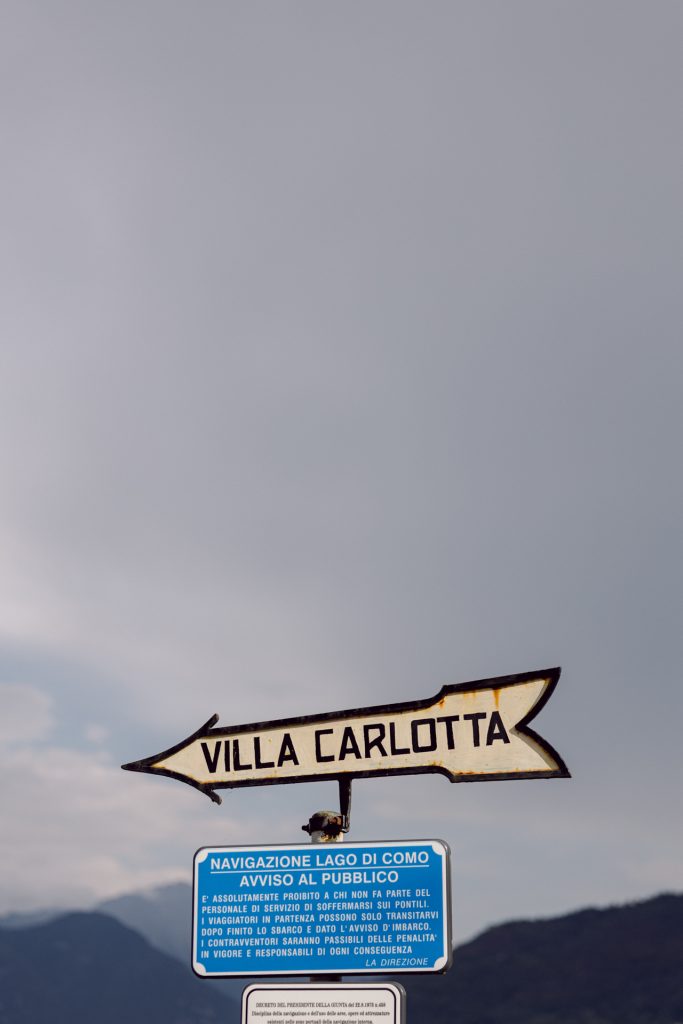
This stretch, often grouped together as “Tremezzina,” is where the lake gets genuinely cinematic — and it’s the part most people are picturing when they say “Lake Como” without realizing it. Lenno is home to Villa del Balbianello, perched on its own wooded peninsula. Tremezzo has Villa Carlotta and its botanical gardens, plus the legendary Grand Hotel Tremezzo. Ossuccio faces the lake’s only island, Isola Comacina, and has some of the most photogenic, least-crowded little churches and lakeside lanes on the entire lake. This area is reachable by car along the SS340 coast road, but boat access is what makes it feel special — many of its best spots are easiest, and sometimes only possible, to reach by water.
Laglio and the Upper West Shore (Laglio, Argegno, Brienno)
Quieter, more residential, and considerably less crowded than Tremezzina, while still being on the glamorous western shore. This is George Clooney’s stretch of the lake (his villa, Villa Oleandra, is in Laglio), and it has a particular kind of understated, old-money calm. Several of the best-value small wedding villas on the entire lake — more on those shortly — are tucked into this stretch.
Bellagio and the Center (Bellagio, the “tip of the Y”)
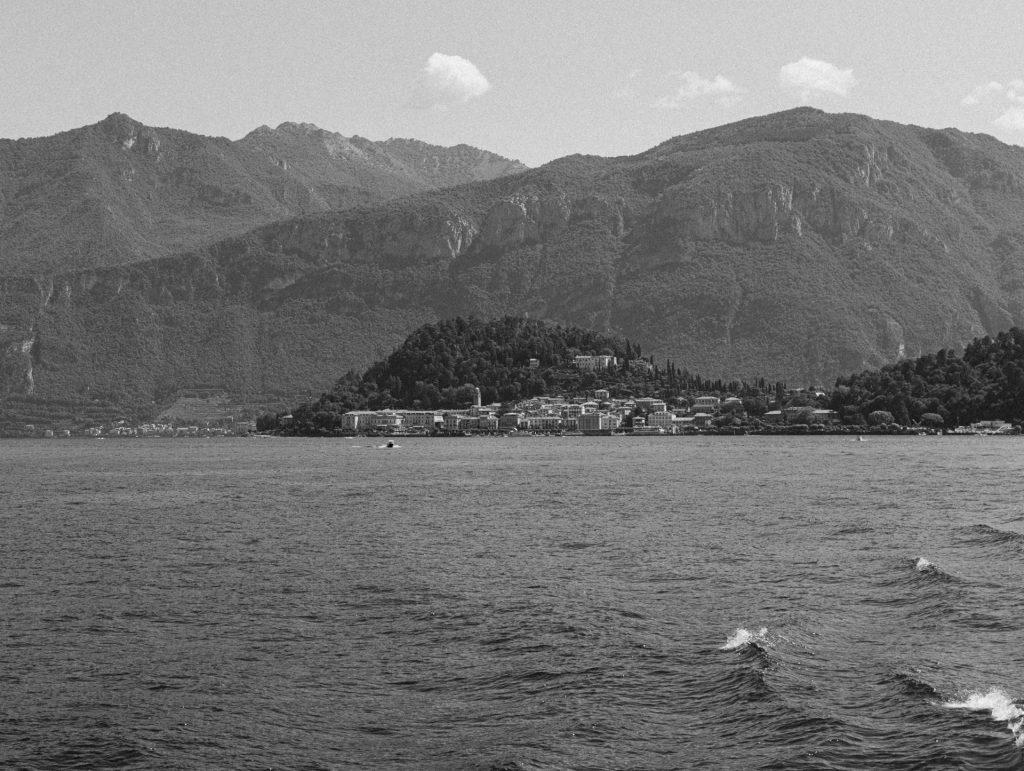
Bellagio sits exactly where the lake splits into its two southern branches, and it’s the most photographed town on Como for a reason: narrow stepped streets, a perfect little harbor, and views down both branches of the lake at once. It is also, by a wide margin, the most crowded town on the lake from late spring through early autumn. If Bellagio is non-negotiable for you, plan around the earliest morning light, a weekday, or the shoulder season — more on timing below.


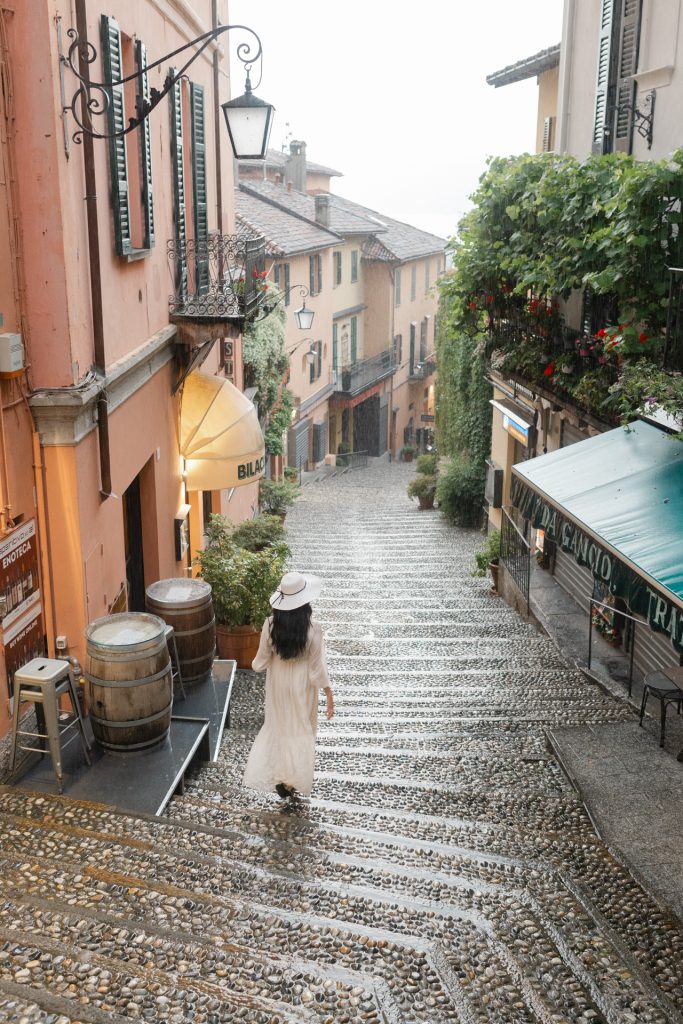
Varenna and the Eastern Shore (Varenna, Menaggio across the water, Bellano)
Varenna, on the eastern shore directly across from Menaggio, is — in my opinion as someone who works here constantly — the most underrated town on the lake. It has the romance of Bellagio with a fraction of the crowds: a tiny harbor, a passeggiata that hugs the cliffside above the water, and two genuinely beautiful villa gardens (Villa Monastero and Villa Cipressi) that welcome elopements warmly. Menaggio, on the opposite western shore, is a relaxed, slightly less polished lake town with excellent access to hiking above the lake and a more local, lived-in feel.

The Northern Lake — Alto Lario (Gravedona, Dongo, Domaso)
Wilder, less developed, and almost entirely overlooked by destination couples. The mountains close in more dramatically here, the water is famous for wind sports (it’s a windsurfing and kitesurfing destination), and the towns feel like real, unpolished Italian lake towns rather than tourist set pieces. If true seclusion matters more to you than the famous names, this is worth a serious look.
The Lecco Branch (Mandello del Lario, Abbadia Lariana, Lecco)
The lake’s other, eastern arm, running down toward the city of Lecco. Dramatically mountainous — the Grigna peaks rise almost straight from the water — and noticeably quieter and more local than the western and central lake. This is where I’d point a couple who wants the same mountains-meeting-water drama as Bellagio, without ever seeing another tourist.
The takeaway: before you fall in love with a single villa or village, decide what you actually want — easy access and infrastructure (south basin), iconic glamour (Tremezzina, Bellagio), quiet elegance (Laglio), or genuine seclusion (Alto Lario, the Lecco branch). That decision will shape everything else about your day.
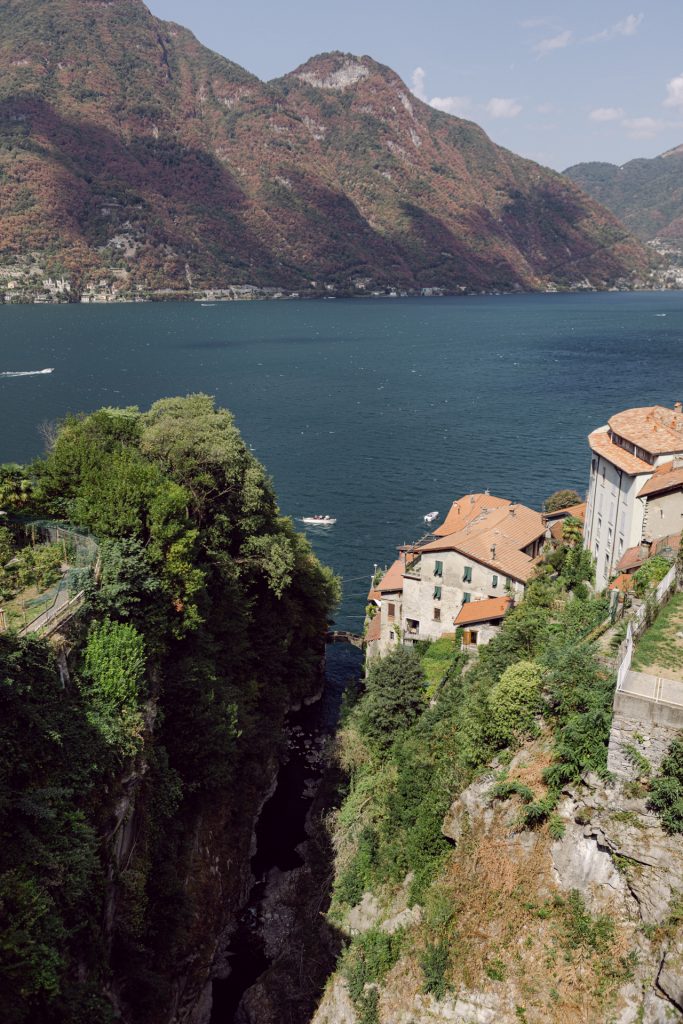
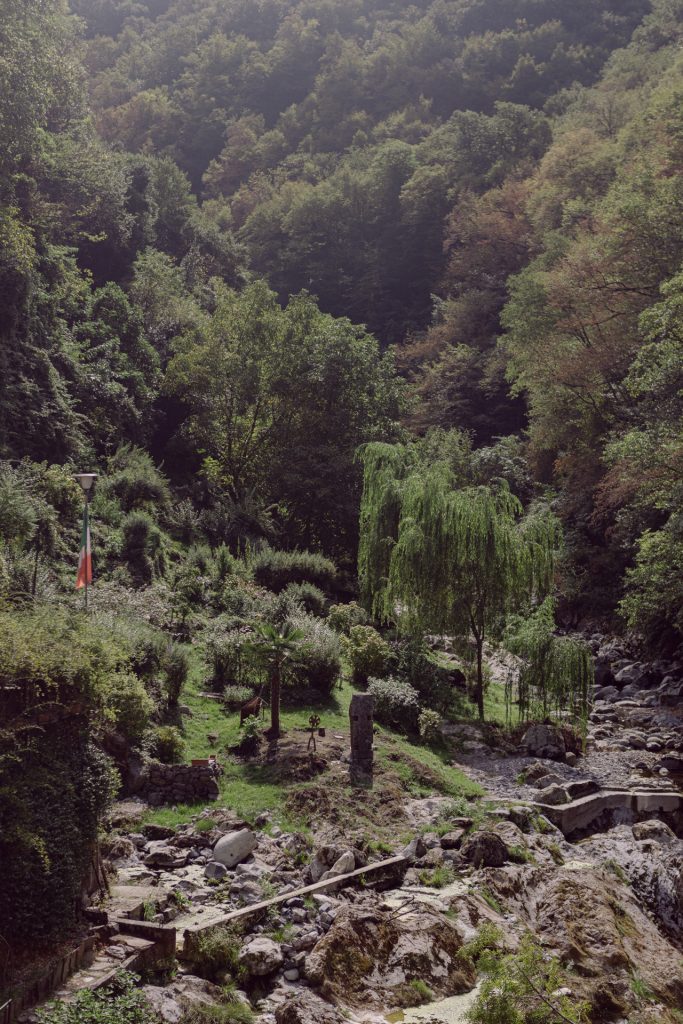
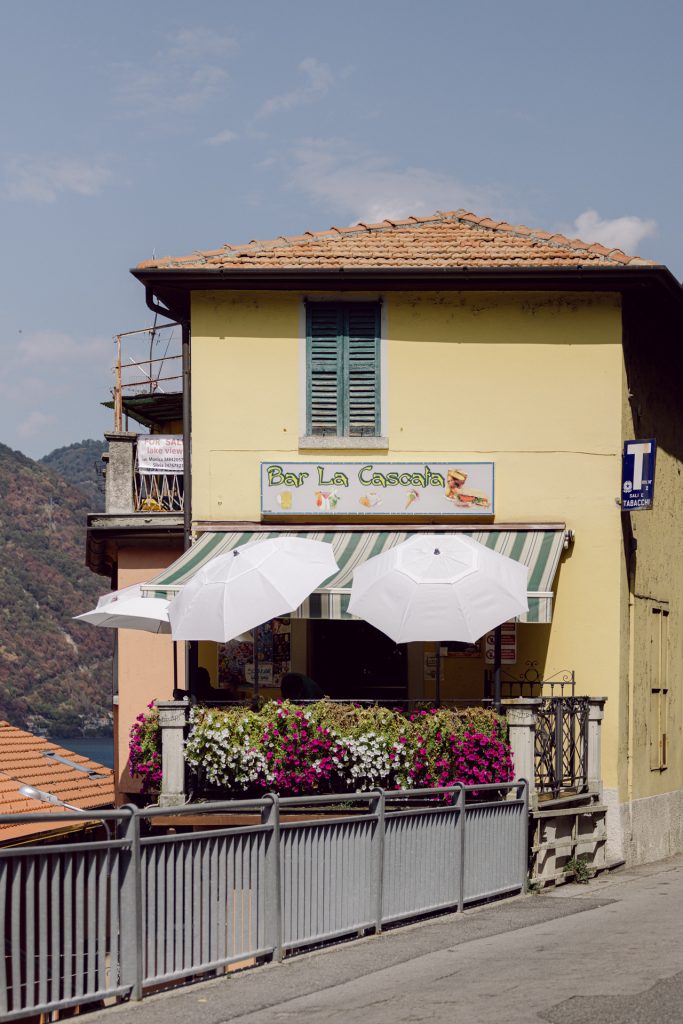
3. How You Actually Move Around the Lake
This trips up almost every couple planning their first Lake Como trip, so let’s be direct about it.
There is no single road that circles the entire lake. The roads that do exist along the shoreline (the SS340 on the west, the SS36 and SP72 on the east) are narrow, winding, and — in peak season — frequently slow due to traffic and tour buses. Driving from one end of the lake to the other can take far longer than the straight-line distance suggests.
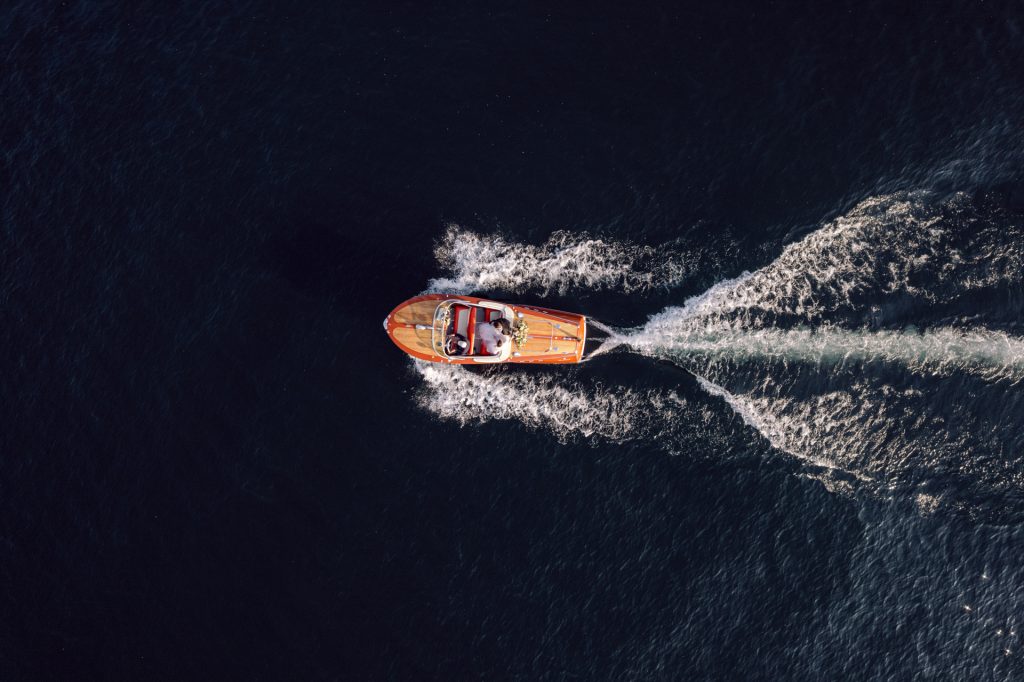
The boat is not a novelty here — it’s often the most practical way to get somewhere. Several of the lake’s most beautiful villas are far easier to reach by water than by road — Villa del Balbianello, for instance, is reachable only by private boat or a 1 km uphill walk from Lenno during opening hours. Even when a road exists, the boat is frequently faster, always more beautiful, and dramatically reduces the stress of parking (which, in towns like Bellagio and Varenna, can be genuinely difficult in summer).
Your three main options for getting around:
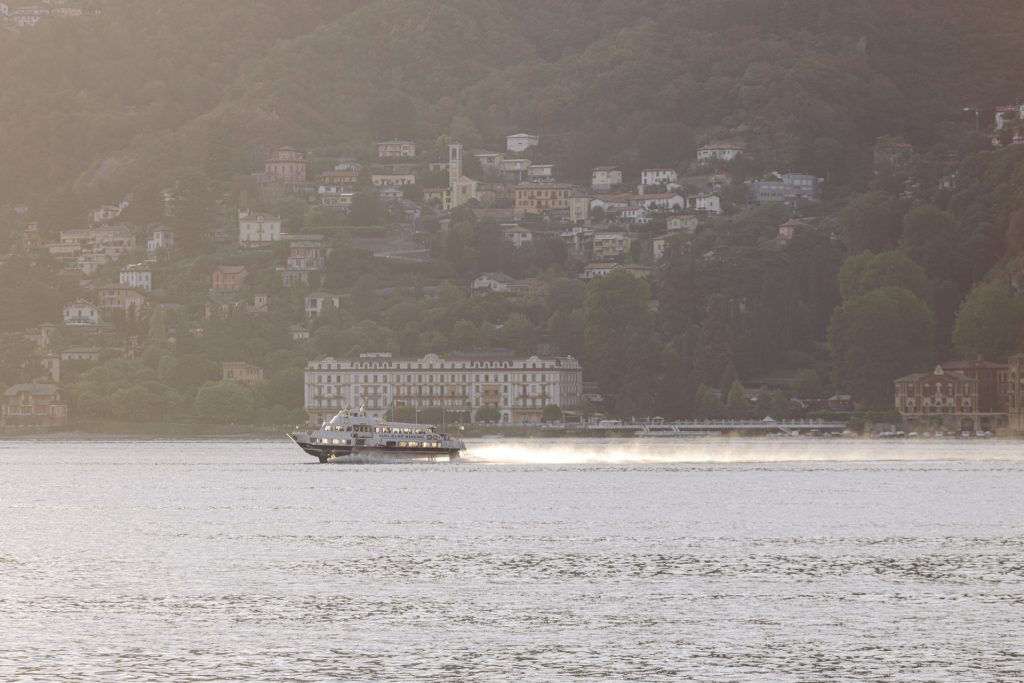
Public ferries (Navigazione Lago di Como). A reliable, scenic, and inexpensive way to move between towns, with both slower “battello” ferries and faster hydrofoil services on the main routes. Great for scouting the lake before your date, less practical for the elopement day itself, since you’re on a fixed schedule shared with everyone else.
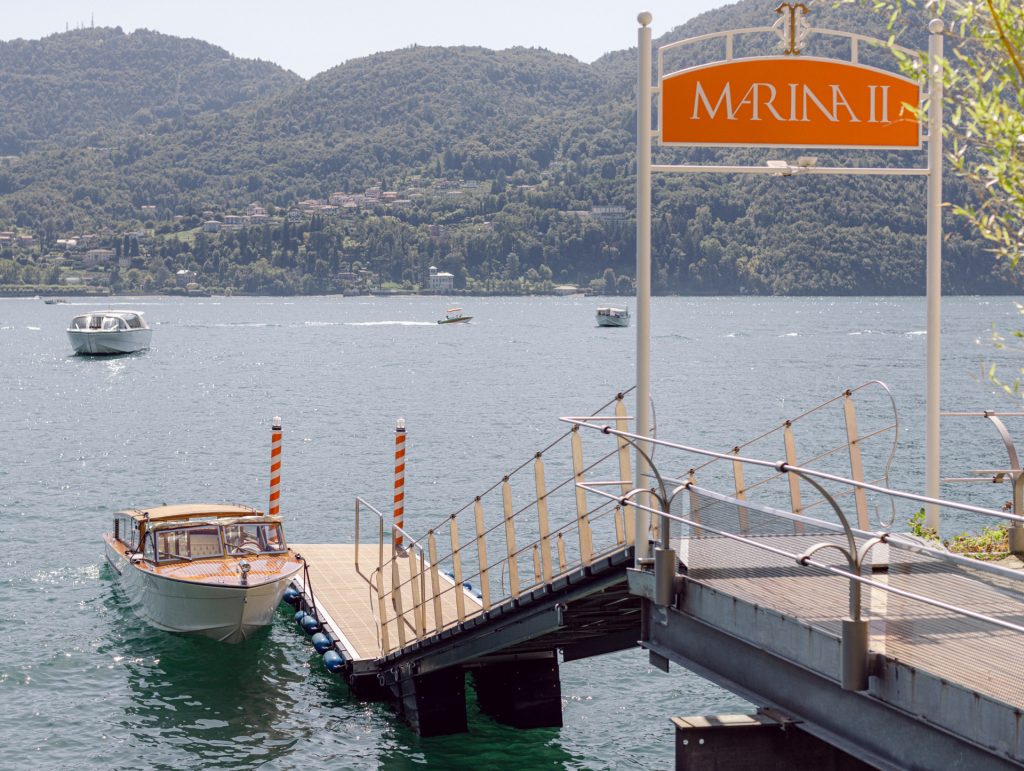
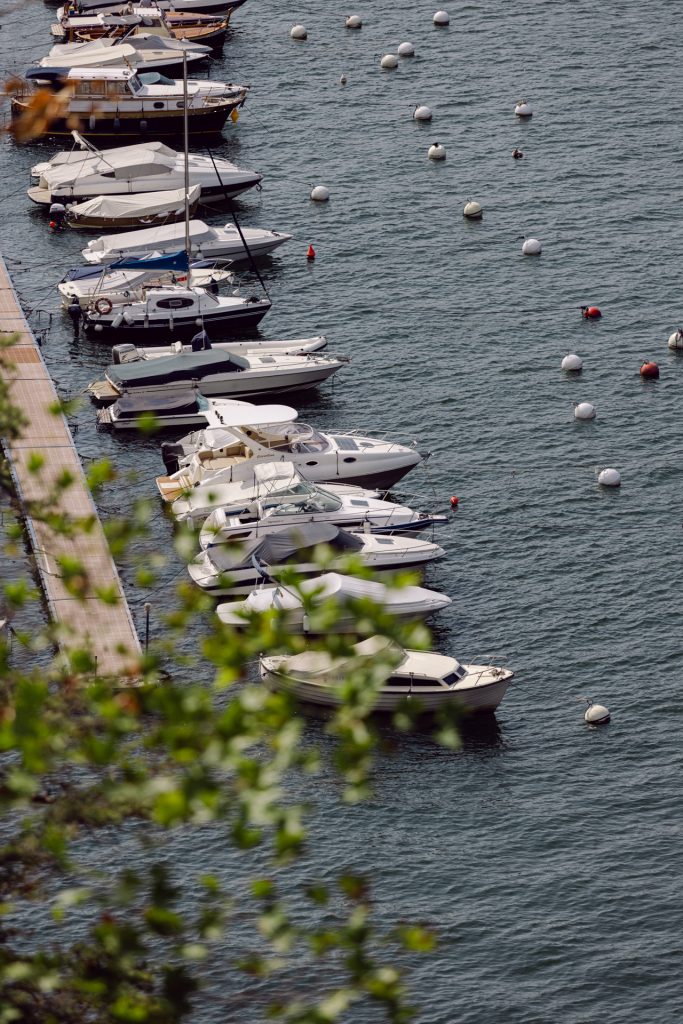
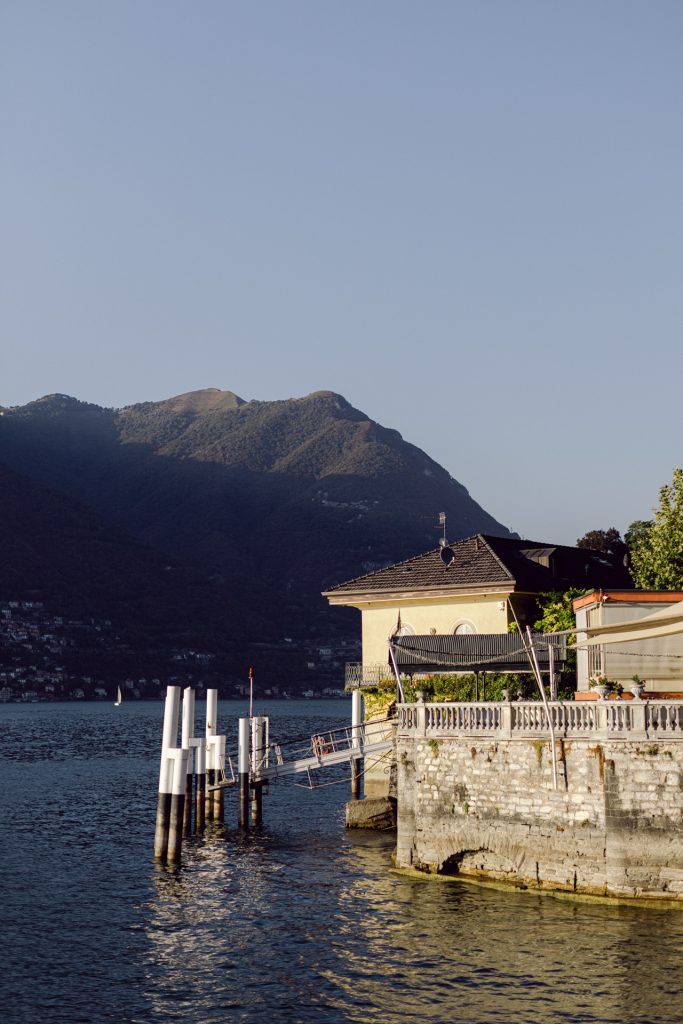
Private water taxis and boat charters. This is how almost every elopement and intimate wedding on this lake actually moves between locations. A private boat means you arrive exactly when the light is right, you’re not sharing the dock with day-trippers, and the ride itself becomes part of your photographs rather than just transportation. I cover specific operators and pricing in section 9.
Car (your own rental, or a private driver). Useful for reaching locations away from the immediate shoreline, for getting to and from the airport, and for accessing the upper-shore and northern villages where boat access is less central to daily life. Parking in the lake’s most famous towns is the main headache — if your day includes Bellagio or central Varenna, plan to park outside the historic center and walk in, or better, arrive by boat.
My honest advice: plan your day as a boat day with a car for the edges, not the other way around. The lake feels completely different — calmer, more private, more itself — once you’re seeing it from the water instead of fighting traffic to look at it from a viewpoint.
4. Symbolic vs. Legal Ceremony: What You Need to Know
Exactly as with the rest of Italy, most couples who elope on Lake Como choose a symbolic ceremony — not legally registered in Italy, completed either before arrival (so you’re already legally married when you land) or afterward, back home. This removes essentially all bureaucracy: no Certificate of No Impediment, no apostilles, no Italian municipal paperwork, no required notice period. You exchange vows wherever and however you want, with an officiant of your choosing or simply between yourselves.
Legal civil ceremonies are also possible on Lake Como, and several town halls and villas with special agreements (Villa del Balbianello has one with the local comune, for example) can host a legally binding ceremony for foreign nationals. The process requires a Certificate of No Impediment from your home country, apostilled and translated, submitted to the relevant Italian commune well in advance, and — practically speaking — a local coordinator who can manage the language and timing. If legal marriage in Italy genuinely matters to you, start that process at least six months ahead and loop in a local planner early.
My honest recommendation, as with everywhere else I work in Italy: if what matters most is the meaning and the images, a symbolic ceremony lets you design your day with total freedom. If legal recognition in Italy specifically matters to you, build in the extra time and the extra help — it’s entirely doable, just not spontaneous.

5. The Best Time of Year for a Lake Como Elopement
April to early June
This is, for most photographers and planners who actually work here, the best window of the year. The gardens are at their most extravagant — wisteria, azaleas, and the famous camellias of the villa gardens are all blooming through this period — the light is soft, and the summer crowds haven’t arrived yet. It’s also the most changeable season for weather: showers pass through, sometimes without much warning, but that’s exactly what keeps the gardens this lush. Build a flexible, light-driven day rather than a single-location plan, and you’ll be glad you did.
Mid-June to August
Peak season, in every sense. Long, warm evenings and the most reliably good weather of the year, paired with the heaviest crowds and the highest prices for everything from boats to restaurants. The one caveat is the summer thunderstorm: on hot afternoons, storms build over the mountains and can sweep across the lake with very little warning, usually late in the day. It’s one more reason the answer here is the same one you’ll hear everywhere on this lake — go early. A 6am ceremony at a viewpoint that’s unbearable (and stormier) by afternoon is still completely yours.
September to mid-October
My personal favorite, and the season I’d recommend to most couples who ask. The light turns warmer and more golden, the worst of the crowds have gone home, the water is often still warm enough to swim in, and the villa gardens take on a slightly wilder, more romantic look as summer fades. The turn of the season can bring the occasional heavy shower — a little more likely as October goes on — but early October especially is a quiet, beautiful window before some seasonal venues and boat operators begin closing for winter.
November to March
Genuinely overlooked, and genuinely atmospheric if you’re the right kind of couple for it. This is the wettest, mistiest stretch of the year — and on this lake, that’s the whole appeal: mist over the water, empty piazzas, villa gardens stripped back to their bones, and a kind of moody, cinematic stillness you simply cannot get in July. Many seasonal restaurants and some villa gardens close or reduce hours in winter, so this season requires more flexibility and more advance research — but for couples drawn to quiet over spectacle, it’s an extraordinary option.
A practical note on rain
Wherever your date falls, plan for the possibility of rain — Lake Como is ringed by mountains, which makes the weather here genuinely changeable and quick to turn. A bright morning can cloud over by mid-afternoon, especially in summer when the heat builds storms over the peaks. None of this is a reason to worry; it’s simply a reason to plan, which is exactly what I do for you. Mornings are the most stable light and the least likely to storm (one more reason an early start wins on this lake), I build your timeline around the light so we move with the weather instead of against it, and I always keep a beautiful covered backup in reserve — a villa loggia, a stone portico, an arcade, a room with a view — so a passing shower never leaves us without somewhere gorgeous to be. For couples who want to take weather almost entirely off the table, splitting coverage across two days means a single grey window can never threaten the whole elopement.
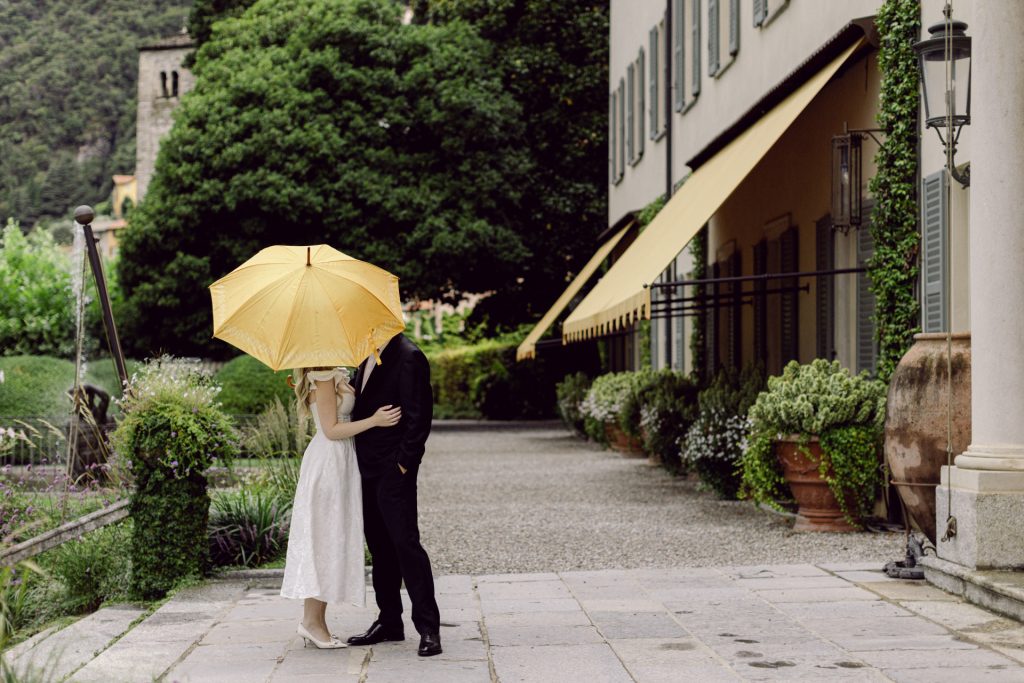
And here’s the part most couples don’t expect: rain can be the best thing that happens to your photographs. Some of my most atmospheric Lake Como images have come from exactly these days — mist low on the water, dramatic skies over the mountains, reflections on wet cobblestones, the two of you under a single umbrella with the lake to yourselves because everyone else has gone inside. Pack a simple, elegant umbrella (a clear one photographs beautifully) and a light wrap, trust the plan, and let the lake do what it does. A little rain rarely interrupts the day — more often, it’s the thing that makes it unforgettable.
A practical note on weekdays
Choose a weekday if you possibly can, regardless of season. On Lake Como specifically, weekday bookings are not just quieter — many villas, boats, and restaurants charge meaningfully less Monday through Thursday than on weekends, and the difference in crowd levels at places like Bellagio or Villa del Balbianello is dramatic.
6. The Best Locations and Venues for an Elopement or Intimate Wedding
This is the section most guides get wrong. Most “Lake Como wedding venue” lists are built for 100+ guest receptions, and they default to the same five enormous, extremely expensive estates every time (Villa Erba, Villa Pizzo, Villa Balbiano, Villa del Balbianello at full buyout). None of those make sense for two people, or for a true intimate wedding of 10–30 guests.
Here is what actually makes sense at elopement and small-wedding scale, organized by what each place is actually good for. Prices below are 2026 reference ranges gathered from venues and planners working on the lake; always confirm current rates directly, as they shift season to season.
For a ceremony only (no reception needed) — public gardens and villas
Villa Monastero, Varenna. A long, narrow botanical garden running directly along the eastern shore, with the mountains reflected in the water on one side and a genuinely beautiful historic residence on the other. It welcomes elopement ceremonies and photography warmly, has its own small pier for boat arrivals, and — because it’s in Varenna rather than Bellagio — is dramatically calmer. This is one of my most-recommended elopement locations on the entire lake. For a private session, Villa Monastero charges by the hour rather than a flat rental — around €300/hour in the open garden, €1,000/hour for exclusive use of the Loggia or the neoclassical Tempietto, and €1,300/hour for the Glorietta terrace, plus €300/hour outside public opening hours. Symbolic ceremonies are welcome too (up to 30 guests bookable online, larger groups by request), and booking is required at least two weeks ahead.
Villa Cipressi, Varenna. Right next door to Villa Monastero, with terraced botanical gardens that drop straight down to the water. Ceremony-only fees here (the gazebo area) start around €4,000, with a full terrace ceremony from around €8,000 — making it one of the more accessible “name” villa gardens on the lake. It also has a small hotel on-site if you want to stay where you marry.
Gardens of Villa Melzi, Bellagio. Among the most beautiful gardens on the lake, but worth knowing upfront: Villa Melzi cannot be privately hired for ceremonies or events. You can, with advance permission, arrange a private photography session in the gardens — which makes it an excellent location for a portrait segment of your day, just not for the vows themselves.
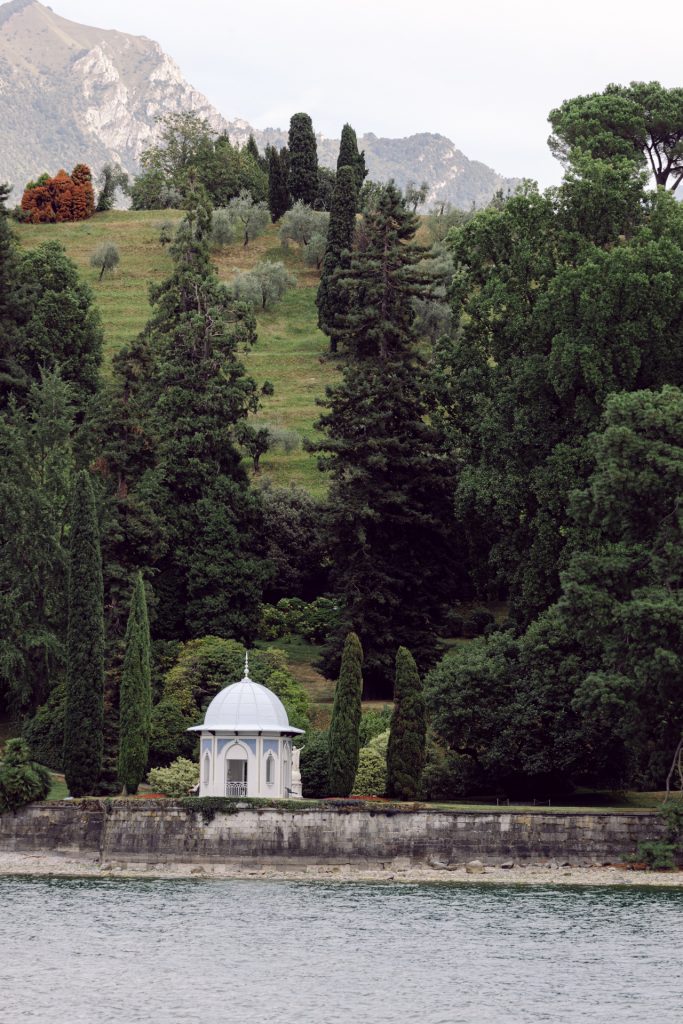
Villa del Balbianello, Lenno. The single most recognizable villa on the lake (and a genuine film location — Star Wars: Attack of the Clones and the Casino Royale finale were both shot here). It’s worth understanding that the villa offers two very different things. The first is a private photography session in the gardens — just the two of you and your photographer, with no ceremony permitted — bookable directly from FAI at a fixed fee: roughly €400–€600 during public opening hours (with visitors present) or €3,000 for exclusive access after hours or on a closed day. Bookings for this open only about three months ahead. The second is a wedding ceremony, a separate and far more significant FAI event booking — indicatively from around €12,000, rising well beyond for weekends and premium dates — arranged six to twelve months ahead, with the civil ceremony performed by an officiant from the Comune di Tremezzina. Either way, you reach the villa by private boat or a 1 km uphill walk (during opening hours), photography is gardens-only (no interiors), and it’s open mid-March to mid-November, closed Mondays and Wednesdays. For most elopement couples, the smartest use is a private after-hours photo session here for the portraits, with the vows themselves exchanged somewhere less restricted — then dinner elsewhere.
For an intimate wedding with guests (roughly 8–40 people) — small private villas
These are the venues most “Lake Como wedding” guides never mention, because they’re not built for 150-person receptions. They’re built for exactly the kind of day you’re planning.
Villa Carminati Resta, western shore. An 18th-century lakefront villa with direct lake access, accommodation for up to 8 people on-site, a lakefront garden ceremony space, a courtyard for cocktail hour, and indoor lake-view reception space. Venue-only rental runs roughly €7,000 (weekday) to €8,500 (weekend) in high season, or up to about €9,700 with the loft and greenhouse included; renting the full property including the on-site rooms runs €9,200–€11,000 per night. Prices drop further outside May–September. For a genuinely intimate group, you can also rent just the lakefront garden, loft, and courtyard (skipping the main building entirely) for around €4,700.
Villa Regina Teodolinda, Laglio. Right on the water with direct boat access and a pool, six suites sleeping 12 guests, and a relaxed villa-holiday feel rather than a formal event-venue feel — lovely for a couple who wants their closest family actually staying with them. High-season nightly rates run around €12,200 (weekend) to €10,200 (midweek), dropping to roughly €6,100–€8,500 in low season. Note the structure here: a 50-guest minimum spend applies regardless of your actual headcount, and stays are capped at two nights maximum (with an event required on both, if you book two).
Relais Villa Vittoria, Laglio. A boutique hotel next door to Teodolinda, sleeping 26 across 13 rooms (plus 4 more at its sister property), with alfresco ceremony and cocktail space and an indoor winery for dancing. Under 30 guests, you don’t need to buy out the whole property — meaning the venue fee itself can be zero, and you simply pay for the rooms you use. Above 30 guests, exclusive use of the property runs from about €6,200 (low season) to €12,800 (high season), with room rates separately ranging €5,100–€9,000 per night for all 13 rooms, breakfast included.
Villa Ponti Bella Vista, hillside above the lake. A panoramic hilltop property with the warmth of an Alpine-meets-Tuscan atmosphere, away from the lakeside crowds entirely, and especially well suited to a small, quiet ceremony where the view itself is the centerpiece.
Villa la Ruga, Argegno. Roughly 20 minutes from Como town, with direct lake access and a lived-in, “secret Italian home” feel rather than a polished event space — a strong option for couples who want authenticity over grandeur.
Villa Marina, Bellano. A private hillside home rather than a purpose-built venue, with a secluded garden and uninterrupted views — genuinely one of the better-value, lower-profile options on the lake for couples who care more about atmosphere than name recognition.
Villa Noseda, Moltrasio. A pieds-dans-l’eau family villa sitting directly on the water in Moltrasio — next door to Passalacqua, the world’s top-rated hotel, but considerably more private and personal in character. Run by brothers Elia and Emmanuel with their sister, it welcomes one couple or group at a time, making the exclusivity feel genuine rather than policy. Its 5,000 sq ft English garden has a lakeside wisteria arch, a fountain, and a panoramic terrace; the private dock and sundeck sit at the water’s edge; and the villa’s own 1969 Riva Olympic (Elisabetta — hull number 30 of only 264 ever built, ASI Targa Oro awarded) is available for private lake tours through nosedaclassicboats.com. Ideal for intimate elopements and small weddings of up to 12 guests; on-site accommodation is one lakeview suite (sleeping 2 adults, with a connected room for children). Pricing is inquiry-based. The ferry stop is a 3-minute walk away, and the bus stops directly outside the gates — making it one of the most logistically easy private venues on the lake. Multiple recent elopement couples have left five-star Google reviews specifically naming it as the highlight of their entire Italy trip.
What I’d steer you away from at this scale
Villa Erba (capacity up to 450+), Villa Pizzo (around 200), and full-buyout Villa Balbiano or Villa del Balbianello receptions are extraordinary venues — and entirely built for a different kind of wedding. At elopement or small-wedding scale, you’ll pay a premium for infrastructure you don’t need (required outside vendor lists, large minimum spends, multi-night buyout requirements). Save them for a future big celebration, and let your elopement live somewhere built to its size instead.
You don’t actually need to rent a venue at all
Here’s something worth saying plainly, because almost no guide to this lake says it: an elopement doesn’t require a rented villa, and your vows don’t need to happen in a “venue.” For two people, the entire idea of an elopement is that the day is built around you, not around a piece of real estate. One of the simplest, most beautiful versions of a Lake Como elopement is built around a stay at a stunning hotel instead — and then we use the lake itself as the rest of the day.
Practically, this looks like booking a beautiful room for two or three nights — anywhere from roughly €700 a night at a well-located mid-range property up to €3,000+ a night at the lake’s most iconic five-star addresses (or over €10,000 for a private suite in the exclusive Villa Passalacqua) — and then building the day around it: your vows exchanged on the hotel’s own terrace, lawn, or private dock (many of the lake’s best hotels have exactly this), portraits through the property’s gardens and pools, a private boat pulling away from the hotel’s own pier, a vintage car winding along the shore between towns, and dinner at a restaurant we choose together. No venue fee, no separate ceremony permit, no negotiating with a villa’s events office — just your stay, the lake, and the day we design around it.
A few hotels on the lake lend themselves especially well to this approach, each with its own personality:
Grand Hotel Tremezzo, Tremezzo. Possibly the single best hotel on the lake for this kind of day — Belle Époque grandeur, a private beach, three pools including the famous floating “WOW” pool on the water itself, and sweeping views straight across to Bellagio. Rooms generally start in the €800–€1,500+ per night range in high season, climbing well beyond that for suites.
Passalacqua, Moltrasio. The Tremezzo family’s smaller, even more exclusive sister hotel — only a handful of rooms, an enormous infinity pool on the water, and a quietly extraordinary, almost private-home atmosphere. Widely considered the most coveted single stay on the lake; rates typically start above €1,800 per night and rise sharply for suites.
Il Sereno, Torno. A sleek, minimalist all-suite hotel with floor-to-ceiling lake views from every room and a private terrace on each one — a strong fit for couples who want contemporary elegance rather than period grandeur. Rates generally start around €900–€1,400 per night.
Villa d’Este, Cernobbio. One of the most celebrated hotels in the world, with 25 acres of gardens, multiple pools, and the closest thing this lake has to old European royal-resort atmosphere — and the easiest of this group to reach, being right at the southern tip near Como town. Rates typically start around €700–€1,200 per night depending on room category, with private villas on the grounds available for considerably more.
Grand Hotel Villa Serbelloni, Bellagio. The only five-star hotel in Bellagio itself, with its own private beach, two pools, and the largest spa on the lake — ideal if being inside Bellagio’s old center, rather than a short drive from it, matters to you. Rates generally start around €700–€1,300 per night.
Villa Lario Resort, Pognana Lario. Quieter and considerably more private than the names above, set on its own two acres directly on the water with an infinity pool and a private pontoon — a good option for couples who want a five-star feel without the crowds that come with the lake’s most famous addresses. Rates generally run €500–€900 per night.
For a day built this way, here’s the kind of activity list I’d build with you instead of a venue rental: a private boat departing right from your hotel’s own dock, a vintage Fiat 500 or Alfa Romeo Spider self-drive tour along the shore between towns (roughly €150–€350 for a few hours, several local operators deliver the car directly to your hotel), a stop for portraits at a public garden like Villa Carlotta or Villa Monastero, lunch or aperitivo at the hotel itself or a nearby trattoria, and dinner at one of the restaurants in section 8.

7. Things to Do — Building a Full Elopement Day
Whether you’re booking four hours or a full sunrise-to-sunset day, here’s the menu of experiences I draw from when designing a Lake Como elopement:
- A private boat tour of the lake, gliding past Villa del Balbianello’s peninsula, the botanical terraces of Villa Carlotta, and the dramatic Orrido di Nesso gorge and waterfall
- A swim stop mid-lake, with the boat anchored somewhere quiet — genuinely one of the most joyful, least-planned-feeling parts of a long boat day
- A visit to Isola Comacina, the lake’s only island, with its Roman-era ruins and small artists’ colony (confirm current access — restrictions have changed in recent years)
- A walk through Villa Carlotta’s gardens, Tremezzo — terraced, full of camellias and azaleas in spring, with marble sculpture rooms inside if weather turns
- Aperitivo on the water at golden hour, prosecco in hand, the mountains turning pink behind you
- A morning hike above the lake — Sentiero del Viandante on the eastern shore, or the trails above Menaggio and Argegno, for couples who want elevation and a view down over the whole basin
- A funicular ride from Como up to Brunate, for a wide panoramic view over the southern basin and the Alps beyond
- A visit to Castello di Vezio, above Varenna, including (seasonally) a falconry display — a fun, unexpected addition for couples who want a little adventure in the day
- Coffee and pastries in a quiet lakeside café before the town wakes up — Varenna and Menaggio both do this beautifully
- A private wine tasting, several vineyards in the hills above the lake offer small-group tastings with a view
- An evening gelato walk through Bellagio or Varenna once the day-trippers have gone home
- A sunset swim directly from a private dock, if your villa or hotel has one
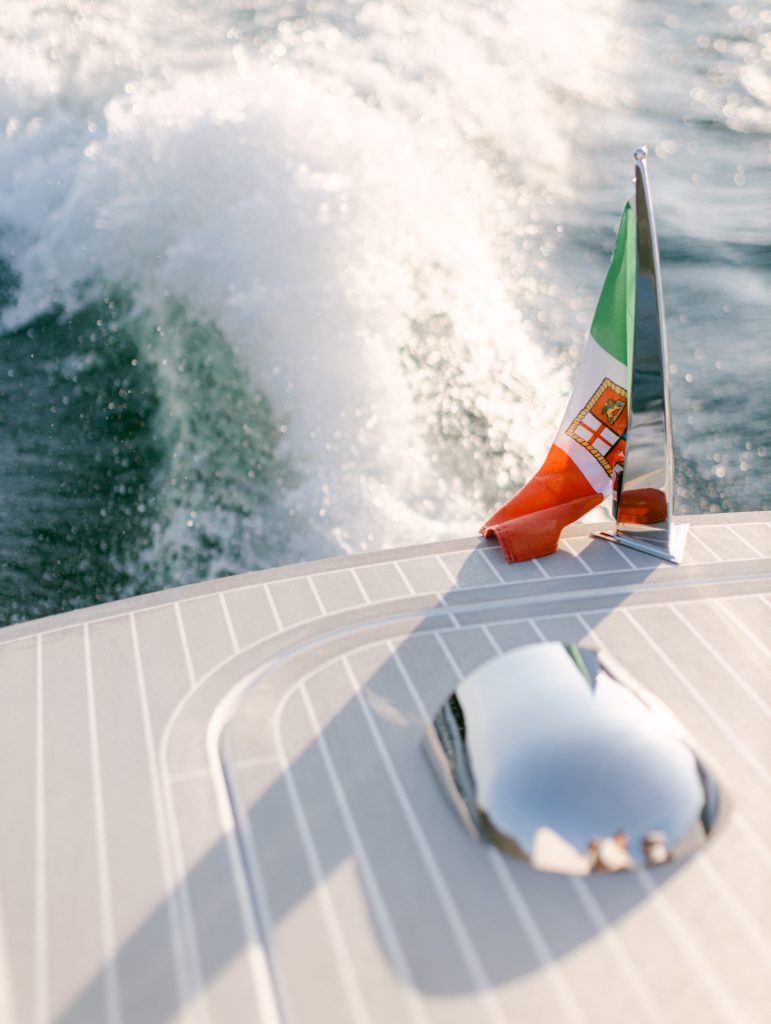
- A classic wooden boat “getaway” departure — genuinely one of the most photogenic closing moments of any Lake Como elopement day
A long day works best when it isn’t built as one continuous photoshoot. The most memorable Lake Como elopements I’ve photographed treat the boat ride, the lunch, the swim, and the walk through town as part of the story — not as gaps between the “real” moments.


8. Where to Eat: Restaurants for Your Elopement Dinner
Michelin-starred, for a true celebration meal
Mistral, at Grand Hotel Villa Serbelloni, Bellagio. One Michelin star under chef Ettore Bocchia, famous for his pioneering molecular Italian cuisine — the only starred fine-dining room in Bellagio itself, right at the tip of the promontory where the lake splits in two. The restaurant reopened in a fully renovated setting in 2026, so confirm current details when you reserve.
Passalacqua, Moltrasio. One Michelin star, chef Viviana Varese, inside Villa Passalacqua — the hotel named #1 in the world by the World’s 50 Best. Currently one of the most sought-after tables on the entire lake; book as far ahead as you possibly can.
Materia, Cernobbio. One Michelin star, chef Davide Caranchini (trained at Noma and Le Gavroche before opening here in 2016). A small, 30-cover room a short walk from Villa d’Este, built around a vegetable-forward, constantly rotating tasting menu and lake fish like agone cured in fennel pollen. This is the hardest weekday reservation on the lake — book well ahead.
Il Sereno al Lago, Torno. One Michelin star, chef Raffaele Lenzi, inside the Il Sereno hotel. A genuinely special lakefront setting with a seven-course tasting menu option and an emphasis on raw, local ingredients. Closes seasonally — confirm reopening dates before you build a date around it.
Kitchen, at the Sheraton Lake Como, Como. One Michelin star, chef Andrea Casali — a more accessible (and more bookable) starred option right in Como town if your day is based on the southern basin.
Excellent, well-loved, and easier to book
Ristorante Alle Darsene di Loppia, Bellagio. Tucked beside the Villa Melzi gardens at the Loppia harbor, with outdoor pergola seating in summer — consistently one of the most romantic, least-touristy-feeling dinners in Bellagio itself.
Ristorante La Punta, Bellagio. At the very northern tip of the town, with views down both branches of the lake — a beautiful spot for a celebratory lunch or an early dinner with a sunset still in front of you.
Trattoria San Giacomo, Bellagio. A small, family-run trattoria a little off the main tourist path, known for hearty, traditional dishes like wild boar ragù — the kind of warm, unpretentious meal that’s a lovely contrast after a more formal ceremony.
Ristorante La Vista, at Albergo Milano, Varenna. A romantic open-air terrace directly over the water with panoramic Alpine views, lake-fish-forward dishes, and a noticeably calmer, more intimate atmosphere than the equivalent restaurants in Bellagio. It’s seasonal — open evenings from April to late October, closed Tuesdays — so check it fits your dates.
Visteria, at Hotel Royal Victoria, Varenna. A refined tasting-menu restaurant under a wisteria-laden trellis — an elegant, slightly more formal option for a couple who wants a proper multi-course celebration dinner without the Michelin price tag.
A practical note: in several lakeside towns (Varenna especially), the best small restaurants take reservations with a cash deposit and book out well ahead in peak season — plan your dinner booking at the same time you confirm your date, not the week before.
9. Boat and Car Rental: Getting Around for the Day
Boats
Prices below reflect 2026 market ranges across the lake’s main operators.
- Self-drive motorboats (under 40hp, no license required): roughly €100–€350 for a few hours, depending on operator and season
- Captained modern motorboat / RIB tours: roughly €200–€400 per hour, or €600–€1,100 for a 2–3 hour private tour including fuel and a welcome prosecco
- Classic wooden “Riva-style” boats with skipper: roughly €400–€1,300 per hour depending on the model, or from about €350 for a shorter Venetian-style water-taxi transfer
- Venetian water taxis / limousines (covered cabin, up to 8–10 passengers): from around €350–€400 for shorter charters
Operators worth knowing: Como Classic Boats and Lake Como Water Taxi (both based around Varenna and Como town), Fercap Lake Como, and Como Boat Rental in Como town — all offer private charters specifically for weddings, elopements, and photography sessions, and most are used to accommodating a photographer on board for a modest extra fee.
A private boat is, in my experience, the single best add-on for a Lake Como elopement day — it solves transportation, becomes part of your photographs, and gives you privacy that no road-based itinerary can match.
Cars
A rental car is genuinely useful for reaching hillside villas, hiking trailheads, and the upper and northern shore, and essential if you’re combining your elopement with travel elsewhere in Italy. Expect roughly €60–€150 per day depending on car class and season; book well ahead in summer, when lakefront rental counters sell out. If you’d rather not drive the lake’s narrower roads yourself, a private driver for the day is a comfortable alternative and easy to arrange locally.

10. What a Lake Como Elopement Day Actually Looks Like
When you book a number of hours with me, that time is continuous. I’m there from the first quiet moment to the last — not dropping in for the ceremony and reappearing at sunset. There are no gaps in the story. The drive between two villages, the boat ride across the water, the slow lunch in the middle of the day — none of that is a pause in the coverage. It’s part of your day, and it’s some of my favourite work.
What changes from couple to couple isn’t whether I’m there — it’s when those hours fall, and how they’re spread across the day. And because I plan every elopement around the light, the timing matters. In June the sun is up by around 5:35 in the morning and doesn’t set until past nine at night, which gives us an enormous, generous day to work with — soft empty mornings, long golden evenings, and everything in between. I design your timeline so the most beautiful light lands on the moments that matter most.
There are four ways to shape it:
- The Mini Elopement Experience — 4 hours, one location. A single, beautifully timed window: your ceremony and portraits in one extraordinary place, at the best hour of the day. Sunrise or sunset, just the two of you. Simple on the outside, unforgettable on the inside.
- The Half Day — 8 hours. The one most couples choose. Enough time to explore two or three places, say your vows somewhere quiet, and finish on the most magical light Lake Como has to offer.
- The Full Day — 12 hours. The whole story in a single day, beginning to end — a slow morning, a real adventure, the ceremony, and a candlelit dinner as the last colour leaves the sky.
- The Custom 2-Day Experience — 16 hours across two days. For couples who want the unhurried version, and often a second world entirely — the alpine lake on one day, somewhere like Venice on the next.
Here’s what three of those can actually look like. These are illustrations, not scripts — your day is built entirely around the two of you, and I always leave room to breathe, so you’re never watching the clock or rushing to the next thing.
The Half Day · 8 Continuous Hours, One Day
An eastern-shore day around Varenna, timed midday-to-sunset so it finishes on the best light. Real June hours below — the exact clock shifts with the season.
1:00 PM — Coverage begins. Getting ready in a room over the water in Varenna — the details, the dress, hair and makeup, the quiet before it all begins.
2:15 PM — The first look on the Passeggiata degli Innamorati, Varenna’s lakeside “walk of lovers” — an unhurried moment to see each other and let the day sink in.
2:45 PM — Up to Castello di Vezio, the medieval watchtower above Varenna, for the falconry display and a view straight down the length of the lake. A little adventure, and a completely different backdrop.
4:00 PM — Onto the water. A private boat carries you across to a quiet cove — a swim, a drink, a slow drift with no one else around.
5:15 PM — Private, after-hours access to the Villa Cipressi gardens — the terraced botanical gardens on the water, the day-trippers gone, the place effectively yours.
6:00 PM — The ceremony in the gardens as the light begins to turn gold.
6:45 PM — Champagne and your first portraits as a married couple, along the garden’s waterfront.
7:45 PM — Golden hour on the Varenna waterfront and back on the water, as the peaks turn pink.
8:45 PM — Sunset (~9:10 PM), then dinner begins on a terrace over the lake — Visteria at the Royal Victoria, or La Vista at the Albergo Milano — as I capture the last, quiet frames.
9:00 PM — Coverage ends.
The Full Day · 12 Continuous Hours, One Day
The whole story, beginning to end, on the central and western lake — the same relaxed morning swim my couples love, now with real room to breathe and the day building to a candlelit dinner at sunset. If you were staying somewhere like the Grand Hotel Tremezzo:
9:00 AM — Coverage begins. A slow start — coffee on the terrace, the dress and the rings laid out, no rush at all.
9:45 AM — A morning swim in the Grand Hotel Tremezzo’s floating pool — the one that sits right on the surface of the lake — while it’s still calm and gold-lit. Natural, unhurried portraits after: wet hair, robes, laughing.
10:45 AM — Getting ready, properly. Hair, makeup, stepping into the dress — I document all of it.
12:00 PM — The first look in the gardens or on the terrace.
12:30 PM — A private vintage wooden boat — a classic Riva — collects you from the hotel dock.
1:00 PM — Lunch on Isola Comacina, the lake’s only island, at the historic Locanda dell’Isola — or a picnic laid out on the shore.
2:45 PM — A swim stop in a hidden cove and a long, slow drift. Nothing scheduled. This is your breathing room.
4:00 PM — A walk through Lenno and the Lido di Lenno — gelato, the little harbour, the afternoon softening.
5:30 PM — Aperitivo on a terrace over the water.
6:00 PM — The ceremony, on a private terrace over the water — your hotel’s own, or a nearby garden that welcomes an intimate ceremony — in the warm, low light.
6:45 PM — Private, after-hours access to Villa del Balbianello — the most famous villa on the lake, its gates closed to the public, the loggia and gardens entirely yours for portraits. (Balbianello allows private after-hours photography but not a ceremony during the session — so we exchange vows just before, then have the villa to ourselves.)
7:45 PM — Champagne and your first portraits as a married couple through the gardens and the colonnade.
8:30 PM — Golden hour on the boat, out on the open water as the sun drops toward the mountains.
9:00 PM — A candlelit dinner begins as the last colour leaves the sky.
Coverage: 9:00 AM–9:00 PM (12 hours).
The Custom 2-Day Experience · 16 Hours Across Two Days
Two 8+ hour days across two worlds — the alpine lake, and the Venetian lagoon. The days don’t have to be consecutive; a travel day sits between them, and Como to Venice is about three and a half hours by car or train. Two separate shooting windows also quietly solve the lake’s biggest risk: weather.
Day One — Lake Como · 10 hours (~11:00 AM–9:00 PM): the wedding day.
A full, moving day, anchored from Como up the western shore to the mid-lake villas. The drive, the flight and the boat rides aren’t gaps between photos — they’re the story — and there’s slack built in so it never feels rushed.
11:00 AM — Coverage begins: getting ready — the details, hair and makeup, stepping into the dress.
12:30 PM — The first look, in a private garden or on a quiet terrace.
1:00 PM — A vintage Alfa Romeo Spider, top down, along the shore road — one of the most joyful, least-posed stretches of the day.
1:45 PM — The seaplane. From Como’s Aero Club — the oldest seaplane club in the world — you lift straight off the water for a flight over the whole lake: the villas, Bellagio’s point, the mountains falling into the water.
3:00 PM — The Orrido di Nesso, from the water. A private boat carries you to the dramatic gorge where a waterfall drops into the lake beneath an ancient stone bridge — cool shade, spray, the two of you alone in a place most visitors only glimpse from above.
4:30 PM — A private wine tasting in the hills. Up into the terraced vineyards above the lake for a slow hour, a glass in hand, the water far below. (Your breathing room, too.)
6:00 PM — Private, after-hours access to a villa garden that welcomes intimate ceremonies — the gates closed to the public, the gardens entirely yours as the light turns gold.
6:30 PM — The ceremony, in the empty garden, in the warm low light, no one else in sight.
7:15 PM — Champagne and portraits through the gardens and down to the water’s edge.
8:15 PM — Golden hour into sunset (~9:10 PM) on a terrace or a dock — the portraits that hold the whole day.
9:00 PM — Coverage ends, or dinner begins.
Day Two — Venice · 6 hours (~3:30 PM–9:30 PM): the lagoon, gold to dark.
3:30 PM — Aboard the Jandona. A 1968 vintage wooden motor yacht — mahogany hull, sun decks, a masterpiece of Italian design — waiting at a quiet fondamenta. You head out across the northern lagoon, a private chef aboard.
4:15 PM — Burano. The fishermen’s island of candy-coloured houses, walked in the late afternoon just as the day-trippers leave and the lanes go quiet and saturated.
5:00 PM — A private cooking class, then dinner as you cruise. Hands in the flour with the chef, then a slow meal on the open deck as the yacht drifts back toward the city and the light turns to honey.
6:45 PM — Transfer to a classic wooden water taxi for the intimate city that the big yacht can’t reach. Dorsoduro first — the Zattere, Punta della Dogana, and Santa Maria della Salute catching the last gold.
7:30 PM — Castello: the towering brick face of the Basilica dei Santi Giovanni e Paolo, and the still, quiet canals around it.
8:15 PM — San Polo: the Rialto from the water as the lamps come on, hidden canals, the whole city beginning to glow.
8:58 PM — Sunset over the water.
9:15 PM — The beginning of the night. Night portraits in an empty, lamp-lit campo or on a bridge, the water black and mirror-still — the frames almost no one else will ever have.
9:30 PM — Coverage ends. Total across the two days: 16 hours.
My Mini Elopement Experience (4 hours, one location, from €3,800) is built for a single, beautifully timed window — often a ceremony plus one location. My Half Day Elopement Experience (8 continuous hours, from €6,200 — the collection most couples choose) covers a full day exactly like the one above, moving between two or three locations with the boat doing much of the connecting work. My Full Day Elopement Experience (12 continuous hours in a single day, from €8,000) tells the whole story from first light through post-sunset — unhurried, with nothing left out. And my Custom 2-Day Elopement Experience (16 hours split across two days, from €10,400) is built for couples who want the unhurried, two-day version — including the option of spending part of it in Milan, Venice or elsewhere nearby — with full experience design across both days.
A note on all of these: they’re built to inspire, not to schedule you to the minute. The best elopement days have space in them — room to change your mind, sit longer over lunch, jump back in the water, or simply be still together. When we plan yours, I’ll design the timeline around the two of you and the light, keep the transitions easy, and leave you free to just be in it. That’s the whole point.
11. Planning Logistics, Vendors, and What to Arrange
Getting to Lake Como
The closest airport by far is Milan Malpensa (about 45–60 minutes by car or a direct train-plus-bus combination to Como). Milan Linate and Orio al Serio (Bergamo) are both viable alternatives, roughly 1–1.5 hours away. A rental car is useful but not essential if you’re basing yourselves centrally and relying on boats and trains to move along the shoreline.
How far in advance to plan
For peak-season dates (June through August) and for any of the named villas in section 6, book six to twelve months ahead. Shoulder season (April–May, September–October) is a little more forgiving — three to six months is usually workable, though the best restaurants and boats still deserve more lead time than that. Legal ceremony paperwork, if you want it, should begin at least six months out.
Other vendors to consider
Officiant: for symbolic ceremonies, I work with several English-speaking celebrants based on the lake who specialize in personal, non-religious ceremonies. Many couples also choose to write and exchange their own vows with no officiant at all.
Hair and makeup: a number of skilled artists work across the lake, based mostly around Como town and Bellagio. Book early for summer Saturdays especially.
Florals: Lake Como’s villa gardens already do a lot of the visual work, so florals here can be simple — a single bouquet and boutonniere rather than a full installation, unless you’re hosting a small reception.
Boat operator: as covered above — book this at the same time as your venue, since the best boats and skippers fill up for peak dates.
Private dinner reservation: especially in Varenna and Bellagio, the smaller, better restaurants book out and sometimes require a deposit — secure this early, not as an afterthought.
A note that applies specifically to me: for elopements (just the two of you, no guest list), the planning above is part of what I do — location scouting, timeline building, vendor recommendations, and day-of coordination are already built into every collection. For an intimate wedding with guests, I focus on the photography itself, and recommend bringing in a dedicated Lake Como wedding planner to manage the venue, catering, and guest logistics alongside me — happy to point you toward planners I trust if that’s the shape of your day.
12. How Much Does a Lake Como Elopement Cost?
The cost of a Lake Como elopement depends entirely on the experience you want to create. A quiet sunrise ceremony overlooking the lake, an afternoon exploring hidden villages by private boat, or exchanging vows at one of the lake’s historic villas all create very different kinds of days—and naturally come with different budgets.
For most couples, the overall investment includes photography, accommodation, transportation, florals, hair and makeup, an officiant (if needed), a private boat experience, and a memorable dinner to celebrate together. While every elopement is different, most thoughtfully planned Lake Como elopements for two typically range between €6,000 and €25,000, with luxury villa celebrations and multi-day experiences exceeding that.
Typical Lake Como elopement costs (2026)
| Category | Typical investment |
|---|---|
| Photography & planning support | €3,800–€10,400 |
| Ceremony location | €0–€8,000 |
| Private villa rental | €4,700–€13,000+ |
| Private boat | €400–€1,500+ |
| Hair & makeup | €200–€450 |
| Florals | €100–€350 |
| Officiant | €300–€600 |
| Accommodation (2–3 nights) | €400–€2,000+ |
| Celebration dinner | €100–€400+ per person |
My collections begin at €3,800 for an intimate four-hour experience and range up to €10,400 for a fully customised two-day adventure. Every collection includes far more than photography. Together we design a day that feels effortless and deeply personal—from choosing locations that suit your vision and the season, to building a timeline around the best light, recommending trusted local vendors, and helping you navigate the logistics so you can stay present with each other.
Planning an elopement on Lake Como isn’t simply about finding a beautiful location. It’s knowing when a famous viewpoint will actually be quiet, which villages are worth the extra boat ride, where the evening light is at its most beautiful, and how to create a day that never feels rushed. Those small decisions shape the entire experience—and ultimately the photographs you’ll treasure for decades.
That’s why I see my role as much more than your photographer. I’m here to help you create a celebration that feels intentional from beginning to end, so when you look back on your wedding day, you remember not only how it looked, but how it felt.
13. Is Lake Como Actually the Right Fit for You?
It’s worth being honest about this before you fall further in love with the idea, because Lake Como isn’t the right setting for every couple.
It’s a strong fit if you want: refined, elegant scenery rather than rugged wilderness; a day that mixes water, mountains, and villages within a small radius; a slightly more “dressed” and polished feel than a barefoot mountain elopement; and you’re comfortable working around crowds in exchange for genuinely iconic backdrops.
It may not be the right fit if you: want total seclusion without any planning around timing (Lake Como rewards early mornings and careful logistics far more than a place like the Dolomites does); are working with a tight budget and want villa-level backdrops without villa-level costs (the lake’s famous names are genuinely expensive — its smaller villages and gardens are not); or are picturing something wild, remote, and untouched rather than elegant and curated.
If any of that gives you pause, it’s worth knowing that Lake Garda, an hour or so south, offers a noticeably more relaxed and budget-friendly version of the same lake-and-mountains setting, and the Dolomites (covered in my other Italy guides) offer the wild, remote feeling Como doesn’t. Most couples who come to me asking specifically for “Lake Como,” though, are picturing exactly what it actually delivers — they just haven’t yet figured out which corner of it fits them, which is the whole point of section 2.
14. Eloping with a Small Group of Guests
Some couples want the intimacy of an elopement with a handful of the people who matter most physically there — parents, a sibling, one or two close friends. On Lake Como, this generally means thinking in terms of two tiers: a true micro-wedding (roughly 8–30 guests) or a minimony (under about 12).
The villas in section 6 — Villa Carminati Resta, Villa Regina Teodolinda, Relais Villa Vittoria, Villa Ponti Bella Vista, Villa la Ruga, and Villa Marina — are specifically sized for this. Logistics shift a little at this scale: you’ll need to think about boat transfers for your guests (not just the two of you), a shared meal, and possibly accommodation for the group rather than just yourselves. But the day can remain genuinely personal and unhurried in a way a 100-guest wedding simply can’t.
One important distinction, since it shapes how I work with couples: for a true elopement — just the two of you — full experience design and day-of planning is built into my collections. For an intimate wedding with guests, my role is the photography itself; I’d strongly recommend pairing with a Lake Como wedding planner to manage the venue, catering, and guest-side logistics, and I’m glad to help connect you with planners whose work I trust.
If you’re picturing a small group, let me know early in our conversation — it changes the venues I’d suggest and the kind of day we design together.
15. Where to Stay — and How Many Nights to Plan For
How many nights: plan for at least three nights on or near the lake — one to arrive and settle in without jet lag dictating your ceremony morning, one for the elopement day itself, and one buffer for weather, a missed flight, or simply not wanting to rush off the morning after you get married. Couples combining Lake Como with another region (Venice, the Dolomites, Tuscany) often extend to five to seven nights total across the trip.
Varenna. My top recommendation for most elopement couples. Romantic, walkable, dramatically calmer than Bellagio, with direct access to Villa Monastero and Villa Cipressi and excellent restaurant options a short walk from your door.
Bellagio. The most iconic base, with luxury options like Grand Hotel Villa Serbelloni (the only 5-star in town) and a genuinely beautiful old center — best suited to couples who want to be in the most photographed part of the lake and don’t mind the crowds that come with it.
Cernobbio. The most polished, infrastructure-rich base, anchored by Villa d’Este — ideal if you want luxury hotel service, easy access to Milan, and the southern basin’s restaurants (including Mistral and Materia) right on your doorstep.
Tremezzina (Tremezzo, Lenno). The best base if Villa del Balbianello, Villa Carlotta, and the western shore’s villa gardens are your priority — home to the celebrated Grand Hotel Tremezzo and Il Sereno.
Laglio and the upper west shore. Quiet, residential, and increasingly home to some of the best-value small villa rentals on the lake — a strong choice if you want to actually stay where you marry.
Menaggio or the Alto Lario. For couples who want hiking access, a more local pace, and meaningfully lower accommodation prices than the central lake’s famous towns.
16. What to Wear
Lake Como’s elegance shapes the answer here more than most destinations.
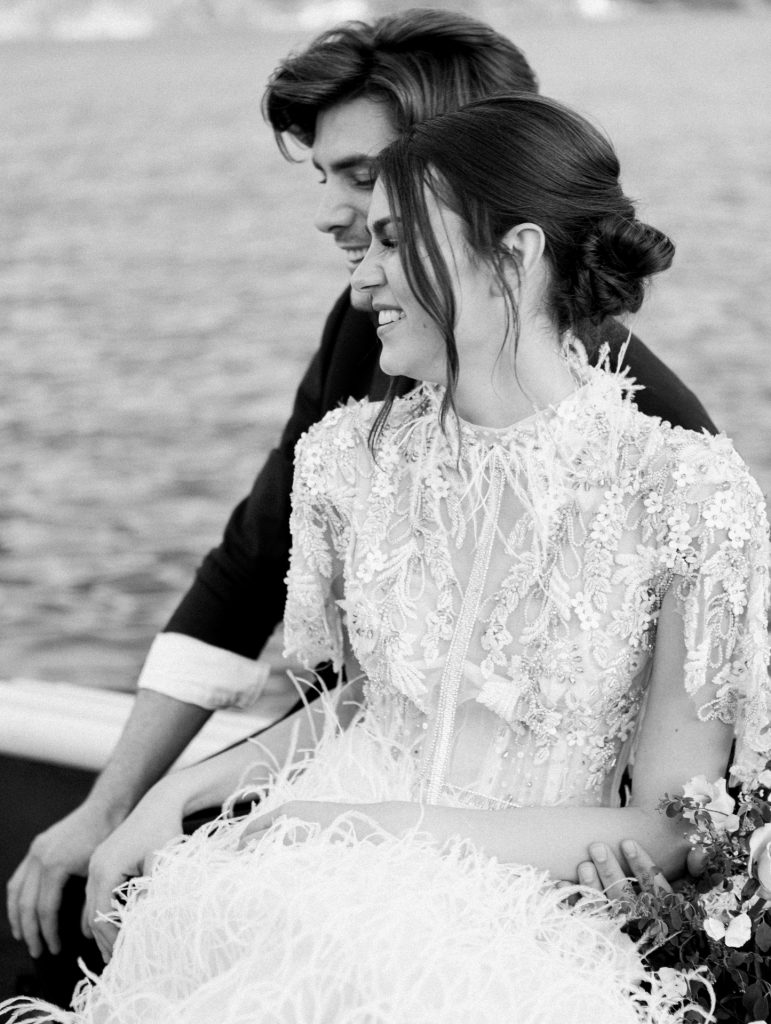
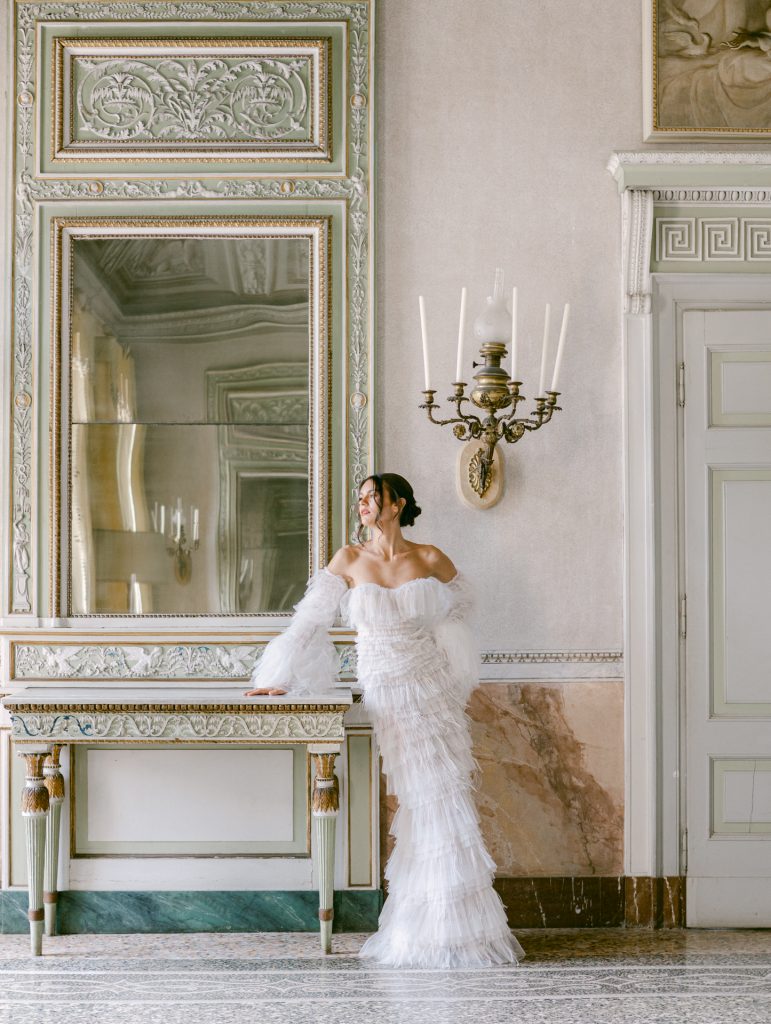
For brides: a flowing dress in ivory, soft white, or a pale neutral suits the lake’s villa-garden backdrops beautifully. If your day includes any boat time, fabric that moves easily and doesn’t catch on wooden seating is worth considering — and bring a light wrap or shawl, since the water carries a breeze even on warm days. A second, simpler outfit is worth packing if your day includes a hike or a swim.
For grooms: a linen or lightweight wool suit works well against the lake’s slightly formal, old-world backdrop — this is a more “dressed” destination than the Dolomites or the Tuscan countryside, and the villa architecture rewards a touch more polish.
For feet: cobblestones are everywhere on this lake, in every town. Bring a second pair of shoes if heels are part of your look, and test them on a wet dock before the day — many piers and boat decks get slippery.
Both of you: if a boat is part of your day (and it should be), ask your boat operator about their no-shoes-on-deck policy in advance — most classic wooden boats require it, and it’s worth planning your outfit and photos with that in mind.

17. How to Find the Right Photographer
Choosing your Lake Como elopement photographer is about so much more than finding someone whose photos you love. You’re inviting someone into one of the most meaningful days of your life—someone who will help shape the experience just as much as they’ll document it.
The right photographer won’t simply arrive with a camera. They’ll help you imagine what your day could look like, guide you through the planning process, and make sure everything flows naturally so you can stay present with each other instead of worrying about what’s happening next.
Here are a few things I’d encourage every couple to look for.
Choose someone who truly knows Lake Como.
Lake Como is breathtaking, but it isn’t always straightforward. Ferries run on schedules, boats need to be timed around your ceremony, popular locations can become crowded at certain times of day, and every villa has its own policies and personality. Someone who knows the lake intimately can help you avoid unnecessary stress and guide you toward places that genuinely fit the experience you’re hoping to create—not just the locations you’ve seen all over Instagram.
Ask to see complete galleries.
Instagram is where photographers share their favourite moments. Your wedding day is everything in between.
A full gallery tells you how someone photographs an entire story—from the quiet anticipation while you’re getting ready, to changing weather, emotional moments, portraits in different lighting conditions, and the celebrations at the end of the day. If you can picture yourselves in a complete gallery, you’re much more likely to love your own.
Look for someone who helps you create the experience—not just photograph it.
The most meaningful elopements don’t happen by accident. They’re thoughtfully planned around what matters most to you.
Whether that’s finding a secluded ceremony location, building a timeline around the best light, recommending incredible local vendors, or knowing exactly when to board a boat to catch the lake at its quietest, your photographer should be helping you create a day that feels effortless from beginning to end—not simply showing up once every decision has already been made.
Choose someone you genuinely connect with.
You’ll spend more time with your photographer than almost anyone else on your wedding day. They’ll be there during the quiet moments, the emotional moments, and the moments you’ll remember for the rest of your lives.
When you feel comfortable with the person behind the camera, you naturally relax. You laugh more. You forget you’re being photographed. And that’s when the most honest, meaningful images are created.
At the end of the day, beautiful photographs are only part of what you’re investing in. The person you choose should leave you feeling supported, understood, and completely free to enjoy one of the most incredible days of your lives.
18. Frequently Asked Questions
Can foreigners elope on Lake Como?
Yes. Most international couples choose a symbolic ceremony, which carries no Italian legal paperwork and gives complete freedom over location and timing. A legal civil ceremony is also possible with the right documentation, arranged well in advance.
What is the best place to elope on Lake Como?
There isn’t one single best place — it depends on the feeling you want. Varenna and the eastern shore for quiet romance, Bellagio for the most iconic (and busiest) version of the lake, Tremezzina for villa grandeur, Laglio for understated calm, and the northern lake or Lecco branch for genuine seclusion.
How much does a Lake Como elopement cost?
Most elopements here run €6,000–€25,000 all-in, depending mainly on venue choice, boat hire, and the restaurant for dinner.
Is Lake Como more expensive than Lake Garda?
Generally, yes. Como’s reputation and villa culture push prices higher across photography, venues, and accommodation. Garda offers a more budget-friendly version of a similar lake-and-mountains setting, with less of Como’s name recognition.
What is the best month to elope on Lake Como?
April–early June and September–early October offer the best combination of good light, blooming gardens (spring) or golden color (autumn), and manageable crowds. July–August is the most reliable for warm weather but also the busiest and most expensive.
Do I need a wedding planner for a Lake Como elopement?
For a true elopement, no — when you book me, full experience design, location scouting, timeline creation, and day-of coordination are already built into your collection. For an intimate wedding with a small guest list, I’d recommend pairing with a dedicated planner to handle venue, catering, and guest logistics alongside my photography.
Is Lake Como good for a small wedding with guests, not just an elopement?
Yes — the small private villas covered in section 6 (Villa Carminati Resta, Villa Regina Teodolinda, Relais Villa Vittoria, and similar) are specifically sized for 8–40 guests, and work beautifully for an intimate celebration without the cost or scale of the lake’s famous grand-villa receptions.
How many days should we stay for a Lake Como elopement?
Plan for at least three nights — one to settle in, one for the elopement itself, and one buffer for weather or simply not rushing the morning after.
Can you legally get married on Lake Como?
Yes, civil ceremonies are possible at approved venues and town halls with the correct documentation (a Certificate of No Impediment, apostilled and translated, submitted well ahead). Many couples instead complete legal paperwork at home and hold a symbolic ceremony here for full flexibility.
19. How to Get Started
If this guide has made Lake Como feel more possible — or even just more specific — here’s the next step.
Tell me what you’re picturing. The town that’s caught your eye, the season, whether you’re drawn to Bellagio’s glamour or Varenna’s quiet, whether you want just the two of you or a small circle of people with you. The more you share, the more specifically I can design around it.
Check your date. Summer weekends and the most photographed villas book out six to twelve months ahead — if you have a date in mind, don’t wait to confirm it.
Let the planning begin. From there, I take the lead on experience design — locations, timeline, the boat, the dinner reservation — so the only thing left for you to do is show up and get married.
Lake Como is, without much competition, one of the most beautiful places in the world to do this. Let’s find the corner of it that’s actually yours.
Camilla is an elopement and intimate wedding photographer based in Italy, working across Lake Como, Venice, Tuscany, Sicily, and the Dolomites. All travel within Italy is included in every collection.
→ View elopement collections and pricing
→ Contact me to start planning



Leave a Comment
Your email address will not be published. Required fields marked *