


Ready to start planning your dream elopement in Italy?
By Camilla M — Dolomites Elopement Photographer & Experience Designer
Updated September 2026
Long before I photographed my first Dolomites elopement, these mountains were simply home. They’re the closest mountains to Venice, where I live, and I grew up going there in every season. In winter I went sledding with my sister and childhood friends, and tried, never quite successfully, to learn to ski. In autumn we picked mushrooms, in summer blueberries, and in spring we went on long walks. January is still my favourite month up there: fresh snow, and a silence you can almost hear. (I wrote about what these mountains mean to me here.)
As a photographer, I kept coming back. I’ve photographed Cortina many times over the years, spent evenings on Passo Giau waiting for the stars to come out over the peaks, and celebrated one of my birthdays with a winter night at Rifugio Lagazuoi, 2,752 metres up, watching the light change across the whole range. It was one of the most magical nights I’ve ever had with a camera. So when a couple asked me to photograph their elopement at Passo Giau, it felt like bringing them into a place I already loved. You can see their summer elopement here.
Knowing a place since childhood gives you a certain feeling for it: when the valleys are quiet, what the weather is about to do, and how to enjoy the mountains while respecting them and the people who live there. It also means I’ve watched them change. The Dolomites have become one of the most popular places in Europe, and several of the most famous locations now have reservations, time slots and toll roads that didn’t exist a few years ago. A beautiful Dolomites elopement today is mostly a matter of good planning: the right side of the range, the right hour, and the right bookings made in advance.
This guide puts all of that in one place: the 2026 access rules, real timelines for each kind of day, real costs, and the honest advice I give the couples I plan with.
Read it start to finish before you book anything. It will save you hours of research, help you avoid the most common planning mistakes, and help you find the corner of the Dolomites that is truly yours.
1. Why the Dolomites — and why they’re made for elopements
The Dolomites are a UNESCO World Heritage Site, recognised in 2009 as some of the most beautiful mountain landscapes on earth. Standing in them, you understand why straight away. Pale limestone towers rise straight up out of green meadows, alpine lakes hold the colour of the sky, and wide high passes open onto a horizon of peaks in every direction. It’s a landscape that feels enormous and completely calm at the same time.
For an elopement, that scale is the whole gift. When it’s just the two of you in front of these mountains, the day naturally becomes about what matters: the promise you’re making, the people you’re making it to, and the place you chose to make it in. You don’t need decorations or a venue here. The mountains are the setting, and they do it better than anything built for the purpose.
The light is the other reason photographers fall in love with this range. Dolomite rock reflects colour in a way granite mountains don’t, so in the first and last light of the day the peaks turn gold, then pink, then a deep glowing red. The Ladin people of these valleys have a word for it: enrosadira. On a clear evening it happens right in front of you, and a ceremony timed to meet it is something you remember for the rest of your life.
A Dolomites elopement also offers something rare in the mountains: extraordinary places without an extraordinary effort to reach them. Many of the most spectacular spots are a short walk from where you park. At Passo Giau, where I photographed my first Dolomites elopement, you step out of the car onto open meadows with a 360-degree view of peaks. At Lagazuoi, a cable car carries you to over 2,700 metres in about three minutes. You can have a truly high-mountain wedding in a flowing dress and comfortable shoes, with no technical hiking required. For couples who love a real adventure, the longer trails, the rifugi and even a private helicopter flight open up everything else.
Then there’s the variety. In a single day you can say your vows on a summit, share a long lunch at a mountain hut, drive over a high pass and finish at a lake as the light turns gold. Each part of the range has its own character. The elegant town of Cortina, the famous lakes of South Tyrol, the vast green meadows of Alpe di Siusi and the quiet high passes each feel like a different world, and a well-planned day moves between them easily.
And with the right timing, the Dolomites give you privacy. They’re famous, and a few places are busy in the middle of a summer day. But the range is huge, and the early mornings, the golden evenings, the quieter passes and the nights at a rifugio belong to the few people who plan for them. Knowing where those moments are, and when the light finds them, is exactly what I help you with.
The Dolomites are also easy to reach from the rest of Italy. Cortina is about two hours’ drive from Venice, where I’m based, so they combine beautifully with a few days on Lake Como, in Tuscany or in the lagoon city itself.
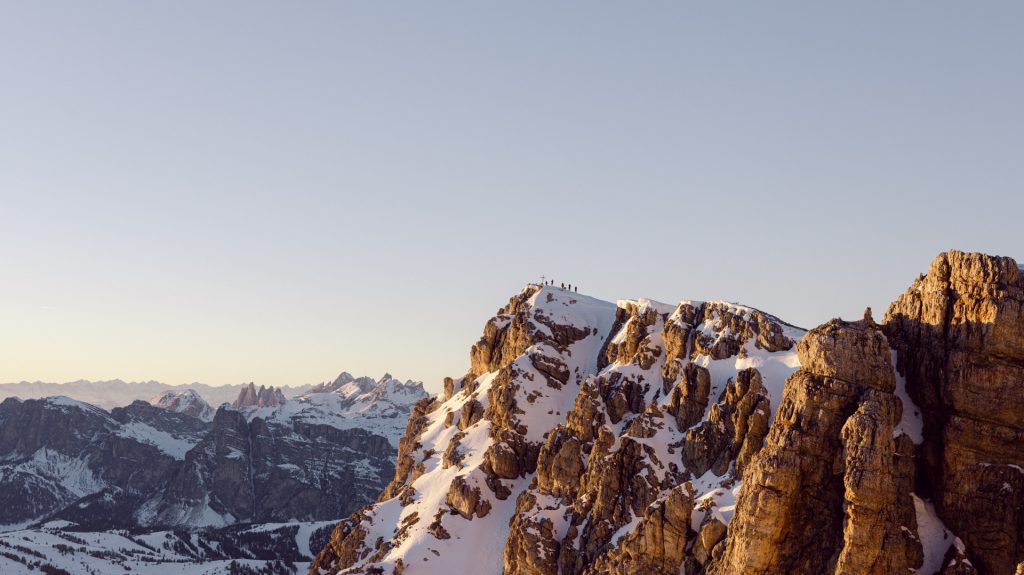
2. Understanding the Geography: The Dolomites Are Not One Place
This is the single most important thing to understand before you start planning a Dolomites elopement, and it’s the thing almost no guide explains clearly. The Dolomites aren’t one destination. They’re a whole mountain range, spread across several Italian provinces, with valleys that feel like different countries. Choosing “the Dolomites” is a bit like choosing “the Alps.” You still need to choose a place within them, and that choice shapes everything else about your day.
The range lies mainly across three provinces: Belluno in the Veneto, South Tyrol (Alto Adige) and Trentino, with smaller parts in Friuli. Each has its own character, and even its own language. In South Tyrol most people speak German, and in several valleys, including Val Gardena, Alta Badia, Val di Fassa and the Ampezzo valley around Cortina, the local language is Ladin, an ancient language spoken only in these mountains. That’s why so many places have two or three names. Lago di Braies is also the Pragser Wildsee, Alpe di Siusi is the Seiser Alm, and Ortisei is St. Ulrich in German and Urtijëi in Ladin. If a map and a road sign seem to disagree, they’re usually both right.
Here’s how I think about the parts of the Dolomites that matter most for an elopement.
Cortina d’Ampezzo and the Ampezzo Valley — elegant, central, and easy to love
Cortina is the most famous town in the Dolomites, and the side of the range I know best. It’s elegant and lively, with beautiful hotels, excellent restaurants and a long history as a mountain resort. It co-hosted the 2026 Winter Olympics. A ring of great peaks surrounds it: the Tofane, Monte Cristallo and the Faloria. For an elopement, Cortina’s real strength is what’s around it. Passo Giau, Passo Falzarego with the Lagazuoi cable car, the Cinque Torri and Lago di Misurina are all within about half an hour’s drive. It’s the best base for couples who want mountain drama by day and a beautiful dinner in town at night.
The High Passes — Giau and Falzarego
Just above Cortina, the road climbs to two of the most spectacular mountain passes in the range. Passo Giau (2,236 m), where I photographed my first Dolomites elopement, is wide open and green, with the tower of Ra Gusela rising right beside the road and peaks in every direction. Passo Falzarego (2,105 m) is the starting point for the Lagazuoi cable car, which takes you to over 2,700 metres in about three minutes, and it’s close to the rock towers of the Cinque Torri. This is where a high-mountain elopement is easiest to reach. You can drive straight up, and most of the views are a short walk from the car.
Misurina, Tre Cime and the Cadini — the iconic peaks
About 25 minutes north-east of Cortina, Lago di Misurina reflects the Cadini di Misurina spires, and a toll road climbs from there to Rifugio Auronzo, at the foot of the Tre Cime di Lavaredo. Their three vertical towers are probably the most recognisable silhouette in the whole range. This area sits right on the border between the Veneto and South Tyrol, and it’s where many of the photographs you’ve seen of the Dolomites were taken. It’s also popular in high summer, so timing and advance booking matter here more than almost anywhere (more on that in section 3).
Lago di Braies and Val Pusteria — the famous lakes
North of Cortina, across the regional border into South Tyrol, the landscape changes. Val Pusteria (Pustertal) is a wide green valley of tidy villages, onion-domed churches and German-speaking towns like Dobbiaco and San Candido. From it, a side valley leads to Lago di Braies, the turquoise lake with the famous wooden boathouse, inside the Fanes-Senes-Braies Nature Park. It’s about an hour’s drive from Cortina. This is the side of the Dolomites for couples dreaming of a lake at sunrise and a rowing boat on still water.
Val Gardena, Alpe di Siusi and Val di Funes — meadows and ridgelines
West of Cortina, about two hours away by road, the heart of South Tyrol’s Dolomites has a gentler, greener feel. Val Gardena, with the villages of Ortisei, Santa Cristina and Selva, is the gateway to the Seceda ridge and its jagged Odle peaks, and to the Sassolungo massif. Just above it lies Alpe di Siusi, the largest high alpine meadow in Europe: open, rolling and covered in wildflowers in early summer. Close by, the quiet Val di Funes is home to the little church of San Giovanni in Ranui, set against the Odle peaks, one of the most famous views in the Alps. This is the natural base for meadows, ridgeline views and a helicopter flight, since Elikos departs from the entrance to Val Gardena.
Alta Badia — the food valley in between
Between Cortina and Val Gardena, the Ladin valley of Alta Badia, with Corvara, La Villa and San Cassiano, is one of the most celebrated food destinations in the Alps, with refined mountain hotels and a slower, quieter pace. It’s a lovely, central base for couples who want both sides of the range within reach.
One practical note for planning ahead: Passo Gardena, the pass linking Alta Badia to Val Gardena, is set to become a seasonal limited-traffic zone from summer 2027. From May to October, only residents of the two valleys, hotel guests along the pass and a few other exceptions would be able to drive across freely, with a limited number of paid parking spaces at the top that can only be booked online. The plan still needs final approval from the provincial government, and I’ll keep this guide updated as the rules are confirmed.
The Trentino Dolomites and the Belluno Dolomites — quieter and wilder
South and west of the famous names, the range goes on. In Trentino, Val di Fassa leads up to the Marmolada, the highest peak in the Dolomites, and to the Sella and Pordoi passes. Further south, San Martino di Castrozza sits beneath the pale walls of the Pale di San Martino. Back in the province of Belluno, the Civetta, the Val di Zoldo and the Dolomiti Bellunesi National Park are wilder and far less visited. For couples who value solitude over famous views, or who are planning a helicopter landing somewhere remote, this part of the range is worth a serious look.
The takeaway
Before you fall in love with a single viewpoint, choose your side of the range. The distances between areas look short on a map, but mountain roads are slow and winding, so the best elopement days stay anchored to one area.
| If you’re dreaming of… | Base yourselves in… |
|---|---|
| High passes, summit views and dinner in an elegant town | Cortina d’Ampezzo |
| The Tre Cime and the Cadini spires | Cortina or Misurina |
| A turquoise lake and a wooden rowing boat at sunrise | Val Pusteria, near Lago di Braies |
| Wildflower meadows, the Seceda ridge, or a helicopter flight | Val Gardena or Alpe di Siusi |
| Both sides of the range, and exceptional food | Alta Badia |
| Solitude, far from the famous names | The Belluno Dolomites or Trentino |
In section 6 I go through the best elopement locations one by one. In section 15 I cover where to stay and how many nights to plan.
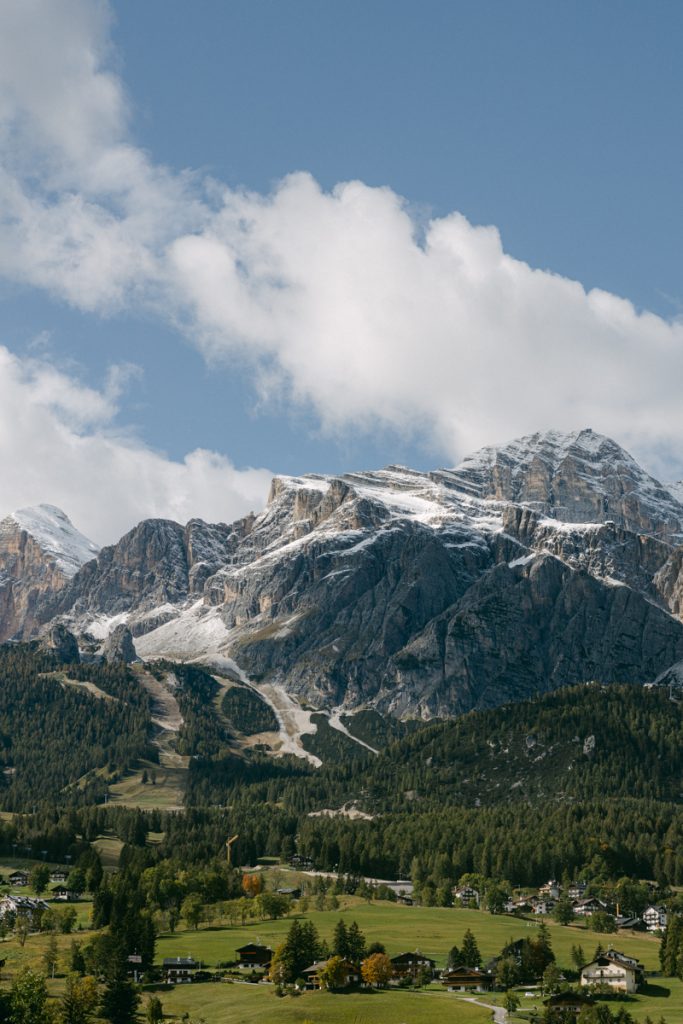
3. How You Actually Move Around the Dolomites
Where Lake Como is a place you cross by boat and Tuscany a place you cross by car, the Dolomites ask for three things: a car, the cable cars, and a little advance booking. Understanding how these fit together is what turns a beautiful plan into a day that actually works, and it’s the part of planning that has changed most in the last few years.
Getting to the Dolomites
The closest major airport to the eastern Dolomites is Venice Marco Polo (VCE), about two hours by car from Cortina d’Ampezzo. Treviso (TSF) is a little closer to the mountains and is served mainly by budget airlines. For the western Dolomites, meaning Val Gardena, Alpe di Siusi and Val di Funes, Innsbruck (INN) in Austria is often the most convenient, at around an hour and a half from Ortisei over the Brenner Pass. Verona (VRN) is roughly two and a half hours away, and Munich (MUC) around four. Bolzano also has a small airport with a limited number of seasonal flights.
You can reach the edges of the range by train, to Bolzano, Bressanone, Brunico or Dobbiaco in South Tyrol, or to Calalzo in the Veneto. But there’s no train to Cortina or into the high valleys. Seasonal buses connect Venice and its airport with Cortina, and local buses link the main villages. For an elopement, though, a car is almost always the right choice.
A car is essential
The most beautiful places in the Dolomites sit at the top of mountain passes, at the end of side valleys and at cable car stations. Public transport reaches many of them in the middle of the day, but not at sunrise or sunset, which are exactly the hours we plan your day around. A rental car gives you the freedom to be in the right place when the light is right.
Mountain driving here is beautiful and entirely manageable, with a few things to know:
- Distances take longer than they look. Roads climb through dozens of hairpin bends. Allow more time than your map app suggests, especially in summer, when the passes are busy with cyclists, motorbikes and tour buses in the middle of the day.
- Parking fills early at the famous spots, and many car parks are now paid or bookable. This is another reason early mornings win.
- In winter, snow tyres or chains are required on most mountain roads (in Italy, generally from mid-November to mid-April), and some passes can close temporarily after heavy snowfall.
Driving licences, international permits and whether to hire a driver are covered in section 9.
Cable cars: the other half of the Dolomites
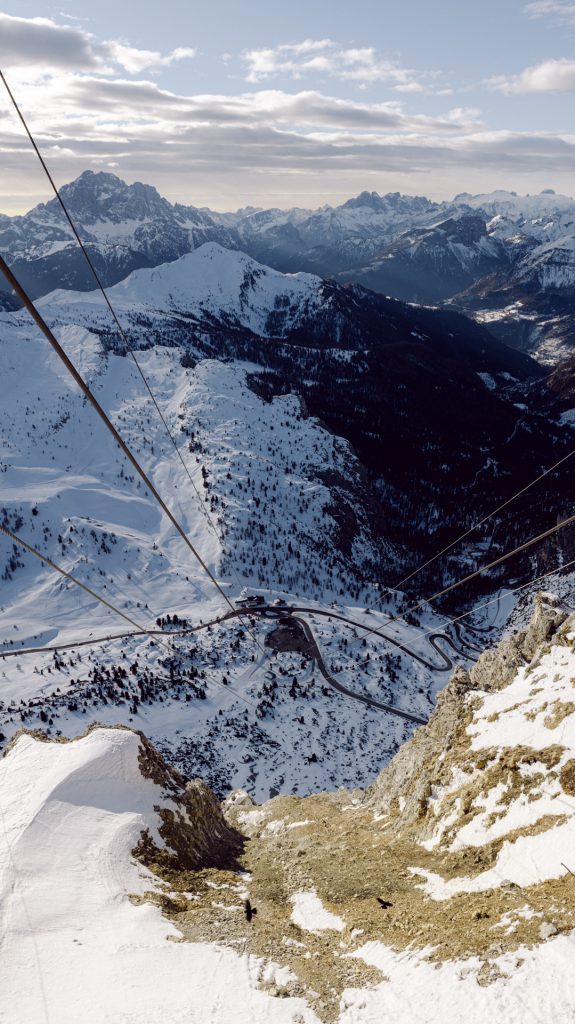
Cable cars are what make a high-mountain elopement possible without a long hike. The Lagazuoi cable car rises 630 metres in under three minutes, and the lifts to Seceda and Alpe di Siusi carry you from the village straight into the landscape. But they run on daytime schedules, typically from around 8:30 or 9:00 until about 5:00 or 5:30 pm, and only in season, roughly late May or June to October, then again for the ski season.
This matters for your photographs. The golden light of sunrise and sunset almost always falls outside cable car hours, and in summer sunset comes long after the last cable car has gone down. There are three ways to be up high in the best light:
- Choose a place you can drive to, like Passo Giau, Passo Falzarego or the high road to Rifugio Auronzo.
- Sleep at a rifugio or mountain hotel, like Rifugio Lagazuoi or a hotel on Alpe di Siusi, so you’re already there when the light arrives.
- Fly in by private helicopter, which is covered in sections 7 and 9.
The access rules you need to know (2026)
As the Dolomites have become one of the most visited places in Europe, the most famous locations have introduced reservations and traffic limits. These rules protect the landscape, and once you know them, they’re easy to plan around. Here’s how things stand for the 2026 season:
| Location | What applies | What it means for your day |
|---|---|---|
| Lago di Braies | From July 1 to September 15, the valley road is closed to private cars between 9:00 and 16:00 unless you have an online parking reservation or permit | Arriving before 9:00 needs no booking, which makes a sunrise ceremony both the most beautiful and the simplest option |
| Tre Cime / Rifugio Auronzo | The toll road to Rifugio Auronzo must be booked online in advance: €40 per car, valid for 12 hours, with a limited number of cars per day. Open roughly late May to late October | Book as soon as your date is fixed. The same booking covers the Cadini di Misurina viewpoint |
| Alpe di Siusi | The road to the plateau is closed to private cars from 9:00 to 17:00 (hotel guests on the plateau excepted). From summer 2026, the two plateau car parks must be booked online, and overnight parking is banned | For sunrise on the plateau, the answer is to stay at a hotel up there the night before |
| Seceda | From summer 2026, the Ortisei–Furnes–Seceda cable car is booked online in 30-minute time slots. The lifts run roughly 8:30 to 17:00, late May to early November | Book your slot in advance. Sunrise and sunset on the ridge are only possible by helicopter |
| Lagazuoi | The cable car runs from 9:00 to 17:00, May 30 to October 18, 2026 | For sunrise or sunset on the summit, sleep at Rifugio Lagazuoi |
| Passo Giau | No access restrictions | Drive up at any hour. One of the simplest high-mountain locations in the range |
| Passo Gardena | A seasonal limited-traffic zone is planned from summer 2027 (May to October), pending final approval | Worth keeping in mind for 2027 dates. I’ll update this guide as the rules are confirmed |
Rules like these are reviewed every season, and new ones are being discussed. The municipality of Auronzo, for example, has spoken about eventually reserving the Tre Cime road for shuttle buses only. Checking current rules and making every booking for your date is part of how I plan your day, so none of this falls to you.
How long it really takes to get around
Here are realistic driving times between the main areas, allowing for mountain roads:
| From → To | Approx. drive |
|---|---|
| Venice Airport → Cortina d’Ampezzo | 2 hours |
| Cortina → Passo Giau | 25–30 minutes |
| Cortina → Passo Falzarego (Lagazuoi) | 25 minutes |
| Cortina → Lago di Misurina | 25 minutes |
| Lago di Misurina → Rifugio Auronzo (toll road) | 15 minutes |
| Cortina → Lago di Braies | about 1 hour |
| Cortina → Ortisei (Val Gardena) | about 2 hours |
| Bolzano → Ortisei | 45 minutes |
| Innsbruck → Ortisei | about 1 hour 30 minutes |
My honest advice
Plan your elopement around one side of the range, with drives of no more than 30 to 45 minutes between locations. Treat the drive over a pass as part of the day rather than a gap in it: some of the loveliest photographs happen on the road, with the peaks rising around you. And leave the bookings to me. Parking slots, toll roads, cable car times and rifugio nights are all part of how I design your day, timed so you arrive at each place just as the light does.
4. Symbolic vs. Legal Ceremony: What You Need to Know
As everywhere in Italy, most couples who elope in the Dolomites choose a symbolic ceremony. It isn’t registered in Italy, and the legal marriage is completed at home, either before you travel (so you arrive already married) or after you return. This removes almost all the bureaucracy: no Italian paperwork, no certificates to translate, no notice period and no witnesses required by law. You exchange your vows wherever and however you want, with a celebrant of your choice or simply between the two of you.
The mountains make this freedom especially beautiful. A symbolic ceremony in the open landscape doesn’t need a permit. A meadow on Passo Giau, a quiet spot by a lake, a ridge with the peaks all around you: all of these are open to you for private vows and photographs, as long as you respect the place and the rules of the protected areas (more on that below). Some places set their own terms. The boathouse at Lago di Braies is booked privately through La Palafitta. Rifugi and hotels welcome ceremonies on their terraces by arrangement. Nature parks limit set-ups and group sizes. I coordinate all of this for you as part of your planning.
A legal ceremony in the Dolomites: possible, and even at altitude
If you want your marriage to be legally registered in Italy, the Dolomites offer something rare: a civil ceremony can take place not only in a town hall, but at a mountain hut. Through its “Sposarsi a Cortina” project, the municipality of Cortina d’Ampezzo has authorised a number of locations beyond the town hall on Corso Italia. Over the years these have included rifugi such as Rifugio Scoiattoli at the foot of the Cinque Torri (2,255 m), Rifugio Averau, Rifugio Faloria and Rifugio Pomedes, as well as the shores of Lago Ghedina and several hotels. The list changes from year to year, so I always confirm the current authorised locations with the town hall before we plan.
The legal route asks for time and paperwork, but it’s entirely achievable:
- Documents from home. Foreign couples need a declaration from their home country confirming they’re free to marry (often called a Certificate of No Impediment, or nulla osta). It must be legalised or apostilled and translated into Italian, following the rules for your nationality.
- Booking with the registry office. The date, time and location are agreed in advance with Cortina’s registry office (Ufficio di Stato Civile). The municipality confirms bookings only a few months before the date.
- Final paperwork. At least two weeks before the ceremony, the office requests the remaining documents, including your witnesses’ IDs and your choice of property regime.
- On the day. You’ll need two witnesses, and an official interpreter if either of you doesn’t speak Italian. The ceremony is performed by the mayor or a delegated officiant.
Legal ceremonies are also possible elsewhere in the range, in town halls and at authorised locations in other municipalities, each with its own procedures. And for couples who want a religious ceremony, many of the little mountain churches and chapels can host one by arrangement with the local parish.
A note for same-sex couples
You are so welcome in the Dolomites. A symbolic ceremony has no restrictions of any kind: any couple can marry anywhere, exactly as they wish. For a legally recognised union, Italy has offered civil unions (unione civile) to same-sex couples since 2016. Many couples complete the legal step at home and hold their real, meaningful ceremony here in the mountains, and I would be honoured to tell your story.
My honest recommendation
If what matters most is the meaning and the images, a symbolic ceremony lets you choose the place, the hour and the light with total freedom. That includes sunrise on a summit or a meadow no registry office could ever reach. If legal recognition in Italy matters to you, give yourselves at least six months, and consider a civil ceremony at one of Cortina’s authorised rifugi: a legally binding wedding at over 2,000 metres, with the Dolomites as your witnesses.
Eloping responsibly in the Dolomites
These mountains are a UNESCO World Heritage Site, a network of protected nature parks, and the home and working land of the people who live here. Much of the famous scenery is private alpine pasture, grazed and cared for by local farming families. Eloping here comes with a quiet responsibility, and it’s easy to honour:
- Stay on the marked paths. On Seceda and in many other places, walking into the meadows is not allowed, and rangers now patrol the most popular areas.
- Leave nothing behind. No confetti, petals, rice or decorations left on the ground. If we use flowers, they come home with us.
- Respect the rules on drones. Drones are prohibited in the private lakeside area at Lago di Braies and restricted in the protected nature parks. I check the rules location by location before we plan any aerial photographs.
- Share the space kindly. We choose quiet hours for your ceremony, and we’re always gracious with hikers and other visitors.
- Respect the farms and the animals. Close the gates you open, give grazing cows their space, and never cross fenced pasture.
It’s exactly how I’ve always loved these mountains, and it keeps them beautiful for the couples who come after you.

5. The Best Time of Year for a Dolomites Elopement
There’s no single “best” month, and the honest answer is more useful than the one most guides give. The Dolomites change completely through the year. The right season depends on what you want to see (wildflower meadows, golden larches or snow), what you want to do (take a cable car to a summit, sleep at a rifugio, walk a trail) and how much quiet you want around you. The main trade-off: summer gives you long days and everything open, along with crowds and afternoon storms. Autumn gives you gold and calm, but the season is winding down. Here’s how I think about each part of the year.
Late June and July — green meadows, wildflowers, and endless light
This is when the high Dolomites wake up fully. The meadows of Alpe di Siusi and the high passes turn deep green and fill with wildflowers, the rifugi are open, the cable cars are running, and the days are the longest of the year, with the sun up by about 5:20 and setting after 9pm. At the highest altitudes snow can linger into June, so early-season plans need a little flexibility, but by July almost everything is accessible.
Summer brings two things to plan around. The first is popularity: from July, the famous spots are busy in the middle of the day, and the access rules from section 3 are in full effect. The second is afternoon thunderstorms. On hot days, storms often build over the peaks after lunch, sometimes quickly, and they usually clear by evening. Neither is a reason to avoid summer. They’re simply why summer elopements are built around the early morning and the evening, the two most beautiful and quietest times of day anyway.
August — high summer, and the busiest weeks of the year
August has the same long days and warm weather as July, with the heaviest crowds of the year. The weeks around Ferragosto (August 15), Italy’s biggest summer holiday, are the busiest of all, in the mountains as much as anywhere. An August elopement is absolutely possible and can be beautiful. It simply asks for more planning: earlier starts, quieter locations and every booking made well in advance.
September — the month I recommend most often
September is the sweet spot for many couples. The summer crowds leave after the first week or so, the afternoons become calmer and more stable, the air turns cool and clear, and the light starts to soften and warm. Lifts and rifugi are still open, and from September 16 the Lago di Braies road restrictions end. You still get long days, with sunrise around 6:30–6:50 and sunset between about 7:25 and 7:50pm, so a 12-hour Full Day can come close to covering both. If your dates are flexible and you want the Dolomites at their most relaxed, this is the month I’d point you to.
October — golden larches, and the season’s last act
October brings the most photographed moment of the Dolomites year. The larches, the only conifers that change colour, turn gold across the valleys and the lower slopes, often with the first snow on the peaks above. The colour usually peaks in the second and third weeks of October, though it varies with each year’s weather.
There’s a trade-off here worth knowing. As the larches peak, the season closes around them. In 2026, for example, the Cinque Torri chairlift closed on October 11 and the Lagazuoi cable car on October 18. Many rifugi close through the month, and high trails can be icy in the morning. The first half of October is the best balance: the gold is arriving, days are clear between weather systems, and most things are still running. By mid-October, a day in the full gold is extraordinary, but it has to be designed around the valleys, lakes and places you can drive to rather than the summits. The days are shorter too, around 11 hours at the start of the month, so this is when a single Full Day naturally fits between sunrise and sunset.
Winter (December to March) — snow, silence, and magic
A winter elopement in the Dolomites is something very few couples think of, and it can be one of the most magical choices of all. The peaks are white, the forests are heavy with snow, the light is low and blue, and the silence is complete. January is still my favourite month up here. Ski lifts run from December to around mid-April, some rifugi stay open all winter, including Rifugio Lagazuoi, where I spent my birthday night, and the Christmas season fills the towns with lights and markets.
Winter asks for more flexibility. Days are short, around nine hours, with sunset at about 4:30pm in December and January. Some high roads can close temporarily after heavy snowfall, and others, like the toll road to the Tre Cime, stay closed all winter. Warm layers and proper boots become part of the look. But for couples who dream of snow and stillness, and don’t mind a little adventure, winter gives you images no summer day can.
Spring and November — the quiet in-between
Between the ski season and summer (roughly mid-April to late May), and again in November, the Dolomites go quiet. Many hotels, rifugi and cable cars close for a few weeks, and the weather is at its most changeable, with snow at altitude and rain below. There is a small upside: while the Alpe di Siusi cable car is closed in spring and late autumn, the road to the plateau is open to private cars all day. But these in-between weeks are the hardest to plan around. Unless your dates are fixed, I’d usually suggest summer, autumn or full winter instead.
The short version
- Wildflowers, open lifts and the longest days: late June and July.
- Stable weather, calmer trails and softer light: September.
- Golden larches: the first half of October for the best balance, or mid-October for peak colour (plan around the valleys and lakes).
- Snow and silence: December to March.
- The busiest weeks of the year: August, especially around Ferragosto (August 15).
Tell me what you’re dreaming of seeing, and I’ll tell you the month, and the side of the range, that delivers it.
Sunrise and sunset through the year
These are the official times for Cortina d’Ampezzo, calculated for the middle of each month. In the mountains, the sun reaches you a little later and leaves you a little earlier, depending on the peaks around you. That’s why I plan every location around the real light on the ground, not just the clock.
| Month (15th) | Sunrise | Sunset | Hours of daylight |
|---|---|---|---|
| January | 7:52 | 16:51 | 9 |
| February | 7:16 | 17:36 | 10¼ |
| March | 6:25 | 18:17 | 12 |
| April | 6:25 | 19:59 | 13½ |
| May | 5:38 | 20:38 | 15 |
| June | 5:18 | 21:06 | 15¾ |
| July | 5:33 | 21:01 | 15½ |
| August | 6:09 | 20:22 | 14¼ |
| September | 6:49 | 19:24 | 12½ |
| October | 7:28 | 18:26 | 11 |
| November | 7:13 | 16:39 | 9½ |
| December | 7:48 | 16:24 | 8½ |
A practical note on light
The light is what we plan everything around. Dolomite rock catches colour like almost no other mountain. In the first and last light of the day, the peaks turn gold, then pink, then a deep glowing red, the enrosadira I mentioned in section 1. A ceremony timed to meet it is unforgettable.
That’s why almost every day I design begins or ends in that light. Sunrise means an early alarm (around 4:30 or 5:00 in summer), empty viewpoints and a quiet, magical start. Evening golden hour gives a more relaxed rhythm, with a late-afternoon start and the ceremony as the light warms. In summer, the middle of the day is for lunch, the drive over a pass and the moments in between, never for standing on an exposed ridge in harsh light.
A practical note on weather
Mountain weather changes quickly, in every season. I watch the forecast closely in the days before your elopement and adjust the timeline to move with the weather rather than against it. In summer, that usually means the high-altitude part of the day happens in the morning, and we’re off exposed ridges before the afternoon storms build. I always keep a beautiful plan B in reserve: a covered rifugio terrace, a wooden stube, a lower valley or a different pass with clearer skies. For couples who want to take weather almost entirely off the table, the Custom 2-Day Experience in section 10 gives you two chances at the perfect light instead of one.
And the truth most couples don’t expect: some of the most extraordinary mountain photographs happen in “bad” weather. Clouds clearing off a peak, mist drifting through the valley, the last light breaking under a storm. A little drama in the sky is often the best thing that can happen to your images.
A practical note on dates
If you can, choose a weekday. Weekends are noticeably busier at the famous spots, and parking slots and cable car times book up faster. Avoid the week around Ferragosto if you can. A few days each summer, some passes also close to cars for cycling events such as the Sellaronda Bike Day, so I always check your date against the local events calendar before we lock anything in.

6. The best locations for your elopement
Here’s the most freeing thing about eloping in the Dolomites: you don’t need a venue. No estate to hire, no villa to book, no minimum guest count. A mountain pass, a lakeshore or a summit terrace costs nothing to stand on, and no landscape in Italy needs less decoration.
Below are the locations I recommend for an elopement, with the practical details that actually decide whether a place works for your day: how you reach it, how far you’ll walk, whether it needs booking, and when the light is at its best.
Passo Giau
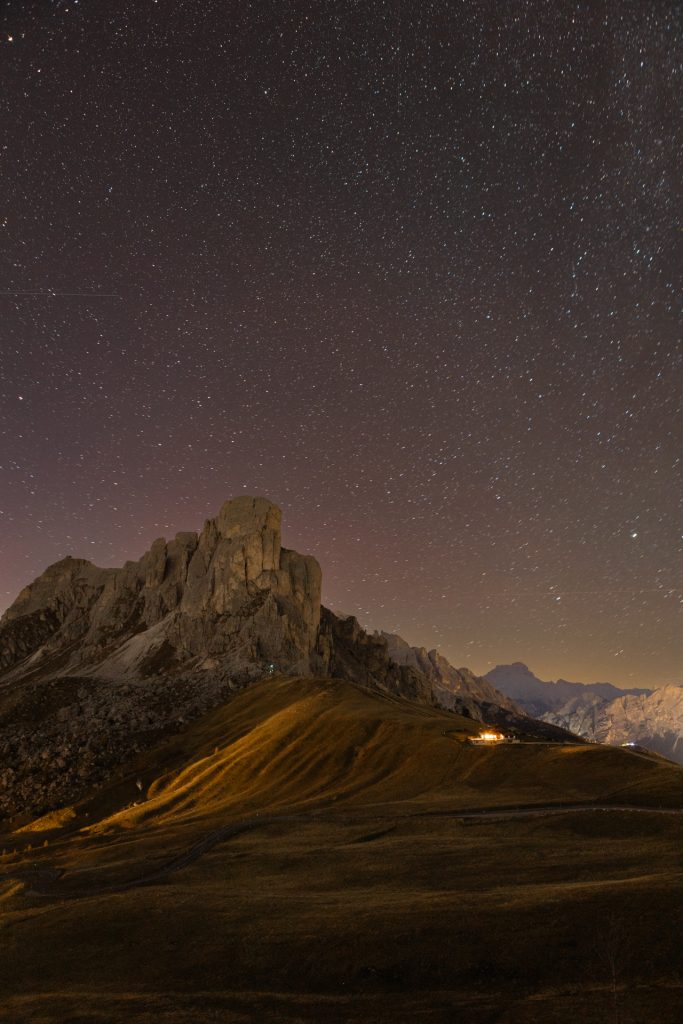
If you want the Dolomites at their most open and dramatic, with almost nothing between you and the mountains, this is where I’d start. Passo Giau sits at 2,236 metres, a wide green saddle with the rock tower of Ra Gusela rising beside the road and peaks stretching to the horizon in every direction: the Tofane, the Marmolada, the Civetta. There’s a rifugio at the top, a few grazing cows, and a great deal of sky.
For an elopement it’s close to perfect, because it asks nothing of you logistically. You drive to 2,236 metres, park, and walk out onto the meadows. No cable car, no time slot, no reservation, no closing time. After dark, far from any real light pollution, the stars over the pass are extraordinary. This is where I photographed this summer elopement.
Access: drive, 25–30 minutes from Cortina · Walk: 5–20 minutes onto the open meadows · Booking: none · Best light: sunrise, sunset, and the night sky · Good to know: the road is open all year, and nothing closes at the end of the day.
Rifugio Lagazuoi
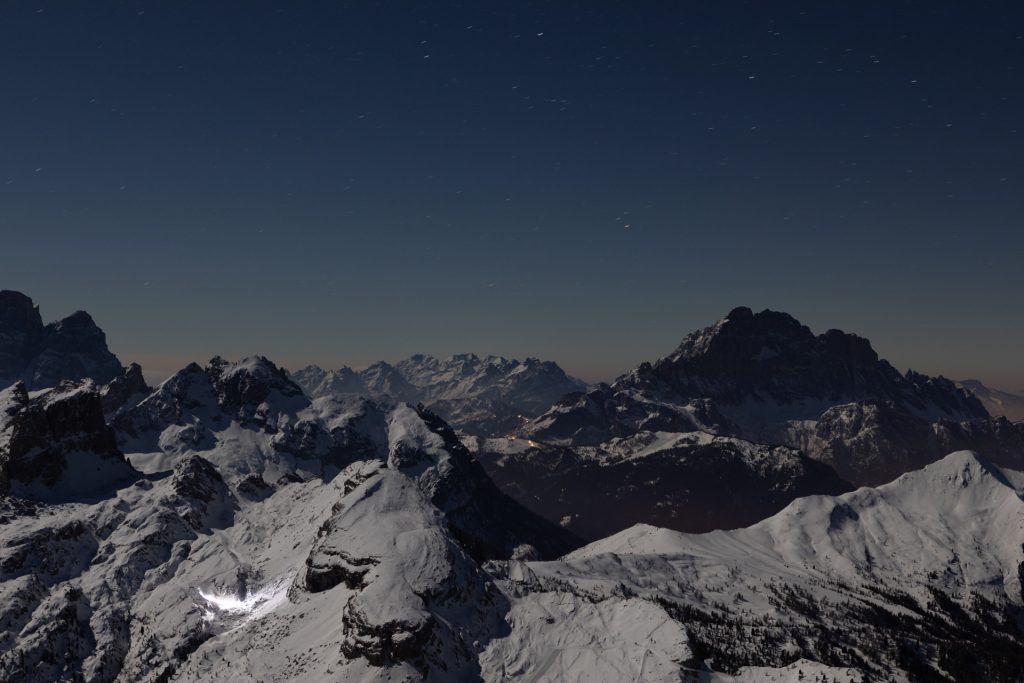
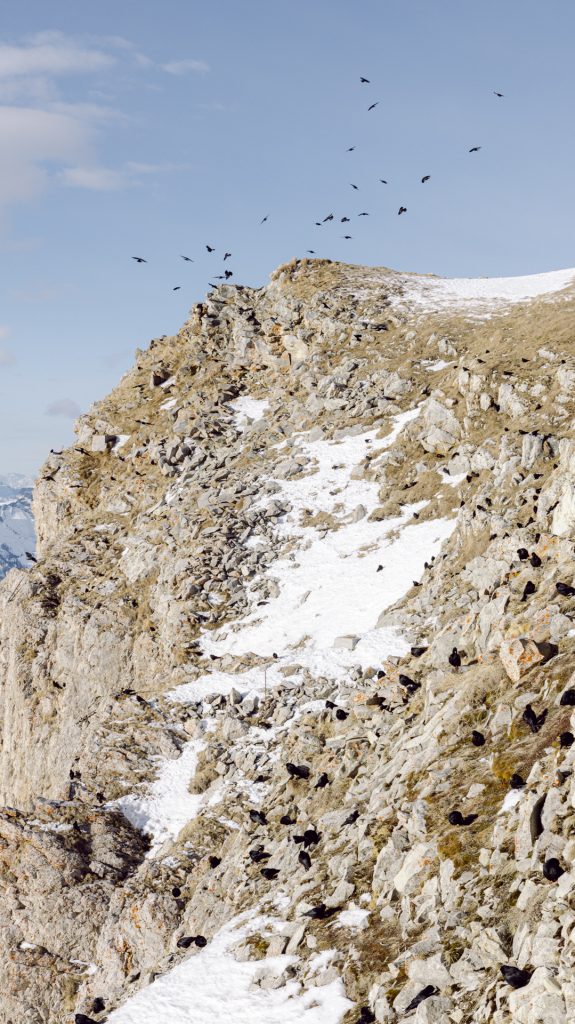
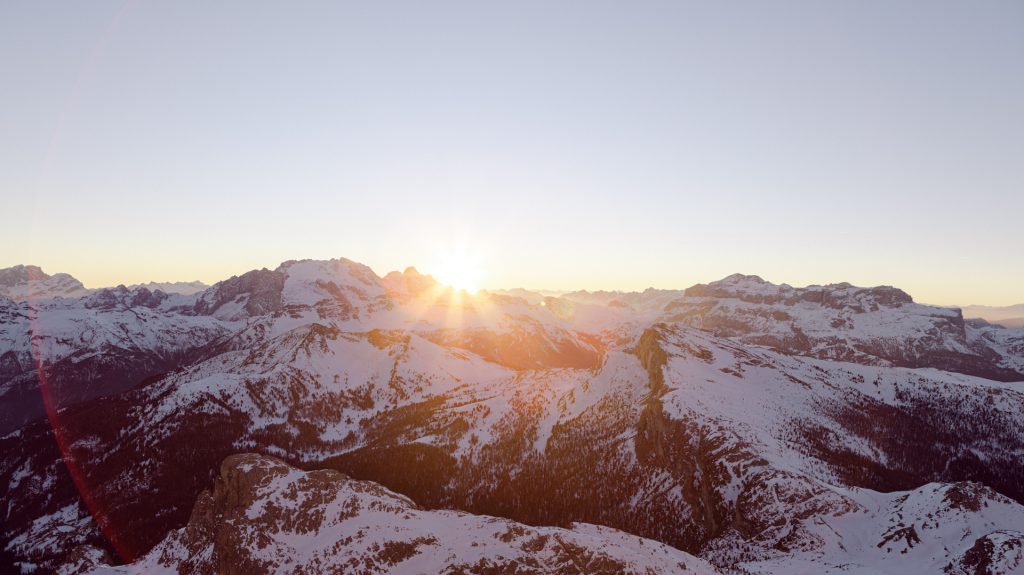
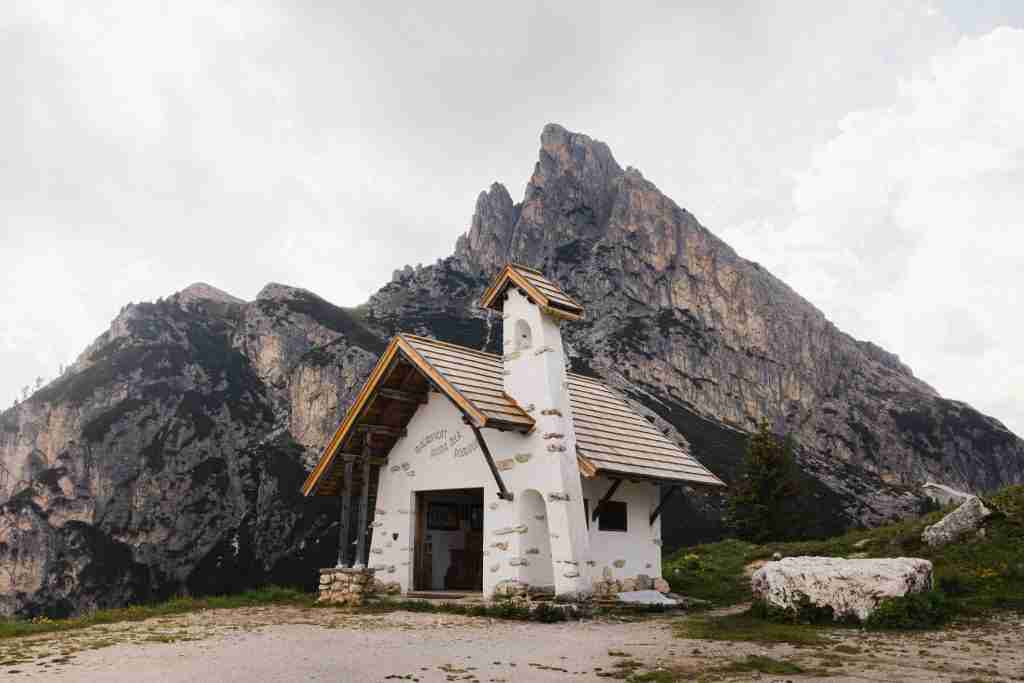
At 2,752 metres, Lagazuoi is one of the most spectacular places in the Dolomites you can reach without hiking. The cable car from Passo Falzarego climbs 630 metres in under three minutes, and you step out onto a rocky summit with a 360-degree panorama: the Marmolada glacier, the Tofane, the Cinque Torri and, on a clear day, what feels like the whole range. A short panoramic path leads to the summit cross, and the First World War tunnels run through the mountain beneath you.
Its real magic is the overnight. The cable car runs only from 9:00 to 17:00, so sunset and sunrise belong entirely to the people sleeping up there. You watch the peaks turn gold from the terrace, have dinner above the clouds, sleep at 2,752 metres and wake to a ceremony with the whole range to yourselves. I spent one of my birthdays up here in winter, and it remains one of the most beautiful nights I’ve ever had with a camera.
Access: cable car from Passo Falzarego, 25 minutes’ drive from Cortina · Walk: the rifugio is 50 metres from the top station, 10–15 minutes to the summit cross · Booking: essential for an overnight stay, months ahead in summer · Best light: sunset and sunrise, for overnight guests only · Good to know: in 2026 the summer cable car season ran May 30 to October 18.
Cortina d’Ampezzo and around
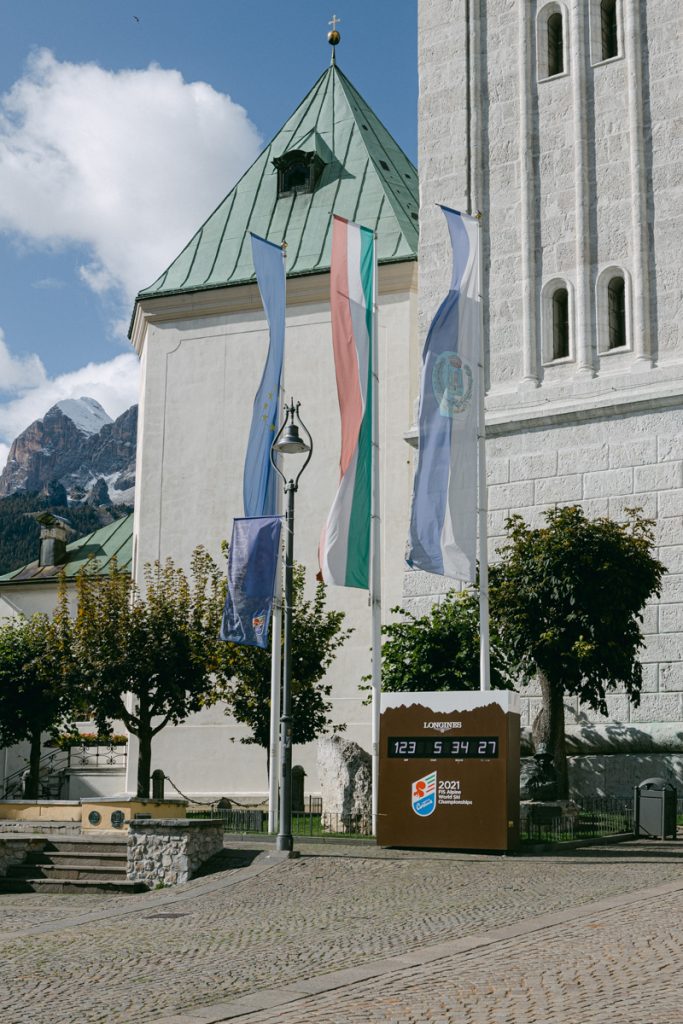
Cortina is worth an hour of your day: Corso Italia in the early morning, the bell tower, the shop windows, the peaks appearing at the end of every street. It’s a gentle counterpoint to the wildness above, and the natural place for getting ready, for lunch and for dinner.
Two spots nearby are worth knowing. Lago Ghedina, a small lake in the woods about 15 minutes from town, is one of the locations Cortina has authorised for legal civil ceremonies. And Lago di Sorapis, the milky-turquoise lake beneath the Dito di Dio, is reachable only on foot: about two hours each way from Passo Tre Croci, on a trail with cable-assisted sections and some exposure. It’s magnificent, but not a wedding-dress hike. If you love it, plan it as a separate adventure day in proper clothes, with your wedding outfits carried up.
Access: Cortina by car, everything within 15–25 minutes · Booking: only for a legal ceremony · Best light: early morning in town, golden hour by the lakes.
Cinque Torri
Five great rock towers stand alone on an open plateau, surrounded by First World War trenches restored as an open-air museum. A chairlift from Bai de Dones carries you up to Rifugio Scoiattoli at 2,255 metres, whose terrace faces the towers with the Tofane, Averau and Nuvolau all around.
It’s also one of the locations authorised for legally valid civil ceremonies through Cortina’s “Sposarsi a Cortina” project: a real wedding at over 2,000 metres, then dinner on the terrace as the sun goes down.
Access: chairlift from Bai de Dones, about 20 minutes’ drive from Cortina · Walk: minutes from the top station, easy paths around the towers · Booking: required for a ceremony or a meal at the rifugio · Best light: late afternoon and sunset · Good to know: in 2026 the chairlift ran June 6 to October 11, from 9:00 to 17:00.
Lago di Misurina
Misurina is the lake you can simply drive to, with the spires of the Cadini reflected in the water and grand old hotels along the shore. It’s far more relaxed than Braies: a flat path of about 2.5 km circles the lake, there’s no reservation system and no time limit, and it’s beautiful late in the day when the light comes low across the water.
Access: drive, 25 minutes from Cortina · Walk: flat lakeside path, as much or as little as you like · Booking: none, paid parking · Best light: late afternoon and sunset · Good to know: it’s the gateway to the Tre Cime toll road, so the two pair naturally.
Tre Cime di Lavaredo and Cadini di Misurina
The three towers of the Tre Cime are the most recognisable silhouette in the Dolomites. A toll road climbs from Misurina to Rifugio Auronzo at 2,320 metres, and from there an almost flat track reaches Rifugio Lavaredo in about 30 minutes, directly beneath the south faces. It’s the easiest way in the whole range to stand under 500-metre walls of rock in a wedding dress.
From the same car park, trail 117 leads in about 30 minutes to the Cadini di Misurina viewpoint. The walk is easy until the final stretch, which is narrow and exposed above a drop. With boots, a bustled dress and no hurry it’s very doable, though not for everyone, and I’ll tell you honestly on the day whether conditions look right.
Access: toll road from Misurina, 15 minutes up · Walk: 30 minutes each way to Rifugio Lavaredo or the Cadini viewpoint · Booking: essential. The toll road is booked online, €40 per car, valid 12 hours, with a limited number of cars per day · Best light: the north faces glow at sunrise, the south faces at sunset · Good to know: open roughly late May to late October, closed all winter.
Lago di Braies
The most photographed lake in the Alps deserves its fame: an intense turquoise basin beneath the pale wall of the Seekofel, with a wooden boathouse and rowing boats on the water. It also rewards early rising more than anywhere else in this guide.
By mid-morning in summer, Braies is busy. At sunrise it’s still, the colour is at its best, and the boathouse can be yours privately: La Palafitta rents it exclusively before public opening, with two rowing boats, for around €600. Arriving before 9:00 also avoids the summer road restrictions entirely. A flat path of about 3.5 km circles the lake in an hour.
Access: drive, about 1 hour from Cortina · Walk: flat lakeside loop, about 1 hour · Booking: the private boathouse well in advance, and a parking reservation if you arrive between 9:00 and 16:00 from July 1 to September 15 · Best light: sunrise, without question · Good to know: drones are prohibited in the private lakeside area.
Alpe di Siusi
The largest high alpine meadow in Europe is a rolling plateau at around 1,800–2,000 metres, scattered with wooden hay barns, with the Sciliar on one side and the Sassolungo on the other. In early summer it fills with wildflowers, in autumn it turns gold, in winter it becomes a white expanse. It’s gentle underfoot, which makes it one of the easiest places in the Dolomites for a long, wandering elopement morning.
The catch is access. The plateau road is closed to private cars from 9:00 to 17:00 (hotel guests excepted), the two car parks now require an online booking, and overnight parking is banned. For sunrise up here, the answer is to stay at a hotel on the plateau, which also gives you the meadows to yourselves in the first light.
Access: cable car from Siusi, or by car outside the closure hours; hotel guests may drive up · Walk: flat, easy paths in every direction · Booking: car park reservation, and accommodation if you want sunrise · Best light: sunrise, and the last hour before sunset.
Seceda
The Seceda ridgeline, with the Odle peaks rising like a wave of stone, is the image most people picture when they think “Dolomites.” It’s genuinely breathtaking, and a cable car from Ortisei takes you to about 2,500 metres.
It’s also the place I’d ask you to think hardest about. Seceda is one of the most crowded spots in the Alps. Fences keep visitors off the meadows, rangers patrol the paths, and the Ortisei cable car requires a pre-booked time slot. The lifts stop long before sunset, so golden light on the ridge is only reachable by helicopter. An elopement here works with the earliest slot of the day, but if you want quiet, I’d point you toward a pass or a plateau instead.
Access: cable car from Ortisei, or the Col Raiser gondola from Santa Cristina plus an uphill walk · Walk: 15–30 minutes along the ridge from the top station · Booking: cable car time slot, in advance · Best light: early morning, or golden hour by helicopter · Good to know: access arrangements on the meadow paths have been disputed between the landowners and the province, so I check the current situation before we plan.
Val di Funes
The chapel of San Giovanni in Ranui, with its copper onion dome standing alone in a green meadow beneath the Odle peaks, is one of the most photographed views in the Alps. It’s small, quiet and completely different in feel from the high passes: pastoral rather than alpine, intimate rather than vast.
Two things to know. The chapel and its meadow are private property, part of the Ranui Hof farm. Access to the meadow costs about €4 per person, paid at the gate, and ceremonies there are arranged directly with the farm. And drones are prohibited throughout the area.
Access: drive, about 50 minutes from Ortisei, then 2 minutes from the car park · Walk: minimal · Booking: contact Ranui Hof for a ceremony · Best light: late afternoon, when the sun is low on the Odle.
One to skip, and why
Lago di Carezza appears on most Dolomites lists: a small emerald lake reflecting the Latemar, a five-minute walk from the road. But the entire shoreline is fenced to protect it, you can only see it from the path above, and in summer that path is busy. It’s a lovely stop on a drive. It isn’t a place to say your vows.
At a glance
| Location | Altitude | How you get there | Walk | Booking needed | Best light |
|---|---|---|---|---|---|
| Passo Giau | 2,236 m | Drive | 5–20 min | No | Sunrise, sunset, night |
| Rifugio Lagazuoi | 2,752 m | Cable car | 0–15 min | Yes, for overnight | Sunset & sunrise (guests) |
| Cortina & Lago Ghedina | 1,200–1,300 m | Drive | Minimal | Only for legal ceremony | Morning, golden hour |
| Cinque Torri | 2,255 m | Chairlift | 5–20 min | Yes, rifugio | Late afternoon, sunset |
| Lago di Misurina | 1,754 m | Drive | Flat, optional | No | Late afternoon |
| Tre Cime & Cadini | 2,320 m | Toll road | 30 min each way | Yes, €40 toll | Sunrise & sunset |
| Lago di Braies | 1,496 m | Drive | Flat loop, 1 hr | Boathouse & parking | Sunrise |
| Alpe di Siusi | 1,800–2,000 m | Cable car or car | Flat, easy | Parking & hotel | Sunrise, late afternoon |
| Seceda | ~2,500 m | Cable car | 15–30 min | Yes, time slot | Early morning |
| San Giovanni in Ranui | 1,300 m | Drive | 2 min | Farm, for ceremonies | Late afternoon |
Tell me what you’re picturing, and I’ll tell you which of these fits your season, your dates and the kind of day you want. Often the answer is a place most couples have never heard of.
7. Things to Do — Building a Full Elopement Day
A long elopement day in the Dolomites isn’t an eight-hour photoshoot. It’s a day built from things you actually want to do, with your ceremony at its heart. Here’s what I draw from when we design yours, with the practical details that make each one work.
A private sunrise on Lago di Braies
La Palafitta, the wooden boathouse on the lake, offers a private booking before the lake opens to the public: about ninety minutes with the boathouse and two rowing boats entirely to yourselves, for around €600. It’s the single best way to have this famous lake to yourselves, and since it happens before 9:00, it also sidesteps the summer road restrictions entirely. Slots are limited and go early for summer dates, so this is one of the first things I book once your date is set.
A night at Rifugio Lagazuoi
The cable car runs only from 9:00 to 17:00, so sleeping at the rifugio is the only way to be on the summit at both sunset and sunrise. You watch the peaks turn gold from the terrace, have dinner above the clouds, and wake to a ceremony with the whole range to yourselves before the first cable car brings anyone else up. Rooms are few, and summer dates book out early.
A private helicopter flight
A helicopter reaches places no trail or cable car can, and at hours a cable car never runs. Places that take two hours by road can be twenty minutes apart in the air. Landings are restricted, more so in South Tyrol in summer than in the province of Belluno, and the operator confirms which sites are permitted for your date. Popular landing spots include the Seceda ridge, remote alpine lakes and quiet high meadows well away from any trail. Full pricing is in section 9.
A proper rifugio meal
Not a sandwich at a counter, a real seated lunch or dinner at altitude: canederli, casunziei, polenta with venison, apple strudel, and a glass of Alto Adige wine while the peaks sit in the window. It’s one of the simplest, most memorable additions to any long day, and rifugio terraces are increasingly used for the ceremony itself.
A picnic on a mountain pass
Local cheese, speck, good bread and a bottle of something worth opening, laid out on the meadows of a high pass as the light turns gold. Passo Giau needs no reservation or permit for this, which makes it one of the easiest, loveliest additions to a day.
Night portraits under the stars
High passes sit far from any real light pollution. On a clear night, portraits under the Milky Way are something very few couples think to ask for, and something I’m always glad to build into a day that runs late.
A slow morning in Cortina
Coffee on Corso Italia, a walk through town before the shops open, the peaks appearing at the end of every street. A gentle, elegant counterpoint to a day spent in the wild.
Location pairings that work well together
The best days pair places close to one another, so the time goes into experiences rather than driving.
The quiet mountain-pass route. Private vows on Passo Giau: no cable car, no time slot, no parking reservation, just the pass. (Passo Gardena, which many guides recommend for a similar pairing, is planned to become a limited-traffic zone from summer 2027 — see section 3.)
Lagazuoi and Passo Giau. A summit ceremony in the afternoon, then about 30 minutes’ drive via Pocol to Giau for golden hour and sunset. My favourite pairing in the whole range.
Lago di Braies and Tre Cime. Sunrise on the lake, then about 45 minutes to Misurina and the Tre Cime toll road for the afternoon and evening.
Alpe di Siusi and Seceda. Sunrise on the plateau while it’s still quiet, then a booked morning slot on the Seceda cable car.

8. Where to Eat: Rifugi and Restaurants
Food is a whole layer of a Dolomites elopement most guides skip, and it shouldn’t be. Some of the most memorable moments of a long day happen at a table: a rifugio lunch at 2,320 metres, a slow dinner in Cortina as the peaks go dark, a private chef in a chalet with no one else around.
What you’ll actually eat
South Tyrolean and Ladin mountain cooking is its own thing, closer in spirit to Austria than to the rest of Italy. Expect canederli (bread dumplings, often in broth or with melted butter and speck), casunziei (beetroot-filled ravioli, a Cortina specialty, usually dressed with poppy seed and butter), speck and mountain cheeses, polenta with venison or goulash, and apple strudel to finish. Alto Adige also makes excellent wine, especially crisp whites like Kerner and Gewürztraminer, and structured reds from the Val Venosta. It’s a cuisine built for a long day outdoors, and it tastes exactly right after a morning on a ridge.
Eating at altitude: the rifugi
A rifugio meal is one of the simplest, most memorable things to build into your day, and several of the ones on this list can also host your ceremony.
A rifugio meal is one of the simplest, most memorable things to build into your day. Several of these are recognised directly by the Michelin Guide’s own selection of the Dolomites’ best mountaintop dining:
- Rifugio Scoiattoli, at the foot of the Cinque Torri (2,255 m), has a terrace facing the towers and is one of Cortina’s authorised legal ceremony locations.
- Rifugio Auronzo, at 2,320 metres beneath the Tre Cime, is the natural lunch stop on a day built around the toll road.
- Rifugio Lagazuoi, at 2,752 metres, serves dinner to overnight guests only, part of what makes staying there so special.
- Rifugio Col Alt, at the top of the cable car from Corvara (2,000 m), is one of Michelin’s own picks for the Dolomites: real restaurant-level cooking, with both mountain classics and more refined dishes, fish and oysters included, alongside a genuinely good wine list.
- KELINA Fine Dine, near the top of the Piz Boé cable car in Corvara, does gourmet lunches only (closed evenings) in a minimalist wood room, with a glass wall framing the Sassongher, Santa Croce and La Varella peaks. The chef blends Sicilian and Ladin flavours.
- Baita Sofie, on the Alpe di Siusi plateau, is a well-loved stop for a long, unhurried lunch among the meadows.
- Chalet Gerard, in Selva di Val Gardena, sits car-accessible, facing the Sassolungo and the Sella group, and pairs naturally with a Seceda or Alpe di Siusi day.
In Cortina
Cortina’s dining scene has grown genuinely serious, helped along by the 2026 Winter Olympics spotlight. Two names come up again and again as its best tables:
- Tivoli, on the road toward the Falzarego Pass, is chef Graziano Prest’s Michelin-starred dining room, with panoramic views and a menu that moves fluently between Alpine tradition and more contemporary technique.
- SanBrite, run by chef Riccardo Gaspari inside his own family’s converted barn, is also Michelin-starred, built entirely around ingredients from the family farm next door. The same family runs El Brite de Larieto, a more rustic agriturismo in the larch forest above town, recognised with a Michelin Green Star for its sustainability.
For a lighter, more casual evening, Chalet Tofane at the foot of the Tofane slopes serves excellent wood-fired pizza in a relaxed, family-friendly setting, which also makes it a good choice if you’re bringing guests (see section 14).
Alta Badia: an extraordinary concentration of talent
Alta Badia and the surrounding passes hold one of the highest concentrations of serious cooking anywhere in the Alps. Norbert Niederkofler, one of Italy’s most celebrated chefs and a pioneer of “Cook the Mountain” cuisine, now holds three Michelin stars at Atelier Moessmer, inside a converted historic textile mill in Brunico, and also runs AlpiNN, his mountaintop restaurant at 2,275 metres on Plan de Corones, reached by cable car from Riscone (last descent 17:00). For a truly special evening on the far side of the range, Rifugio Fuciade, near Passo San Pellegrino in Val di Fassa, is one of the most romantic high-altitude restaurants in the Dolomites, with rooms if you’d like to stay, and in winter it’s reached by snowcat, snowmobile or horse-drawn sleigh.
A private chef in your chalet
For an intimate dinner with no one else around, several private chefs and small catering teams work across the range, cooking a multi-course mountain menu in a rented chalet or hotel suite. It’s a lovely, quiet way to close a long day, and I can point you toward options once we know where you’re staying.

9. Cars, Cable Cars, and Helicopters: Getting Around for the Day
Section 3 covered the big picture: why a car is essential, and the access rules that shape when you can be where. This section is the practical follow-through: how to actually rent the car, book the lifts, and, if you want it, arrange the helicopter.
Renting a car
If you hold an EU or EEA driving licence, you can drive in Italy on it directly, no extra paperwork needed. If you’re coming from anywhere else, including the UK, US, Canada or Australia, Italian law requires you to carry an International Driving Permit (IDP) alongside your home licence. It’s a certified translation, not a separate test, and it’s inexpensive and simple to get from your local motoring association before you travel, valid for one to three years depending on where it’s issued. Rental desks don’t always ask for it, but a roadside police check will, and driving without one can mean an on-the-spot fine and a voided insurance claim if anything goes wrong. Bring the physical licence too; a photo on your phone isn’t accepted.
Most agencies set a minimum age of 21, with a young-driver surcharge under 25, and you’ll need a credit card (not a debit card) in the lead driver’s name for the deposit. Book your car as early as you can for a summer date; the Bolzano and Verona airport counters, along with the Venice ones, get busy in high season.
Driving into Cortina: watch the ZTL
The historic centre of Cortina has a camera-monitored limited traffic zone (ZTL). Drive in without permission and the fine arrives by post months later. The simple rule: don’t drive into the centre unless your hotel has confirmed parking and registered your plate for you. Otherwise, park at one of the edge-of-town car parks and walk in, which is a pleasant five to ten minutes on Corso Italia anyway.
A private driver, for the day you’d rather not drive
For the day of your elopement itself, some couples prefer a private driver: someone who knows the passes, handles the parking and toll-road bookings, and means you can both enjoy a glass of something at dinner without worrying about the drive back. It’s a lovely small luxury, and I can arrange it as part of your planning if it appeals to you.
Booking the cable cars
Every lift mentioned in this guide, Lagazuoi, Seceda, Cinque Torri, Alpe di Siusi’s car park, the Tre Cime toll road, is booked online in advance, usually through the operator’s own website or the regional Dolomiti Superski system. None of it is complicated, but it does need to happen before your date, not on the morning of. This is one of the first things I take care of once your plans are set, so none of it falls to you.
The helicopter: Elikos
If a helicopter flight is part of your day, here’s how it actually works.
Elikos, founded by brothers Marco and Gabriel Kostner, flies out of Pontives, at the entrance to Val Gardena, using an Airbus H125. You can book the whole exclusive helicopter, up to six passengers, so your photographer flies with you at no extra charge per person.
Pricing depends on flight time and the number of landings: a short flight with a single landing runs roughly €1,500–2,000; the package most elopement couples choose, around four hours with two or three landings and about an hour of total flying time, runs closer to €3,500. This is booked and paid directly with Elikos, separately from my collections.
Landing sites are genuinely restricted, more so in South Tyrol in summer than across the border in the province of Belluno. Popular sites include the Seceda ridge, remote alpine lakes, and quiet high meadows well off any trail. The operator confirms exactly which sites are available for your date and season, which is why the helicopter is one of the first things I discuss with you if you’re drawn to it: the earlier we know, the more choice we have.
Book early. Helicopter dates, especially for golden-hour flights in peak season, are sought after and go quickly.


10. What a Dolomites elopement day actually looks like — and how to choose your collection
When you book a number of hours with me, that time is continuous. I’m there from the first quiet moment to the last. The drive over a pass, the cable car, the long lunch at a rifugio: none of that is a pause in the coverage. It’s part of your day, and often where the most honest photographs happen.
What changes from couple to couple is when those hours fall. In the Dolomites, that depends almost entirely on the season. In early July the sun rises around 5:30 and sets around 9pm, which gives you about fifteen hours of light. Even a 12-hour day can’t hold both sunrise and sunset, so in summer we choose one end of the day, or split the story across two days. By early October the day has shortened to about twelve hours, sunrise around 7:15 and sunset around 7pm. A single Full Day can then go from first light to last light. It’s the most useful thing to know before you choose a collection, and very few guides tell you.
The second thing that shapes your day is access. Almost every famous location now has a rule. Here are the rules that affect the timelines below, as they stand for 2026:
- Lago di Braies: the valley road is closed to cars without an online reservation between 9:00 and 16:00, from July 1 to September 15. Arriving before 9:00 needs no booking.
- Tre Cime and Cadini di Misurina: the toll road to Rifugio Auronzo must be booked online in advance. It costs €40 per car, the ticket lasts 12 hours, and only a limited number of cars go up each day.
- Lagazuoi: the cable car runs from 9:00 to 17:00. The only way to be on the summit at sunrise or sunset is to sleep at the rifugio.
- Seceda: the cable car from Ortisei needs a pre-booked time slot.
- Passo Gardena: closed to private traffic from September 2026.
- Passo Giau: no rules at all. You drive up and it’s yours, which is one of the reasons I love it.
I handle all of these bookings as part of your planning. But knowing them helps you see why the timelines below look the way they do.
The four collections
The Mini Elopement Experience — 4 hours, one location, from €3,800. One extraordinary place at the best hour of the day, for the ceremony and your portraits. It’s ideal for a sunset at Passo Giau, or a sunrise on the Lagazuoi summit after a night at the rifugio. Minimum 400 hand-edited images.
The Half Day — 8 continuous hours, from €6,200. The collection most couples choose. It gives you time for two or three locations connected by beautiful drives, and ends on the best light of the day. Minimum 800 hand-edited images.
The Full Day — 12 continuous hours, from €8,000. The whole story in one day. From September onward it can run from sunrise to sunset; in high summer it covers either the morning half of the day or the evening half, in full. The whole day is blocked in my schedule, so we can move with the weather. Minimum 1,200 hand-edited images.
The Custom 2-Day Experience — 16 hours across two days, from €10,400. The version I recommend most for summer Dolomites elopements. It gives you both the sunrise and the sunset, two different parts of the range, and a full night’s sleep in between. It’s also the best protection against weather: if one afternoon is lost to a storm, you still have the other day. Minimum 1,600 hand-edited images.
Below is what each can realistically look like. Every drive time, opening hour and access rule is real. The exact clock will shift with your date.
The Mini Elopement Experience · 4 hours · Sunset at Passo Giau
Early July, sunset around 9pm. Passo Giau is about 25–30 minutes’ drive from Cortina, with no cable car, no booking and no closing time. It’s also where I photographed my own first Dolomites elopement.
5:30 PM — Coverage begins at the pass (2,236 m). You arrive dressed and ready, and we park at the top. The tower of Ra Gusela rises right above you.
5:45 PM — The first look. It happens on the open meadows, a short walk from the road, where the crowds never go.
6:30 PM — We wander further out, finding the spot where the light will fall best for your vows.
7:30 PM — The ceremony, just as the light starts to warm, with the peaks of the Tofane, Marmolada and Civetta on the horizon.
8:00 PM — Champagne and your first portraits as a married couple.
8:30 PM — Golden hour, as the peaks slowly turn pink (the enrosadira).
9:00 PM — Sunset. Then the soft blue hour that follows.
9:30 PM — Coverage ends. Dinner is back in Cortina, half an hour down the road.
The sunrise alternative: stay the night at Rifugio Lagazuoi (2,752 m), and we cover 5:00–9:00 AM on the summit, before the cable car brings up the first visitors at 9:00.
The Half Day · 8 continuous hours · Lagazuoi and Passo Giau
Early July. It starts in Cortina and ends at sunset on the pass. The route loops Cortina → Passo Falzarego → Passo Giau, with no drive longer than 30 minutes. The timing is built around the Lagazuoi cable car’s last descent at 17:00.
1:00 PM — Coverage begins. You get ready at your hotel in Cortina: the dress, the details, the peaks outside the window.
2:00 PM — The first look, in a quiet corner of the hotel garden or a lane in town.
2:30 PM — The drive to Passo Falzarego takes about 25 minutes of switchbacks with the Tofane beside you.
3:00 PM — The Lagazuoi cable car takes under three minutes to climb 630 metres. You step out at 2,732 m, fifty metres from the rifugio.
3:30 PM — The ceremony at 2,700 metres. It happens on the panoramic path toward the summit cross, with the Marmolada glacier and the Cinque Torri laid out below.
4:00 PM — A toast on the rifugio terrace, followed by portraits along the ridge and the First World War emplacements.
4:40 PM — The cable car back down, comfortably before the last descent at 17:00.
5:00 PM — The drive to Passo Giau via Pocol takes about 30 minutes, with a stop wherever the light asks for one.
5:45 PM — A picnic on the Giau meadows: local cheese, speck and a bottle of Alto Adige wine.
7:30 PM — Golden hour on the open plateau.
9:00 PM — Sunset. Coverage ends.
The Full Day · 12 continuous hours · Lago di Braies to Tre Cime, sunrise to sunset
Early October. This is the season when a single 12-hour day really can hold both sunrise and sunset. The larches are turning gold, the summer crowds have gone, and the Braies road restrictions have ended (they run until September 15). The Tre Cime toll road stays open until late October, weather permitting. In July, this same route would need about sixteen hours, which is exactly what the 2-Day Experience is for.
7:00 AM — Coverage begins at Lago di Braies. You slept at the lakeside hotel, or drove about an hour from Cortina in the dark. The lake is completely still.
7:30 AM — The ceremony at the water’s edge, as first light reaches the Seekofel wall above the lake.
8:00 AM — Portraits on the shore and the wooden jetty. If the La Palafitta boathouse is still running for the season, we add the rowing boats; I confirm this with them for your date.
8:30 AM — The lakeshore loop, about 3.5 km and flat. It’s a slow hour-long walk on your first morning as a married couple.
9:30 AM — Breakfast on the terrace of the lake hotel.
10:30 AM — The drive toward Misurina takes about 45 minutes. We go through Dobbiaco and Val di Landro, with a stop at the roadside viewpoint where the north faces of the Tre Cime appear in the valley.
11:30 AM — Lago di Misurina. A slow walk along the shore, with the Cadini spires reflected in the water.
12:30 PM — Up the toll road (booked in advance) to Rifugio Auronzo, about 15 minutes of driving. Lunch at 2,320 metres.
2:00 PM — The easy, almost flat track under the south faces of the Tre Cime to Rifugio Lavaredo, about 30 minutes each way. It’s the most accessible way to stand right beneath the three towers in your wedding clothes.
3:30 PM — Coffee at the hut, then the walk back.
4:30 PM — The Cadini di Misurina viewpoint (trail #117), about 30 minutes each way. The trail is easy, but the last stretch is narrow and exposed. You’ll want proper boots, a bustled dress, and me walking it with you. We arrive once the midday crowd has thinned.
6:00 PM — Golden hour back near Auronzo, as the south faces of the Tre Cime catch the last warm light.
7:00 PM — Sunset. Coverage ends. Dinner is in Misurina, 15 minutes down the road, or Cortina, about 40 minutes.

The Custom 2-Day Experience · 16 hours across two days · With a private helicopter
Early July, based in Val Gardena. Day One is the wedding, including a private helicopter flight with Elikos. The company is run by the Kostner brothers and departs from Pontives, at the entrance to Val Gardena, about 15 minutes from Ortisei. Day Two is sunrise on Alpe di Siusi, the largest high alpine meadow in Europe.
Day One — The helicopter wedding · 8 hours (1:00–9:00 PM)
1:00 PM — Coverage begins. You get ready in Ortisei.
2:15 PM — The first look in the meadows above the village.
3:00 PM — A 25-minute drive to the little church of San Valentino near Siusi. It’s one of the most beloved views in South Tyrol: a white chapel in the meadow with the Sciliar massif rising behind it.
4:30 PM — The drive to the Elikos heliport at Pontives, about 20 minutes.
5:15 PM — Lift-off. The Dolomites open up beneath you. By helicopter, places that are two hours apart by road are about twenty minutes apart.
5:45 PM — First landing, and the ceremony, on a remote high ridge facing peaks like the Cadini di Misurina. There are no trails and no other people, only the two of you and the wind.
6:45 PM — Airborne again for a scenic flight past the Tre Cime and across the range.
7:30 PM — Second landing for golden hour and champagne, at Seceda if a landing there is permitted on your date. Seceda’s cable car closes long before sunset, so the helicopter is the only way to have that ridge to yourselves in the evening light.
8:40 PM — The last flight back in the sunset glow. The pilot always sets the final return time.
9:00 PM — Back at Pontives. Coverage ends. Dinner in Ortisei.
Day Two — Sunrise on Alpe di Siusi · 8 hours (5:00 AM–1:00 PM)
No ceremony today. You’re already married, and today is simply yours. Private cars can drive onto the plateau before 9:00 AM, so we go up in the dark.
5:00 AM — Coverage begins. We drive up from Ortisei in the blue hour, about 40 minutes via Siusi to Compatsch.
5:40 AM — Sunrise. The Sassolungo stands dark against the sunrise while the Sciliar turns pink behind you.
6:00 AM — Wandering the meadows, between old wooden hay barns and the wildflowers of early summer, in your second outfit.
8:30 AM — Breakfast on the plateau, as the first day visitors arrive.
9:30 AM — Back down to Ortisei, then the Seceda cable car on a booked morning slot.
11:00 AM — A walk along the Seceda ridge, with the jagged Odle peaks beside you.
12:15 PM — Lunch at a mountain hut on the Seceda plateau.
1:00 PM — Coverage ends. Total across the two days: 16 hours.
What the helicopter actually costs, and how it works
Helicopter flights are booked directly with the operator and aren’t part of my collections. As a realistic guide, a short private flight with one landing runs about €1,500–2,000. The package most elopement couples choose is about €3,500 for four hours with the helicopter, two or three landings and around an hour of total flying time. That is exactly what the Day One timeline above uses. The price is for the whole exclusive helicopter, up to six passengers, so I fly with you at no extra cost per person.
Helicopters can’t land anywhere they like. The Dolomites cross three provinces with different rules, and much of the range is protected as a UNESCO World Heritage site. Landing sites in South Tyrol are especially limited in summer, while the Belluno side has more options. Couples commonly land at Seceda, the Cadini di Misurina area, and near the Marmolada, but the operator confirms which sites are permitted for your specific date. I coordinate this with them when we plan your day.
Which collection is right for you?
- Choose the Mini if you want one perfect moment in one place, and are happy for the ceremony and the light to be the whole story.
- Choose the Half Day if you want your elopement to feel like an actual day, with getting ready, a first look, a real adventure and a sunset. For most couples it’s the best balance of experience and investment.
- Choose the Full Day in September or October if you want sunrise and sunset in one day, with golden larches and quieter trails.
- Choose the Full Day in summer if you’d rather have a long, unhurried half of the day than a rushed whole one.
- Choose the Custom 2-Day Experience if you’re eloping between June and August and want both ends of the day, two different parts of the range, or something like a helicopter. It’s also the safest choice against mountain weather: afternoon thunderstorms are common in July and August, and two days means one grey afternoon can never cost you the whole story.
Whichever you choose, the planning is part of it. That means choosing locations for your season, booking every parking slot, cable car and toll road, timing each move so the best light lands on the moments that matter, and coordinating the people around you. These timelines are illustrations, not scripts. When we plan yours, we build it around the two of you, your date and the forecast, and leave room for the moments no one can plan.
11. Planning Logistics, Vendors, and What to Arrange
A Dolomites elopement has more moving parts than it looks like from the outside: bookings to make, a small team to put together, paperwork if you’re marrying legally. None of it needs to fall on you. Here’s what’s involved, and what I take care of.
How far ahead to book
For a summer date, especially July or August, I’d suggest reaching out six to twelve months ahead. Popular dates fill first, and so do the things around them: rifugio rooms, helicopter slots, hotels on Alpe di Siusi. For September or the first half of October, three to six months is usually enough. If a legal ceremony matters to you, start the paperwork side at least six months out (see section 4), since documents from your home country can take time to gather and translate.
What’s already included when you book me
This whole guide, in a sense, describes my job. When we work together, I don’t just show up with a camera on the day. I design the entire experience with you: choosing locations that fit your season and your vision, building a timeline around the light, booking every parking reservation, cable car slot and toll road on your behalf, and coordinating the small team around you. My aim is that you arrive at the mountain with nothing left to think about except each other.
Your small team
Most Dolomites elopements need only a handful of people beyond the two of you and me.
A celebrant. If you’re eloping symbolically, you might choose someone to lead your ceremony, write your own vows to exchange privately, or ask a trusted friend to officiate. I can recommend English-speaking celebrants who work well in mountain settings. If you’re marrying legally, your officiant is the mayor or a delegated official, as covered in section 4.
Hair and makeup. A small number of talented artists work across the Cortina and Val Gardena areas and are used to alpine conditions, wind, altitude, and getting ready before dawn. I can put you in touch once your date and location are set.
Florals. The mountains ask for very little: a single seasonal, hand-tied bouquet usually says more here than anything elaborate. A few florists in the region work beautifully with wildflowers and alpine textures, and I’ll point you toward the right one for your season.
Rings and small details. If you’re bringing anything sentimental, a family ring, a handwritten vow book, let me know in advance so I can build a quiet moment for it into your timeline.
A note on travel and insurance
If your day includes a cable car, a helicopter, or altitude above 2,500 metres, it’s worth checking that your travel insurance covers you at that elevation, most standard policies do, but a few exclude high-altitude activities specifically. It’s a five-minute check worth doing before you travel.
12. How much does a Dolomites elopement cost?
The honest answer is that it depends on the day you want. The good news is that the Dolomites can be one of the most affordable places in Italy to elope beautifully. The mountain passes are free, you don’t need a venue, and the landscape does the work a villa or an estate does elsewhere. Your budget grows with the experiences you choose: a night at a rifugio, a private morning on the lake, a helicopter. It doesn’t grow with how many things you’re obliged to rent.
As a broad guide, a thoughtfully planned Dolomites elopement for two runs between about €5,500 and €20,000 all-in. To make that range useful, here are three real examples, built on the sample days in section 6, followed by a breakdown of every cost.
Three example budgets
A sunset on Passo Giau — around €5,500. The Mini Elopement Experience (€3,800) at sunset on the pass, with two nights in a comfortable mid-range hotel in Cortina (about €500), a rental car (about €250), hair and makeup (about €300), a simple bouquet (about €150) and a celebration dinner in Cortina (about €200). You exchange your own vows, so there’s no officiant fee. There’s no venue fee and no access fee, and the pass needs no booking.
The Half Day at Lagazuoi and Passo Giau — around €9,000–10,000. The Half Day collection (€6,200), with three nights in a four-star hotel in Cortina (about €1,200), a rental car (about €350), Lagazuoi cable car tickets, hair and makeup (about €350), florals (about €250), an English-speaking celebrant (about €450) and dinner (about €300). This is the day most of my couples choose: a summit ceremony at 2,700 metres, a picnic on the pass and sunset over the meadows.
The summer 2-Day Experience with a helicopter — around €19,000–21,000. The Custom 2-Day Experience (€10,400) and a private helicopter for about four hours with two or three landings (about €3,500). Add four nights in a luxury hotel in Val Gardena (about €3,000), a rental car (about €500), hair and makeup on both days (about €700), florals (about €350), a celebrant (about €500), celebration dinners (about €600) and Seceda cable car tickets. It’s the most extraordinary version of a Dolomites elopement: a ceremony on a ridge no trail reaches, and sunrise on Alpe di Siusi the next morning.
Typical Dolomites elopement costs (2026)
| Element | Typical range |
|---|---|
| Photography & full planning (my collections) | €3,800–€10,400 |
| Ceremony location | €0 (mountain passes and open landscape need no venue or permit for a symbolic ceremony) |
| Accommodation, per night | ~€150–€300 mid-range · €300–€600 four-star · €600–€1,500+ luxury |
| Rifugio Lagazuoi overnight | Private rooms with half board; confirm current rates, as rooms book out early |
| La Palafitta private sunrise, Lago di Braies | ~€600 |
| Braies valley parking (July 1–Sept 15, 9:00–16:00 only) | €18–€44 depending on car park; free before 9:00 |
| Tre Cime toll road to Rifugio Auronzo | €40 per car, booked online, valid 12 hours |
| Cable cars (Lagazuoi, Seceda) | Standard lift tickets, bookable online |
| Private helicopter (see section 6) | €1,500–€2,000 for a short flight with one landing · ~€3,500 for about 4 hours with 2–3 landings |
| Car rental | €60–€150 per day |
| Hair & makeup | €200–€450 per day |
| Florals | €100–€400 |
| Celebrant | €300–€600 |
| Rifugio lunch or dinner | €40–€120 per person |
| Celebration dinner in Cortina or Val Gardena | €100–€300+ per person |
Figures are guides to help you plan, not quotes. Access fees and lift prices change each season, and I confirm everything for your date as part of planning.
Where your money matters most — and where it doesn’t
Worth every euro: time. More hours is what turns a beautiful location into a lived day, with room for the drive, the lunch and the golden hour, and without watching the clock. In summer especially, the 2-Day Experience is the best investment you can make, because it’s the only way to have both sunrise and sunset, and the best protection against an afternoon thunderstorm.
Worth it if it’s your dream: the helicopter, the private morning at La Palafitta, a night at Lagazuoi. Each gives you something money can’t otherwise buy, which is a famous place entirely to yourselves.
Easy to save on: the venue, because you don’t need one. Florals, because the mountains need very little decoration and a single seasonal bouquet is all the day wants. And accommodation, if you choose September over August, when hotel prices ease, the crowds thin out and the light gets better.
Don’t cut: proper footwear and warm layers. They cost little and decide how comfortable, and how present, you’ll be at 2,700 metres.
What every collection includes
My collections begin at €3,800 for four hours and go up to €10,400 for a two-day adventure. Every one of them includes the whole planning of your day, not just the photography. That means choosing locations that fit your season, building the timeline around the light, and booking every parking slot, cable car and toll road on your behalf. It also means knowing which pass will be empty at which hour and which trail is doable in a dress, coordinating the small team around you, and keeping the day running so nothing falls to you on the morning of your wedding. All travel within Italy is included.
Nearly everything else on this page happens once and is gone by morning. The photographs are what remain — the thing you’ll hold in fifty years, and the only part of the day your future family will ever see. Planning a Dolomites elopement was never really about finding a beautiful mountain; the whole range is beautiful. It’s about the hundred small decisions that turn it into your day. That’s the part I’m here for.
13. Are the Dolomites Actually the Right Fit for You?
Not every couple who loves the idea of an elopement is right for the Dolomites, and I’d rather tell you that plainly now than have you discover it on the day. Here’s how I think about it, honestly.
The Dolomites are right for you if…
You want scale over polish. These mountains are enormous, dramatic and a little wild. If the thing you’re drawn to is standing somewhere genuinely vast, with nothing between you and a 360-degree view of peaks, this is one of the most extraordinary places in the world to do it.
You’re happy to be a little uncomfortable for a beautiful photograph. Not much, most of what’s in this guide needs no real hiking, but a 4:30am alarm, a cool wind at 2,700 metres, or a short walk in boots under your dress is part of the deal. If that sounds like an adventure rather than an inconvenience, you’ll love it here.
You want your day to feel like a journey. A Dolomites elopement rarely stays in one place. A summit in the morning, a rifugio lunch, a different valley by evening. If you like the idea of your wedding day actually moving through a landscape, rather than being anchored to a single beautiful room, this is built for exactly that.
You’re drawn to quiet over spectacle. For all their fame, the Dolomites reward couples who want privacy more than an audience: an empty pass at dawn, a lake before the crowds, a summit you had to earn or fly to. If what you want is to be truly alone together, this range gives you that more easily than almost anywhere in Italy.
The Dolomites might not be right for you if…
You’re picturing an elegant villa, a long table under string lights, and a formal reception. That’s a genuinely beautiful way to marry in Italy, and it’s simply a different one. For that version, Lake Como or Tuscany will serve you far better than a mountain pass ever could.
You’d rather not think about weather at all. Mountain weather is part of the deal here, more so than in a Tuscan hilltop town or a Venetian courtyard. I plan carefully around it and always keep a beautiful alternative in reserve, but if the idea of a plan B unsettles you rather than excites you, a lower-altitude destination will feel calmer.
You want the romance of a city. Canals, candlelit alleyways, the sound of a place that’s been lived in for a thousand years, that’s Venice’s gift, not the Dolomites’. If that’s closer to what you’re picturing, my Venice guide is the better place to start.
You’re not comfortable with any amount of walking, altitude, or early mornings. Even the gentlest days in this guide ask a little more of you physically than a hotel garden elopement would. There’s no shame in that preference, it just points you elsewhere.
If you’re still not sure
Tell me what you’re picturing: the mood, the season, whether you want drama or quiet, mountains or water, an early sunrise or a slow afternoon. I photograph across Italy, and I’d always rather help you find the region that’s genuinely right for you than talk you into one that isn’t. Sometimes that conversation ends with the Dolomites. Sometimes it sends you toward Lake Como, Tuscany, or Venice instead. Either way, you’ll know before you book.

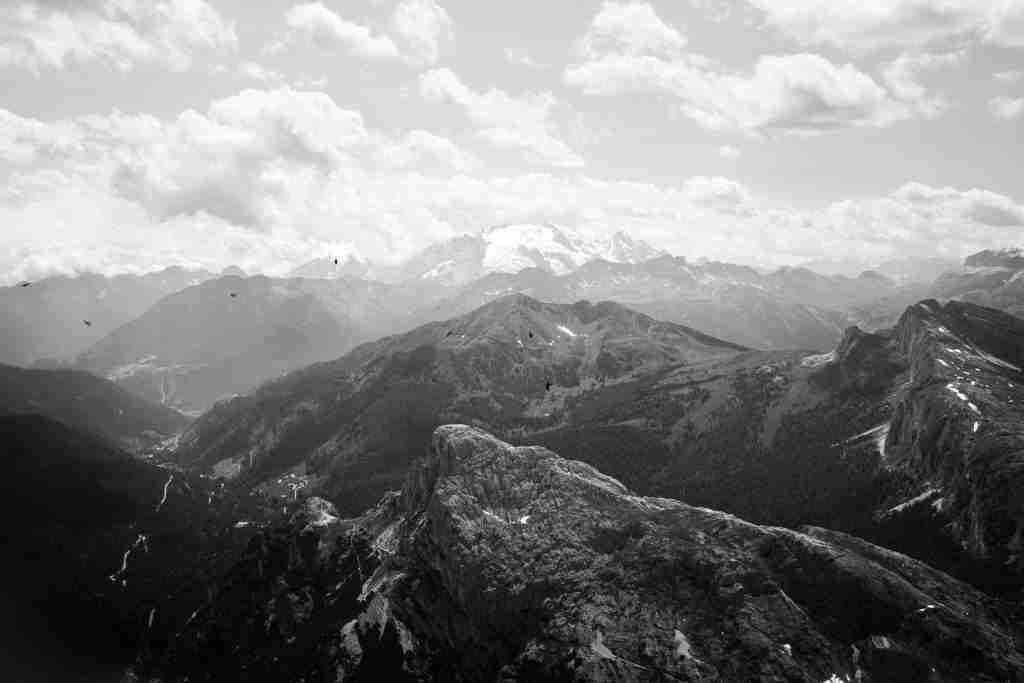
14. Bringing a Few Guests to Your Dolomites Elopement
Some couples want the mountains entirely to themselves. Others want their parents there, or their two closest friends, without turning the day into a full wedding. Both are completely valid, and the Dolomites handle a small group beautifully, up to around eight to ten people, without losing the intimacy that made you want to elope in the first place.
Choosing locations your guests can actually enjoy
Not every location in this guide suits a group the same way it suits the two of you alone.
Easiest for guests of any age or mobility: places reached by cable car or a short, flat walk are the simplest to share. Rifugio Lagazuoi, Passo Giau (you drive straight to it), and the plateau of Alpe di Siusi all put a guest within a few minutes of the view, with nowhere technical to navigate. If anyone in your group has specific mobility needs, it’s worth checking directly with the relevant cable car operator, accessibility varies by lift and by season, and I’m happy to help you confirm this once we know your group.
Fine for guests who enjoy an easy walk: Lago di Braies, Lago di Misurina, and the track to Rifugio Auronzo beneath the Tre Cime are all flat or gently graded, comfortable in ordinary shoes.
Best kept to just the two of you: the narrower, more exposed trails in this guide, particularly the final stretch to the Cadini di Misurina viewpoint, or anything on Lago di Sorapis, are genuinely better suited to a couple in hiking boots than to a small group in wedding clothes. If a guest location and your ceremony location don’t naturally overlap, a lovely solution is to have your intimate moment just the two of you, then bring everyone in for the celebration afterward at a rifugio or restaurant nearby.
Getting a small group around
One car works for two people. A group needs a plan. For six to ten guests, a rented minivan or two cars is usually simplest, and for anyone less comfortable with mountain roads, a private driver for the day removes that worry entirely (see section 9). If your group is staying at the same hotel, many in Cortina and the surrounding valleys can arrange a shared transfer to your ceremony location and back.
When it’s time for a planner, not just a photographer
I plan the elopement itself fully: locations, timeline, bookings, the small team around you. If you’re bringing guests for a toast and a meal afterward rather than a seated reception, that stays comfortably within what I coordinate. If you’re picturing something closer to a proper celebration, a private dinner for ten with a set menu, transport for everyone, place cards, that’s the point where a dedicated wedding planner earns their place alongside me. I’m always glad to recommend one if your plans grow in that direction.
Where to celebrate afterward
A rifugio terrace, a table at one of the restaurants in section 8, or a private chef in your chalet all make lovely settings for a small group to toast the two of you once the ceremony itself is done. Let me know roughly how many you’re bringing, and I’ll help you match the celebration to the group.
15. Where to Stay, and How Many Nights to Plan For
How many nights
For a single elopement day, plan on three nights minimum: one to arrive and settle in, adjust to the altitude, and scout your locations with me if you’d like to; the elopement day itself; and one more before you travel home, so nothing about your flight schedule puts pressure on the day. If you’re drawn to the Custom 2-Day Experience, or simply want to see two different sides of the range, four to five nights is the sweet spot, enough for the Cortina side and Val Gardena or Alta Badia, without feeling rushed between them.
Cortina d’Ampezzo
Cortina remains the most naturally elegant base in the whole range, and it puts Passo Giau, Lagazuoi, the Cinque Torri and Misurina all within half an hour.
- Grand Hotel Savoia, right in the centre of town, is a five-star classic with a long history as one of Cortina’s grandest addresses, an indoor pool and spa.
- Cristallo, a Luxury Collection Resort & Spa, Cortina’s original luxury hotel, sits in an elevated position just outside the centre with sweeping Dolomites views.
- Faloria Mountain Spa Resort, in the quiet village of Zuel just above town, offers a more contemporary, design-led take on alpine luxury with genuinely spectacular views across the valley.
Alpe di Siusi and Val Gardena
If your plans involve Alpe di Siusi, Seceda, or a helicopter flight with Elikos, this is your base.
- Adler Lodge Alpe, one of the very few hotels actually standing on the Alpe di Siusi plateau itself, is a real find for an elopement: as guests, you’re issued a pass that lets you drive up even outside the hours the road is open to everyone else, which means the meadows and the sunrise genuinely belong to you before anyone else arrives. It’s an adults-oriented retreat (children over eight), so it suits a couple perfectly. Ortisei, for the Seceda cable car and the town itself, is a short drive below.
Alta Badia
For couples building a day around the extraordinary food covered in section 8, or simply wanting a quieter, more central valley between Cortina and Val Gardena, Alta Badia delivers.
- Aman Rosa Alpina, in San Cassiano, recently reopened after an extensive renovation, is the valley’s most storied address, understated alpine luxury with genuine history.
- Hotel La Perla, in Corvara, is a family-run five-star with real Ladin character, home to the Michelin-starred La Stüa de Michil.
Near Lago di Braies
If a sunrise ceremony at the lake anchors your day, the Hotel Lago di Braies, right on the water, is the only way to actually be there before the crowds arrive rather than driving in. Rooms book out early, especially for summer.
A private chalet
For couples who’d rather have a whole space to themselves, sometimes with room for a few guests, private chalets are available to rent across Val Gardena, Alta Badia and the valleys around Cortina. I’m happy to point you toward options once we know your dates and group size.
16. What to Wear
The Dolomites are mountains, at altitude, with real wind and real weather, and that shapes the answer more than fashion does.
The dress, or the suit
A flowing dress in a soft, natural fabric, silk, chiffon, crepe, works beautifully against these mountains and moves wonderfully in the wind that’s almost always present at altitude. Structured ballgowns and heavy fabrics tend to fight the landscape rather than complement it. Neutral, earthy or warm tones, ivory, sage, dusty rose, sit particularly well against the pale grey of the rock and the green of the meadows.
If your day involves any walking, even the easy kind, a second, shorter or more practical outfit is worth considering for the walking sections, saving the fuller look for the ceremony and portraits. Many couples find they wear the walk far more easily than they expected once they’re actually in it.
For a suit, natural fabrics and a slightly looser cut handle changeable mountain weather better than a fitted formal suit. A jacket you’re happy to take on and off matters more here than almost anywhere else in Italy, since the temperature swings meaningfully between a sheltered valley and an exposed ridge.
Layers, always
Mountain weather changes fast, and altitude changes it further. Even in the height of summer, a cable car station at 2,700 metres can be genuinely cold and windy, while the valley below sits in warm sunshine. A light jacket, wrap, or shawl for each of you, easy to remove for photographs and just as easy to put back on, is one of the simplest things that makes a long day comfortable rather than something to endure. In shoulder season or winter, real warmth becomes essential rather than optional.
Footwear
This is the one place I’ll be direct: proper shoes matter. Several of the locations in this guide, the walk to Cadini di Misurina, the track beneath the Tre Cime, even the meadows at Passo Giau, are genuinely easier and more enjoyable in a good pair of boots or sturdy trainers than in anything delicate. Many brides choose a pair of comfortable hiking boots or boots for the walking parts of the day and switch into something more delicate just for the ceremony and portraits, which works beautifully and photographs just as well. It isn’t a compromise on how the day looks; it’s what actually lets you enjoy it rather than watch the ground the whole time.
Coordinating without matching
Let the mountains carry the drama. Coordinate your tones so the two of you sit together naturally in a photograph, without needing to match exactly. The landscape here is doing enough of the work on its own.


17. How to Choose Your Dolomites Elopement Photographer
Your photographer is not a neutral service you hire and forget about until the day. In an elopement, especially somewhere as vast and specific as the Dolomites, they’re your guide, your logistics coordinator, and the person entirely responsible for whether your day feels like what you actually wanted or like a version of it you had to compromise on. Here’s what I’d genuinely look for.
Someone who plans, not just photographs
The single biggest difference between a good Dolomites elopement and a difficult one is planning: knowing which pass is empty at which hour, which cable car needs booking months in advance, which trail is doable in a dress and which isn’t. Ask any photographer you’re considering how much of the planning they actually handle. If the answer is “you’ll need to sort that yourself,” you’re taking on a genuinely significant amount of logistics on top of your own wedding day.
Someone whose editing and eye you actually love
Look at full galleries, not just highlight reels. Editing style is deeply personal, and what reads as “beautiful” varies enormously between photographers: warm or cool, high contrast or soft, editorial or documentary. My own background is in cinema and documentary filmmaking, which shows up in how I frame and edit: I’m drawn to light, to movement, to the kind of honest, unposed moment that a film camera taught me to watch for rather than direct.
Someone who knows Italy, not just photography
I’m Italian, and I live a couple of hours from Cortina. That matters more than it might seem: understanding how Italian bureaucracy actually works, which local vendors are genuinely reliable, how to navigate a permit request or a rifugio booking in Italian rather than through a translated form. If you’re eloping from abroad, working with someone who’s local to the country, not just visiting for your date, removes a whole layer of friction you might not even know to expect.
Someone who asks about you before talking about packages
A good first conversation should feel like getting to know each other, not like being sold a product. I want to know what your day is meant to feel like before I suggest a single location: are you drawn to drama or quiet, sunrise or golden hour, one perfect place or a real adventure across several. The right locations and the right collection should follow from that conversation, not precede it.
Someone you’d genuinely enjoy spending the day with
This is easy to underestimate and important not to. You’ll spend a meaningful part of one of the most significant days of your life with this person, often at 4:30am, often somewhere remote, sometimes in weather that isn’t cooperating. Trust your instinct about whether the conversation feels easy.
18. Frequently Asked Questions
Do we need a permit to elope in the Dolomites?
For a symbolic ceremony in the open landscape, no. A meadow on Passo Giau, a quiet spot by a lake, a summit terrace, none of it needs a permit for private vows and photographs. A few specific places work differently: the boathouse at Lago di Braies is booked privately through La Palafitta, and rifugi welcome ceremonies on their terraces by arrangement. I handle all of this as part of planning your day.
Can we legally get married in the Dolomites?
Yes. Cortina d’Ampezzo, through its “Sposarsi a Cortina” project, authorises civil ceremonies not only at the town hall but at a number of rifugi and other locations across the valley, so a legally binding wedding at over 2,000 metres is genuinely possible. It takes more lead time than a symbolic ceremony, generally at least six months, since documents from your home country need to be gathered, legalised and translated. See section 4 for the full detail.
Can same-sex couples elope in the Dolomites?
Absolutely, and warmly. A symbolic ceremony has no restrictions of any kind. For legal recognition, Italy has offered civil unions to same-sex couples since 2016. Many couples complete that legal step at home and hold their real, meaningful ceremony here in the mountains.
How much does a Dolomites elopement cost?
My collections run from €3,800 for four hours to €10,400 for a two-day experience, and cover full planning alongside photography. A complete elopement, including accommodation, vendors and any extras like a helicopter flight, typically falls between €6,000 and €20,000 depending on the day you build. Section 12 breaks this down in full, with real example budgets.
What’s the best month to elope in the Dolomites?
There’s no single answer, it depends what you want to see. Late June and July give you wildflowers and the longest days. September brings calmer weather and softer light, and it’s the month I recommend most often. The first half of October brings the golden larches. Winter offers snow and a stillness like nowhere else. Section 5 goes through each season honestly, including the trade-offs.
How many days should we plan to stay?
Three nights at minimum, one to settle in, the elopement day itself, and one before you travel home. If you’re drawn to seeing two sides of the range or booking the Custom 2-Day Experience, four to five nights gives you room to do that without rushing.
Do we need to be experienced hikers?
No. Most of the locations in this guide need little or no walking: Passo Giau is a drive-up, Lagazuoi and Seceda are reached by cable car, and the track beneath the Tre Cime is flat and easy. A small number of viewpoints, like the final stretch to Cadini di Misurina, involve a short, moderate walk with some exposure, and I’ll always tell you honestly in advance what a location actually asks of you.
What happens if there’s a thunderstorm?
Afternoon storms are common in the Dolomites in July and August, and I plan around them as a matter of course, generally by keeping the high-altitude part of your day in the morning, before storms typically build. I watch the forecast closely in the days beforehand and always keep a beautiful alternative in reserve. If weather is a real concern for your dates, the Custom 2-Day Experience is the best protection: two chances at the light instead of one.
Can we actually be on a summit at sunrise or sunset?
Yes, but it takes a specific plan. Cable cars generally run 9:00 to 17:00, well inside the window of the best light. The way around it is to sleep at a rifugio, Lagazuoi is the classic choice, so you’re already up there when sunset and sunrise happen, or to fly in by private helicopter.
Is a helicopter elopement realistic for us?
Genuinely, yes. Elikos, based near Ortisei, offers private charters from around €1,500 for a short flight with one landing, up to about €3,500 for a longer flight with several. It’s booked as the whole exclusive helicopter, so your photographer flies with you at no extra cost. Sections 7 and 9 cover exactly how it works.
Can we elope in the Dolomites in winter?
Yes, and it’s one of the most striking choices you can make: snow-covered peaks, a low blue light, and a stillness that summer simply doesn’t have. It asks for warmer layers and more flexibility around shorter days and occasional road closures, but for the right couple it’s extraordinary.
Do we need a wedding planner as well as a photographer?
For the elopement itself, no, I handle the full planning: locations, timeline, every booking, the small team around you. If you’re bringing a number of guests and picturing something closer to a proper celebration afterward, a dedicated planner is worth bringing in alongside me. Section 14 goes into this in more detail.
19. Let’s Plan Your Dolomites Elopement
If you’ve read this far, you already have a real sense of what a Dolomites elopement can be: a sunrise on an empty pass, a summit you slept beneath the night before, a day that moves through some of the most extraordinary landscape in Italy with nothing left to plan when you arrive.
What happens next
Reach out and tell me what you’re imagining, the season, the mood, whether you’re drawn to one perfect place or a real adventure across several. The more you share, the better I can tell you whether we’re the right fit and start shaping a day around you.
A word on timing
Popular dates, especially summer weekends, book out early, and so do the things around them: rifugi, helicopter slots, hotels on the plateau. If you have a date in mind, don’t wait too long to start the conversation.
Still deciding on a region?
The Dolomites aren’t right for every couple, and that’s exactly as it should be. If you’re picturing villa elegance rather than mountain drama, my Lake Como or Tuscany guides might be the better place to start. If it’s the romance of a city you’re after, read how to elope in Venice. And if you’re not sure at all, that’s a perfectly good reason to simply get in touch.
The Dolomites are waiting, genuinely one of the most extraordinary places in the world to make the most important promise of your life. Let’s go there together.
Camilla M is an Italy-based elopement photographer and experience designer, working across the Dolomites, Lake Como, Tuscany, Venice and beyond. Planning is always included.
→ View elopement collections and pricing
→ Contact me to start planning
→ How to elope on Lake Como | How to elope in Tuscany | How to elope in Venice | How to elope in Italy



Leave a Comment
Your email address will not be published. Required fields marked *