


Ready to start planning your dream elopement in Italy?
How to Elope in Italy: The Complete Guide (2026–2027)
By Camilla M — Elopement Photographer & Experience Designer, based in Venice, Italy
I’ve been photographing elopements in Italy for over eleven years. I’ve watched couples exchange vows on the edge of a Sicilian cliff at sunset, in a Tuscan courtyard that had been there since the fifteenth century, on a private boat in the Venetian lagoon while the city disappeared in the morning mist behind them, and on a narrow stone terrace above Lake Como while a storm gathered over the mountains to the north.
Every single time, I’ve watched something happen on their faces. A kind of release. A recognition that this — just the two of them, in one of the most beautiful countries on earth, with no audience and no performance and no expectations — is exactly what they came for.
Italy does something to people who choose to elope here. It gives their decision a backdrop that is impossible to argue with. The beauty is so old and so dense that it absorbs the day and gives it back transformed. You arrive with a relationship. You leave with a story.
I’m Camilla. I’m Italian, I live in Venice, and I’ve spent over a decade helping couples design and photograph elopements across this country. This guide is everything I know about eloping in Italy — written honestly, in detail, for couples who are serious about getting this right. I’ll cover every major destination, the practical and legal realities, how to choose the right experience for who you are, and what a day with me actually looks like.
Read this from start to finish and you’ll save months of research.
1. Why elope in Italy — what makes it different from everywhere else
Italy is not the easiest country to elope in. The logistics are more complex than eloping in a national park or on a private property in the countryside somewhere. The language barrier is real. The bureaucracy, if you want a legal ceremony, is genuinely demanding. The distances between destinations are significant.
And yet couples choose Italy again and again, from every corner of the world, because Italy offers something that simpler destinations don’t: weight.
The beauty here isn’t new. Venice has been beautiful for a thousand years. The cypresses of Tuscany were painted by the Renaissance masters. The temples of Sicily were standing two and a half thousand years ago. When you stand in these places with the person you’re choosing to spend your life with, that accumulated human time is present in the landscape whether you’re thinking about it or not. It enters the photographs without being asked. It gives the day a depth that a beautiful mountain or a private beach — however genuinely beautiful — simply doesn’t carry in the same way.
There is also something about Italian culture itself that aligns unusually well with elopements. Italy has always been a country where beauty and pleasure and the quality of daily life are taken seriously — where a good meal, a good light, a beautiful place to sit are not luxuries but necessities. Eloping in Italy means spending a day in a country where those values are built into the architecture, the food, the landscape, and the people. Your elopement day will be beautiful not just because you made it beautiful, but because the country you’re in takes beauty seriously.
And one more thing: Italy is not one place. It is a collection of completely different worlds, each with its own climate, its own aesthetic, its own emotional register. The couple who dreams of soft golden light on a villa terrace is thinking of Tuscany or the Amalfi Coast. The couple who wants something architectural and ancient and otherworldly is thinking of Venice or Sicily. The couple who wants something raw and alpine and cinematic is thinking of the Dolomites. I’ve photographed a lot of them. Each destination produces a completely different kind of day and a completely different kind of image — and part of my job is helping you understand which one is actually yours.

2. Symbolic vs. legal ceremony: what you actually need to know
This is the first practical question almost every couple asks, so let me be completely clear.
The majority of my clients choose a symbolic ceremony. This means the marriage is not legally registered in Italy. You either handle the legal paperwork in your home country before arriving (so you arrive already legally married) or you complete it when you return home. In Italy, you exchange vows with an officiant in a location that means something to you — beside a Tuscan vineyard, on a Venice terrace, at the edge of a Dolomites meadow — and the ceremony is entirely yours, without any Italian bureaucratic requirements.
Symbolic ceremonies are completely flexible, deeply personal, and require essentially no paperwork on the Italian side. You choose your officiant (I can recommend trusted English-speaking officiants across all major destinations), you write your vows or work with the officiant to write them, and the ceremony is yours from beginning to end. There are no minimum guest requirements, no designated venues, no civil servants present.
Civil ceremonies for foreign nationals in Italy are legally possible but significantly more complex. Requirements vary by nationality and destination, but the general process involves:
- Obtaining a Certificate of No Impediment (or equivalent) from your home country
- Having it translated into Italian by a certified translator
- Having it apostilled (legalised) for international use
- Submitting documents to the relevant Italian Comune (municipality) well in advance — generally a minimum of six months, often more
- The ceremony itself taking place at a designated civil registry venue, often in a municipal building rather than a scenic location
If you have your heart set on a legally binding ceremony in Italy, it is absolutely achievable with the right support and enough lead time. I work with trusted wedding planners in Venice, Florence, and the Amalfi region who specialise in exactly this. It adds complexity and cost, but for some couples the legal recognition in Italy is important and worth it.
My honest recommendation for most couples: unless you have a specific reason for wanting your marriage legally registered on Italian soil, the symbolic route is far more satisfying. You get all the meaning, all the beauty, and none of the bureaucratic friction. The ceremony can happen anywhere — not just at a civil registry office — and the entire day can be designed around you rather than around administrative requirements.
A note on timing: if you’re planning a legal ceremony in Italy, start the process at least a year in advance. If you’re planning a symbolic ceremony, six months is comfortable in most cases. I can help you navigate either path from your first enquiry.
3. Italy’s elopement destinations — an honest guide
Italy is not interchangeable. Each region has its own light, its own architecture, its own season, its own emotional texture. The choice of destination is the most important creative decision you’ll make, and it’s one I spend significant time on with every couple I work with.
Here is my honest guide to every major elopement destination in Italy — not the promotional version, but what I actually think based on having photographed all of them.
Venice
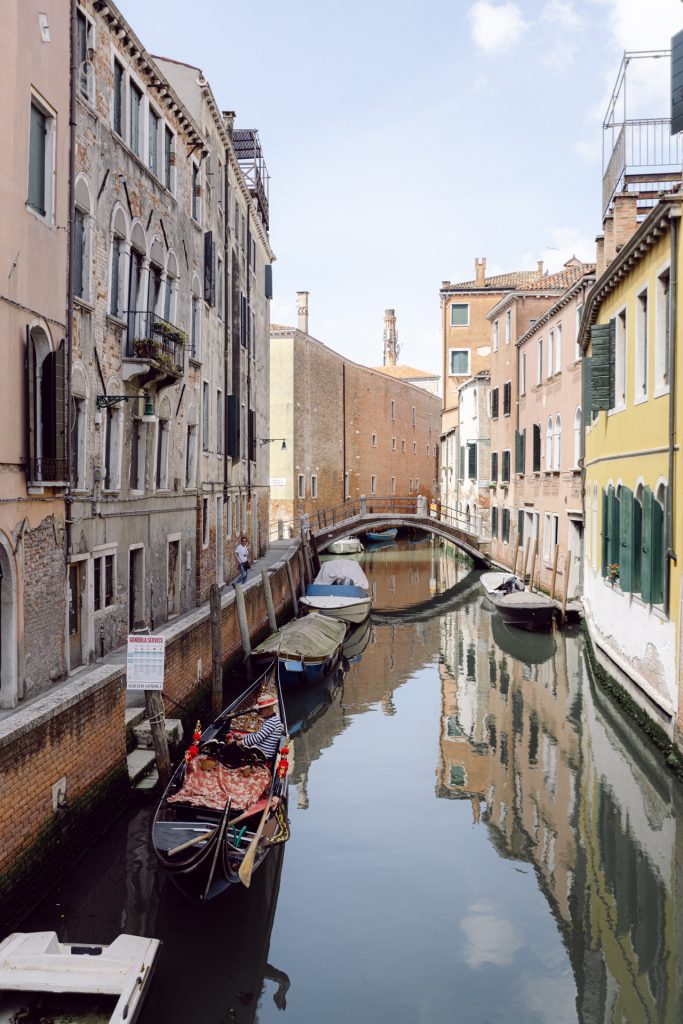
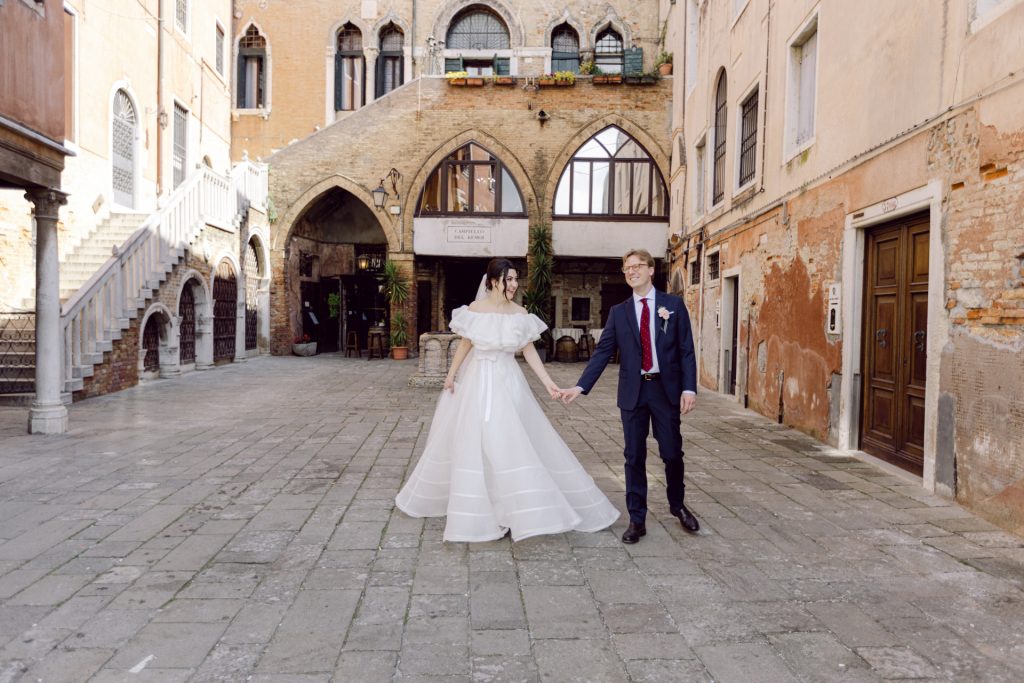
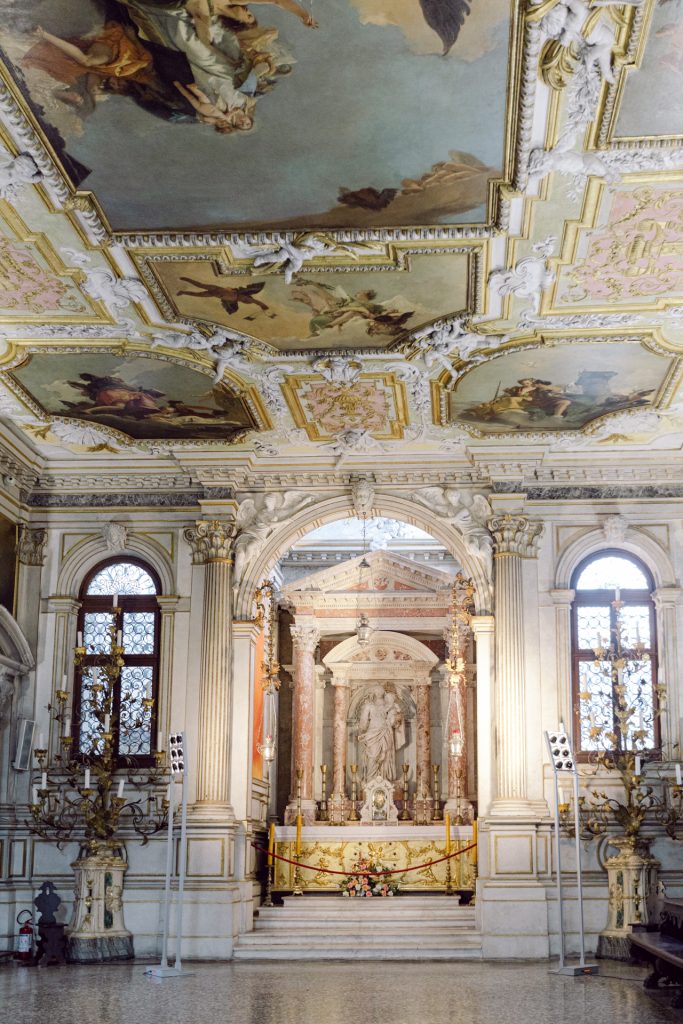
Venice is where I live, and it is the destination I know most deeply. I’ve written a complete, exhaustive guide to eloping in Venice — covering locations, seasons, ceremony options, logistics, and what a real day looks like — in my dedicated Venice elopement guide. If Venice is on your list, read that guide. It covers everything.
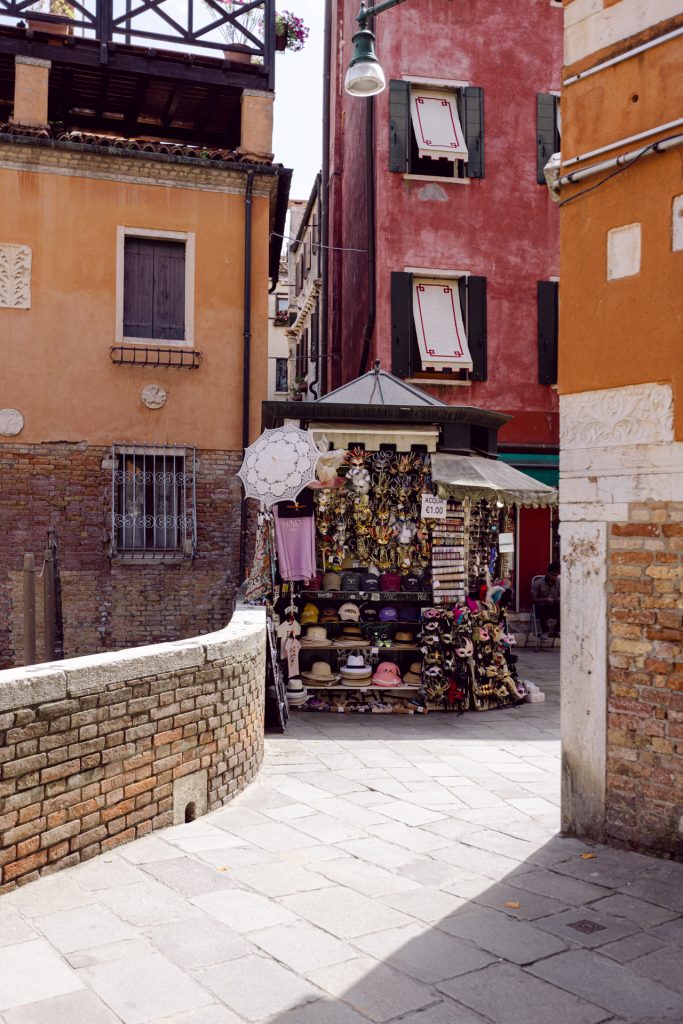
But here is the essential version: Venice rewards elopements in a way that almost no other city in the world does. Its geography eliminates cars, crowds disperse within minutes of leaving the main tourist circuits, and the city’s physical structure — narrow calli, small bridges, hidden courtyards — naturally creates intimacy. The light in Venice is unlike anywhere else: reflected off water, softened by the lagoon air, it produces images with a quality that experienced photographers recognise immediately.
The timing matters enormously. Venice in summer is extraordinary at sunrise and demanding by mid-morning. Venice in October is, in my personal opinion, the most beautiful version of itself. Venice in winter is intimate and cinematic and largely yours.
Best for: Couples who want weight and history and a city that genuinely gives itself to an intimate day. Architectural, layered, otherworldly.
Best season: October is my first recommendation. April and May are a close second.
Read more: How to Elope in Venice, Italy — The Complete Guide
Lake Como
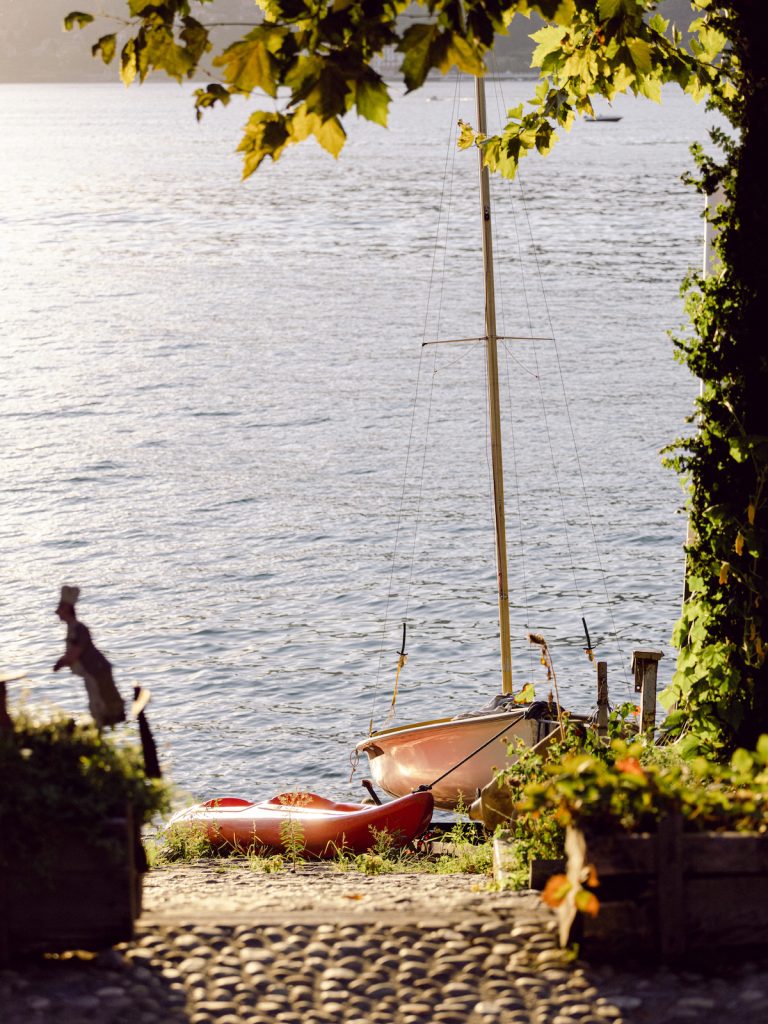
Lake Como is the most consistently photogenic destination in Italy for luxury elopements. The combination of alpine water, mountain backdrop, and palatial villas creates images that have a specific visual language — horizontal reflections, soft mist, grand architecture framed by lake and sky — that is immediately recognisable and consistently extraordinary.
The lake stretches roughly 45 kilometres between its northern and southern points, with a Y-shaped geography that creates three distinct branches. The central villages — Bellagio, Varenna, Tremezzo, Lenno — are the most photographed, and for good reason: the views from these villages across the water to the mountains are extraordinary at any hour. But Como is large enough that with local knowledge, you can almost always find light and quiet simultaneously.
The villa gardens are among the most beautiful in Europe. Villa del Balbianello — set on a narrow wooded headland jutting into the lake near Lenno — has a quality that photographs can’t entirely capture: the sense of standing at the edge of the world, with the lake wrapping around you on three sides and the mountains rising behind. Its terraced gardens, designed in the eighteenth century, are among the most beautiful designed landscapes I’ve ever photographed in. Permits are required for photography here, and I handle this as part of the planning process.
Villa Monastero in Varenna has a different character — more contained, more intimate, with a long lakefront terrace that catches the light all afternoon. Villa Carlotta at Tremezzo is famous for its camellias and azaleas in spring, when the gardens become genuinely riotous with colour.
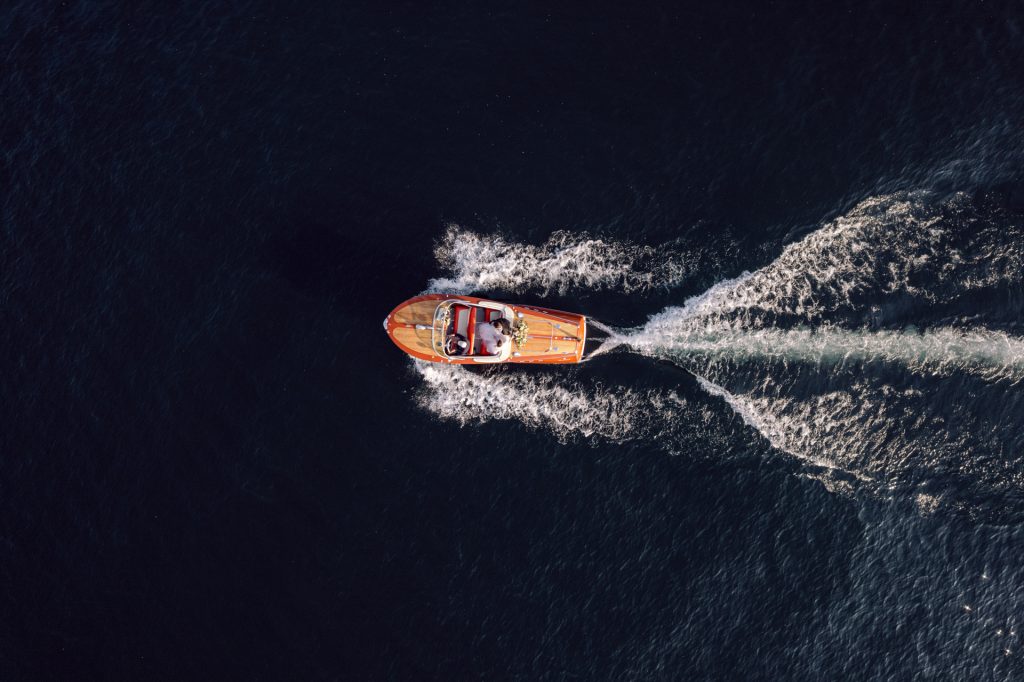
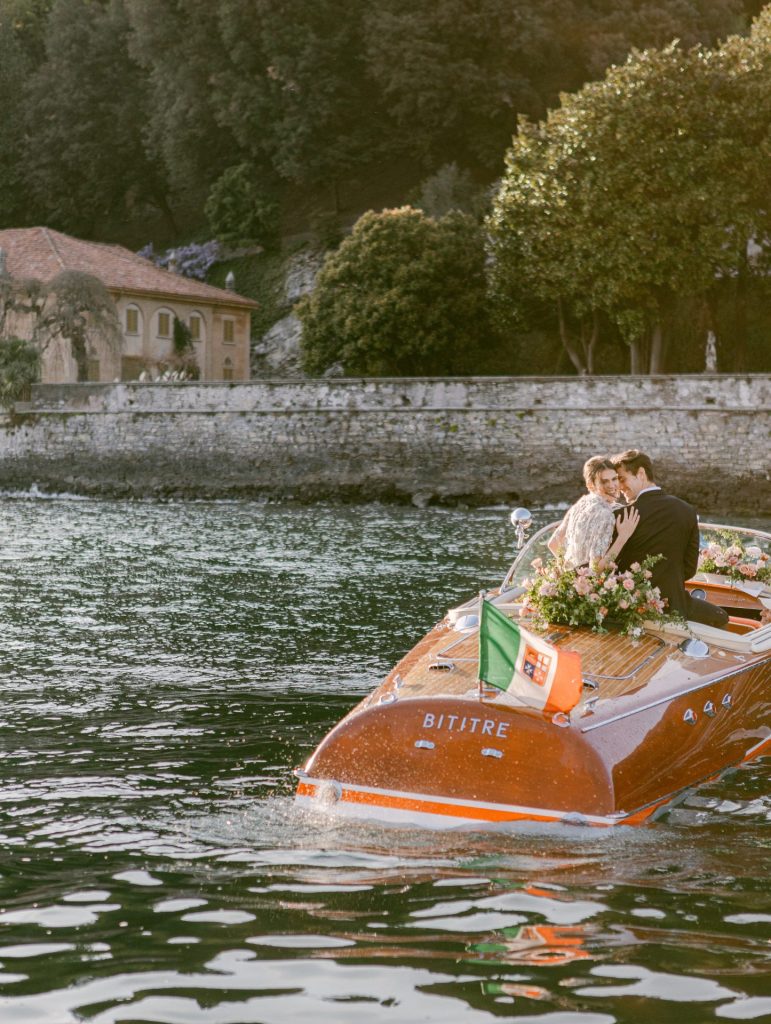
For couples who want to stay on the water, a private boat session on Como is extraordinary. The early morning mist lifts slowly off the lake, revealing the mountains in stages. The reflections in the still water are perfect mirrors. And the absence of other boats in the early hours creates the feeling of having the entire lake to yourselves.
The Dongo and Domaso areas at the northern end of the lake are less visited and more raw — the mountains closer, the villages quieter, the atmosphere more alpine than Riviera. For couples who want the lake without the luxury-hotel aesthetic, the north is worth considering.
Best for: Couples who want grand, romantic, European elegance. Villa gardens, mountain reflections, private boats. The most consistently photogenic destination in Italy for luxury imagery.
Best season: May (magnolias and azaleas in bloom), June (long evenings, warm light), September–October (the summer crowds thin and the light softens).
What to avoid: July–August weekends, when the road traffic can make logistics genuinely difficult. Midday light in summer is harsh; plan sessions for early morning or evening.


Tuscany
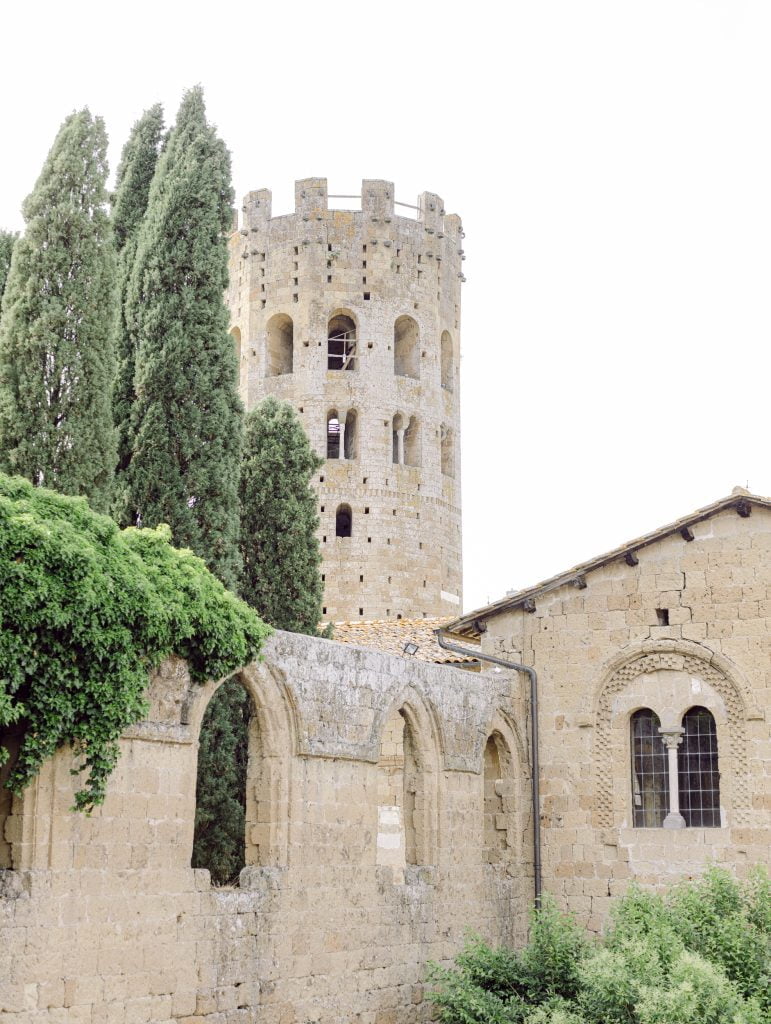
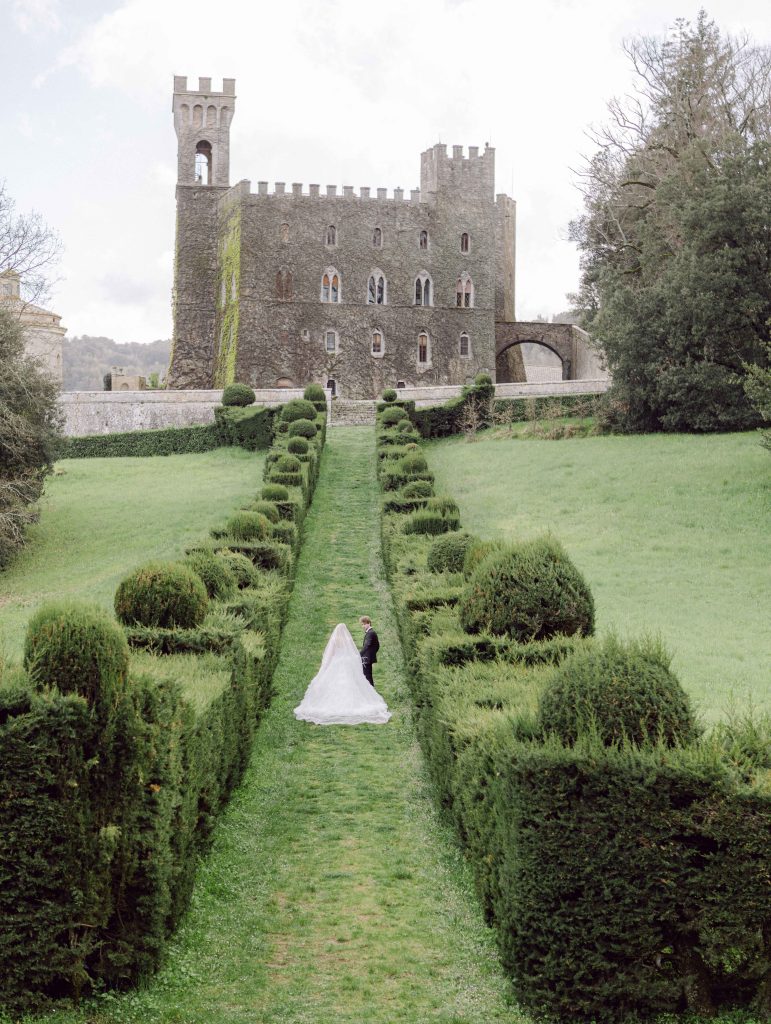
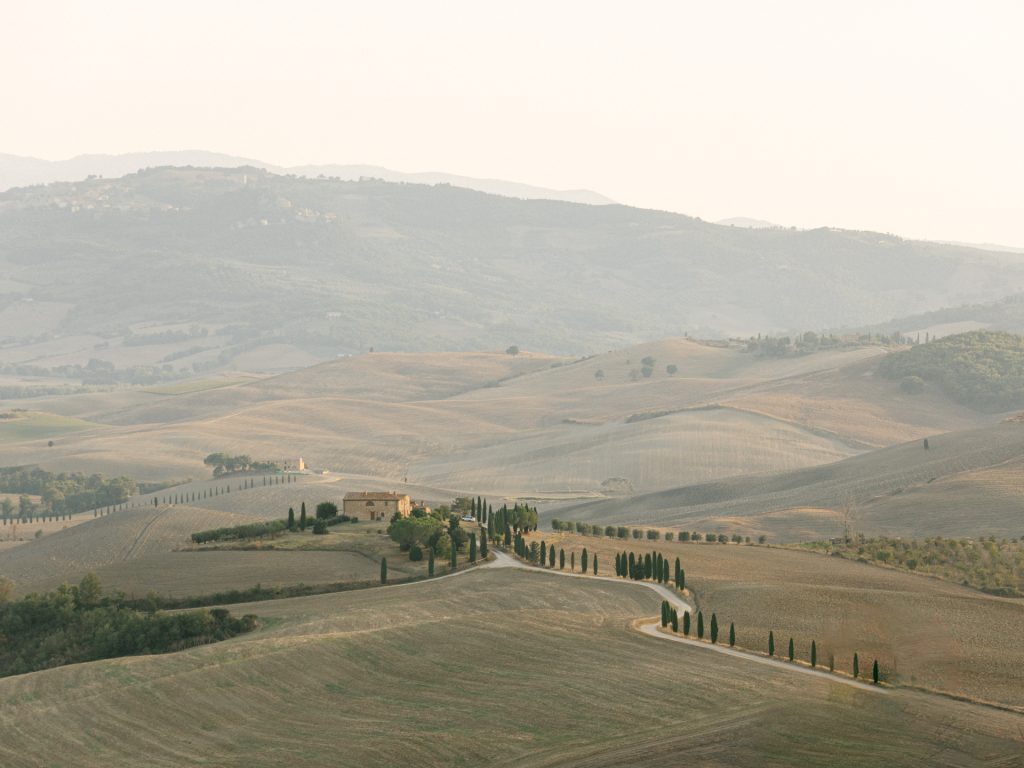
Tuscany is the Italy most people imagine when they imagine Italy. Cypress-lined roads rising to hilltop villages. Terracotta and stone and olive groves. Vineyards in the Chianti hills with names that have been making wine since the Renaissance. The Val d’Orcia — declared a UNESCO World Heritage landscape specifically because it looks like a painting — with its soft golden hills and isolated farmhouses and perfectly placed trees.
This is a region built for the long, slow, beautiful day. Tuscany elopements work best when they’re not rushed — when there’s time to walk through a vineyard in the late afternoon, to stop for wine at a cantina, to find the exact corner of a medieval village where the light falls perfectly on ancient stone. The pace of Tuscany suits elopements. It is a countryside that rewards presence.
The most extraordinary light in Tuscany happens twice a day and briefly each time: at sunrise, when the mist sits in the valleys between the hills and the first light catches the crests; and at golden hour, when the low sun turns the pale Crete Senesi landscape to amber and copper. Building your elopement day around one or both of these moments is the single most important photographic decision you’ll make if you’re eloping in Tuscany.
Chianti Classico — the region of hills between Florence and Siena — is my most frequently photographed area of Tuscany. The combination of vineyards, cypresses, stone farmhouses (casali), and soft undulating light produces images that are quietly extraordinary. The villages — Panzano, Radda, Gaiole, Castellina — are beautiful to walk through and largely free of mass tourism outside summer weekends. Many of the best villas and agriturismi here are available for private hire for a day, providing a stunning base.
The Val d’Orcia between Pienza and Montalcino is one of the most photographed landscapes in the world, and it earns every photograph. The iconic cypress road near San Quirico d’Orcia, the Belvedere farmhouse above it, the vast rolling landscape visible from the terrace of Pienza — these are places where the landscape itself does most of the work. I return here every year and every year the light is different.
Florence itself offers the option of combining a few hours in the city — the Oltrarno neighbourhood across the Arno, Piazzale Michelangelo at dawn, the narrow streets of the medieval centre — with the Tuscan countryside on the same day. For couples arriving by train, Florence is a practical base for exploring the wider region.
Best for: Couples who want warmth, golden light, wine country, and the feeling of a day that unfolds slowly and beautifully. The most romantic, film-like destination in Italy for a certain kind of couple.
Best season: Late April–May (green hills, wildflowers, moderate crowds), September–October (harvest season, amber light, one of the most beautiful seasons in the Italian calendar).
What to avoid: August, when the countryside is parched brown and the heat is oppressive. San Gimignano and the main tourist centres on any weekend between June and September.
The Dolomites
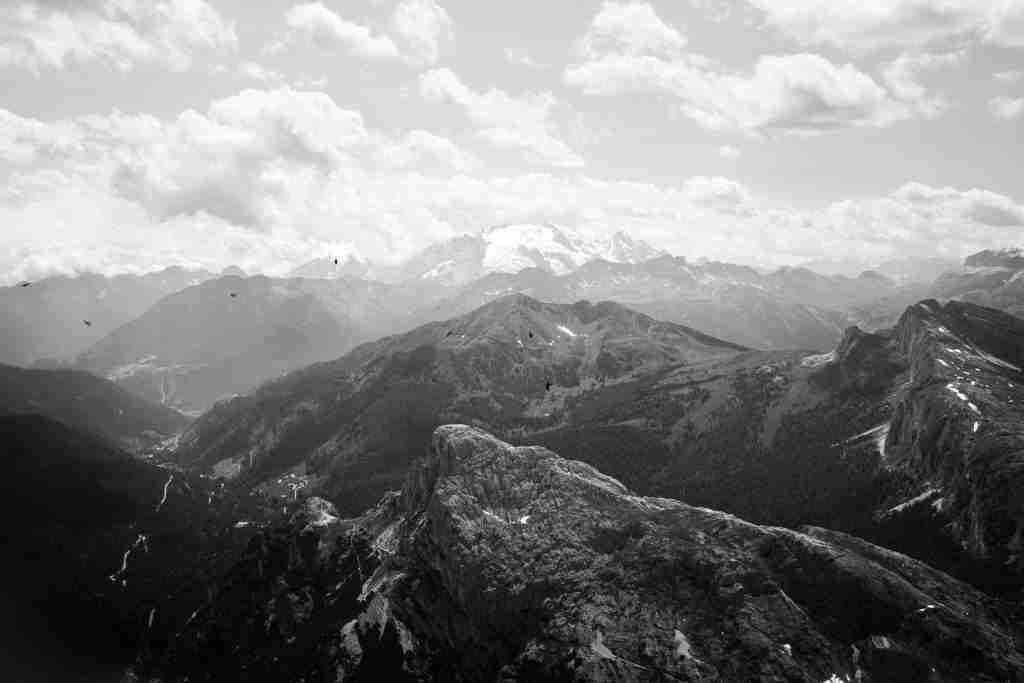
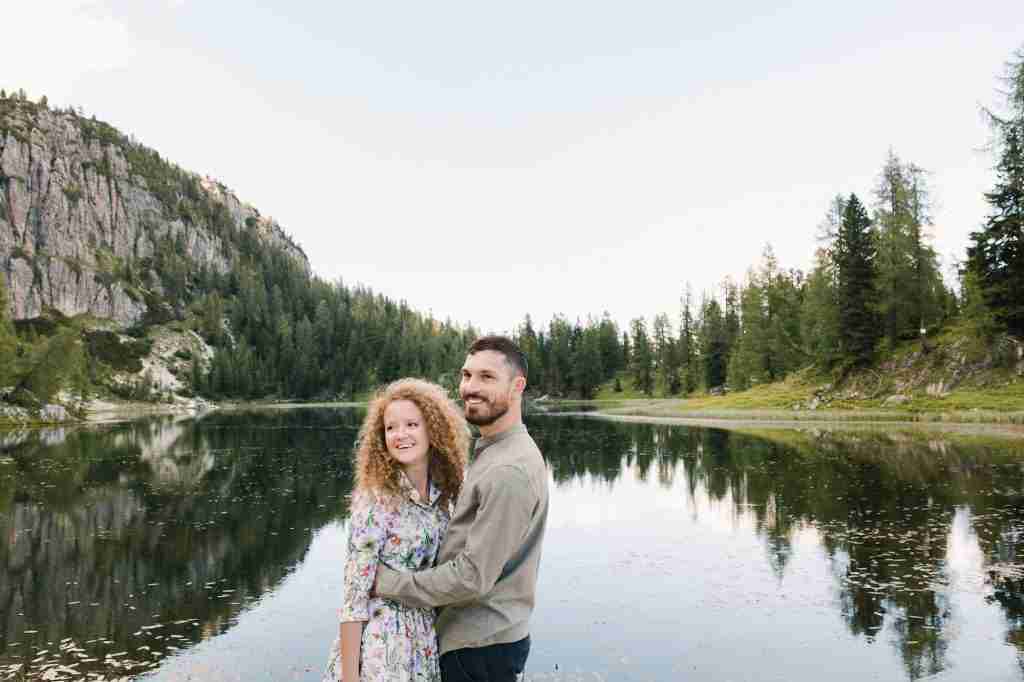
The Dolomites are unlike anything else in Italy — or anywhere else in the world. These mountains in the northeast corner of the country, straddling the regions of Trentino-Alto Adige and Veneto, are a UNESCO World Heritage Site and one of the most dramatic landscapes on earth. Towers of pale dolomite rock rising vertically from alpine meadows. Lakes so still and clear they look constructed. Forests of larch that turn gold in October. And in summer, meadows so thick with wildflowers that they seem improbable.
The Dolomites attract a specific kind of couple — those who want something cinematic and raw and physically present. This isn’t a landscape that rewards passivity. A Dolomites elopement typically involves some walking — not necessarily strenuous hiking, but engagement with the landscape. The best images come from being in it, not just standing in front of it.
Tre Cime di Lavaredo — the three iconic rock towers visible from the Auronzo refuge — is the most internationally recognised Dolomites image, and it earns its reputation. The approach at sunrise, when the first light turns the rock faces from grey to pale rose and then gold, is one of the most extraordinary photographic experiences in Italy. It requires an early start (often a 4am departure) and comfortable footwear, but the results are unlike anything else I photograph.
Alpe di Siusi (Seiser Alm) is the largest high-altitude Alpine meadow in Europe. In summer it is an ocean of green with wildflowers; in autumn the larches turn golden around its edges; in winter it disappears under snow. The plateau is accessible by cable car and offers walking at every level — from flat meadow strolls to longer ridge paths with expanding views. The combination of accessible terrain and extraordinary scenery makes it ideal for couples who want drama without difficulty.
Lago di Braies — the most photographed lake in the Dolomites — is extraordinary in early morning before the day visitors arrive. The pale turquoise water, the wooden boathouse at one end, the rock faces reflected in the still surface — it is a genuinely spectacular location that photographs in every season and every light condition. The challenge is logistics: it requires arrival by 7am in summer to have the place to yourselves.
Cortina d’Ampezzo is the most elegant Dolomites town — an alpine resort with a long history of hosting European aristocracy and international ski culture. For couples who want the mountains without sacrificing comfort and style, Cortina offers extraordinary accommodation and easy access to several of the most beautiful valley and peak locations.
Best for: Couples who want something cinematic, raw, alpine. Those drawn to drama rather than elegance. Excellent for adventurous couples willing to engage with the landscape.
Best season: Late June–July (meadows in full bloom), September (larches begin to turn gold, crowds thin), October (peak colour, extraordinary light, fewer visitors). Winter is extraordinary for snow-covered landscapes but requires warm clothing and some physical tolerance for cold.
What to avoid: August weekends at the main locations (Tre Cime, Lago di Braies) when crowds are at their peak. Midday light on the rock faces, which becomes flat and harsh in summer.



Sicily
Sicily is the most ancient and the most surprising of Italy’s major destinations. The island has been inhabited and contested for three thousand years — by Greeks, Romans, Arabs, Normans, Spanish — and every culture left its mark on the architecture, the food, the landscape, and the people. This layering of civilisations gives Sicily a depth and a strangeness that the mainland doesn’t have in the same way. It is a place that feels old in its bones.
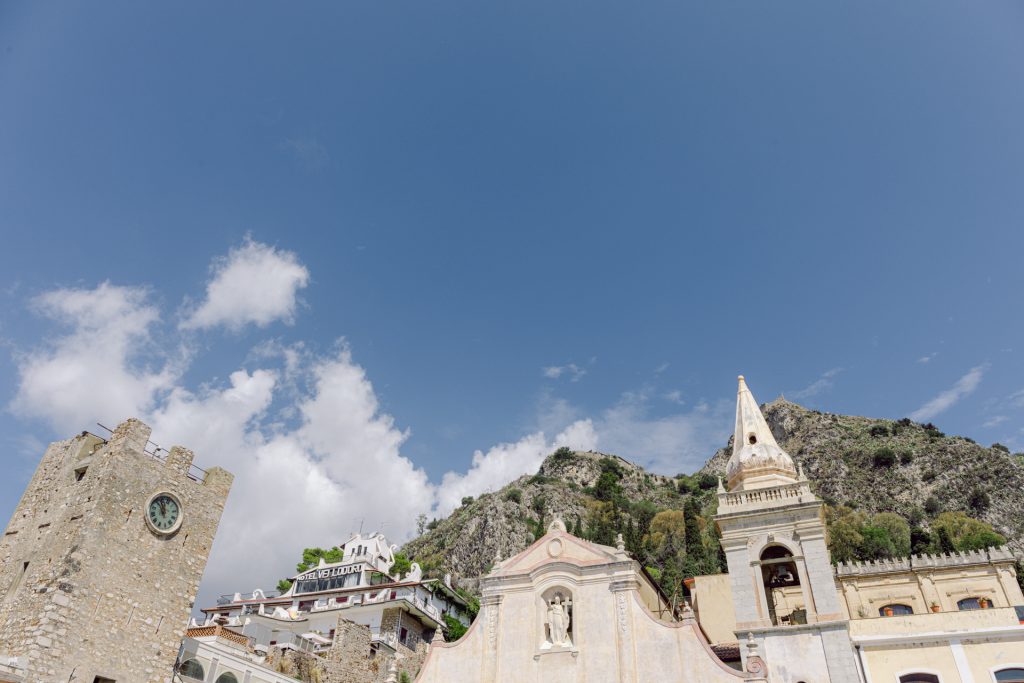
Taormina is the most internationally known of Sicily’s elopement destinations, and it is genuinely extraordinary. Perched on a cliff above the Ionian Sea, with Mount Etna — still active, still occasionally breathing smoke across the eastern sky — as its permanent backdrop, Taormina produces images that are difficult to forget. The ancient Greek theatre at Taormina is one of the most beautiful ancient structures in the world: its stone semicircle faces the sea and Etna simultaneously, and when the light is right — late afternoon, golden, falling across those ancient stones — it is genuinely overwhelming.
The streets of Taormina itself are narrow and beautiful, lined with baroque architecture, flowering terraces, and views that open unexpectedly onto the sea and the volcano. The cliff-edge position creates a vertical drama that few Italian towns can match. A dawn session in Taormina, before the day visitors arrive by cable car from the coast, gives you a completely different town — quiet, still, belonging to the cats and the light.
Noto in the southeast of the island is a UNESCO-listed baroque city rebuilt almost entirely after a 1693 earthquake. Its pale golden stone, carved in elaborate baroque ornament, creates a unified aesthetic that is unlike any other city in Europe. The main street — Corso Vittorio Emanuele — is a continuous procession of baroque church facades, palaces, and balconies carved with human figures. Noto is best in the late afternoon, when the low sun falls directly on the south-facing facades and turns the stone from pale gold to deep amber.
Val di Noto — the wider region surrounding Noto, including the towns of Modica, Ragusa Ibla, and Scicli — is less visited than Taormina but arguably more extraordinary for elopement photography. These are towns that appear to have changed very little in three hundred years. The streets are almost empty. The churches are open. The light on the baroque stone in the late afternoon is unlike anything else in Italy.
The Aeolian Islands — a volcanic archipelago north of Sicily — offer something completely different: raw volcanic landscape, crystal-clear water, and a pace of life so slow it feels almost sedative. Stromboli, with its permanently active volcano, is the most dramatic; Panarea is the most elegant; Salina is the most lush and green. For couples who want to combine an elopement with something genuinely wild and remote, the Aeolians are unforgettable.
Best for: Couples drawn to ancient civilisations, volcanic landscapes, and a beauty that is raw rather than manicured. Sicily is for those who want to feel the age of the earth.
Best season: April–May (spring wildflowers, manageable temperatures, off-peak crowds), September–October (harvest season, the light is extraordinary, the sea still warm).
What to avoid: July–August in Taormina, which becomes genuinely crowded and very hot. The interior of the island in summer can be extreme — plan sessions for early morning or evening.


Amalfi Coast
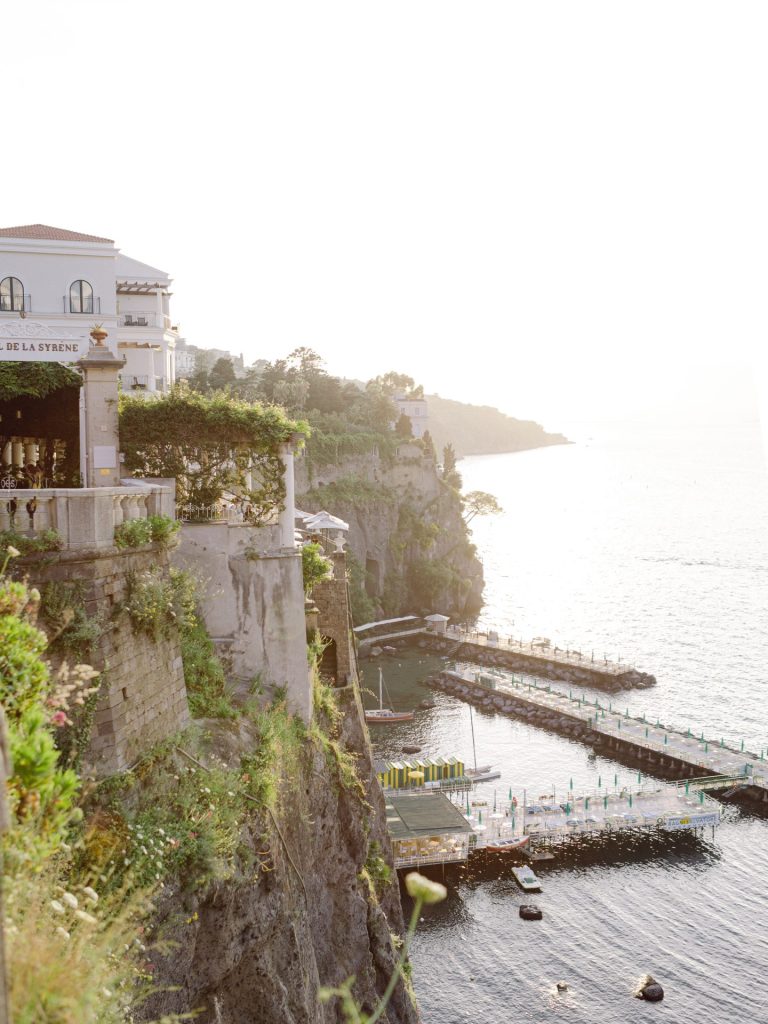
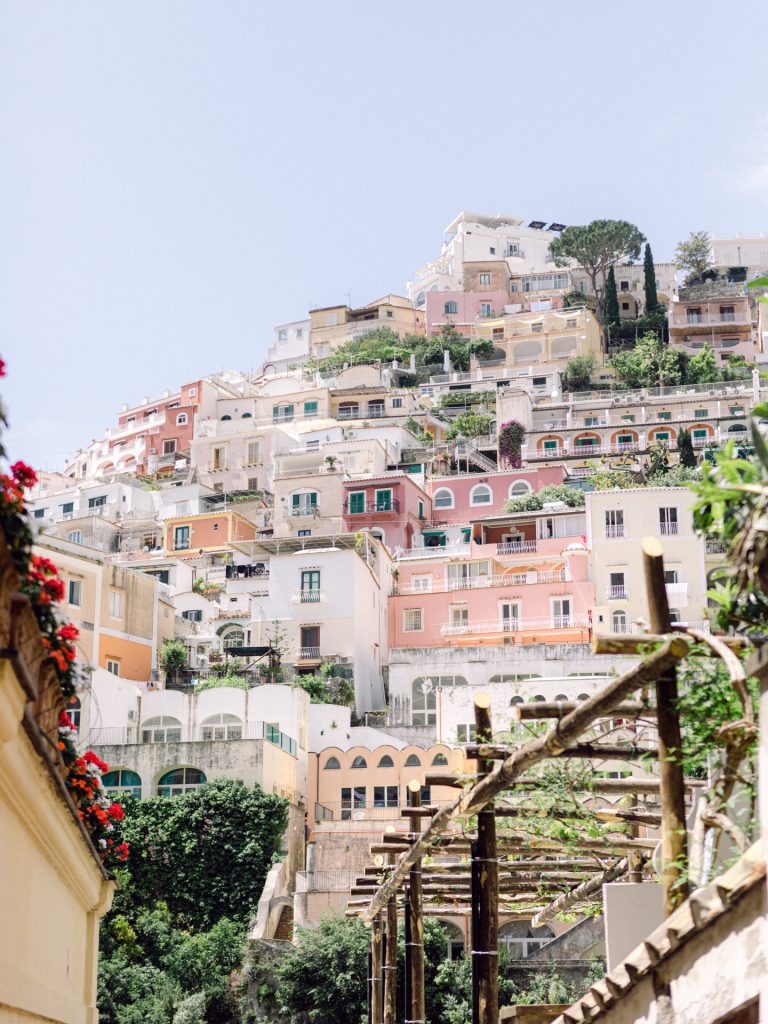
The Amalfi Coast is among the most dramatic coastal landscapes in Europe. The road between Sorrento and Salerno clings to cliffs above the Tyrrhenian Sea, passing through a succession of towns — Positano, Ravello, Amalfi, Praiano — built vertically into the rock face, with pastel buildings and terraced lemon groves cascading to the water. The views are staggering. The light — particularly in the morning and the golden hour — is extraordinary.
The practical reality of the Amalfi Coast is that it is both spectacular and logistically challenging. The road is narrow and heavily trafficked in summer, which means that timing and transport planning are essential. For elopements, this means building the day around early starts and avoiding the main towns during midday hours in peak season.
Ravello is, in my opinion, the finest elopement town on the coast. Unlike Positano and Amalfi, which sit directly on the sea, Ravello is perched on a high ridge above it — at 365 metres, it feels apart from the coastal bustle below, with a quietness and an elegance that suits elopements perfectly. The gardens of Villa Cimbrone — one of the most beautiful garden estates in Italy — end in the famous Terrace of Infinity, a belvedere on the cliff edge with a view across the entire Tyrrhenian Sea that has been described by literary visitors for over a century as one of the most beautiful views in the world. Permits are required for photography in the villa gardens and I handle these as part of the planning.
Villa Rufolo, also in Ravello, is smaller and more intimate than Cimbrone but also extraordinary — its Norman-Arab architecture and cliff-edge garden are unique in the region, and the views from its tower across the coast are spectacular.
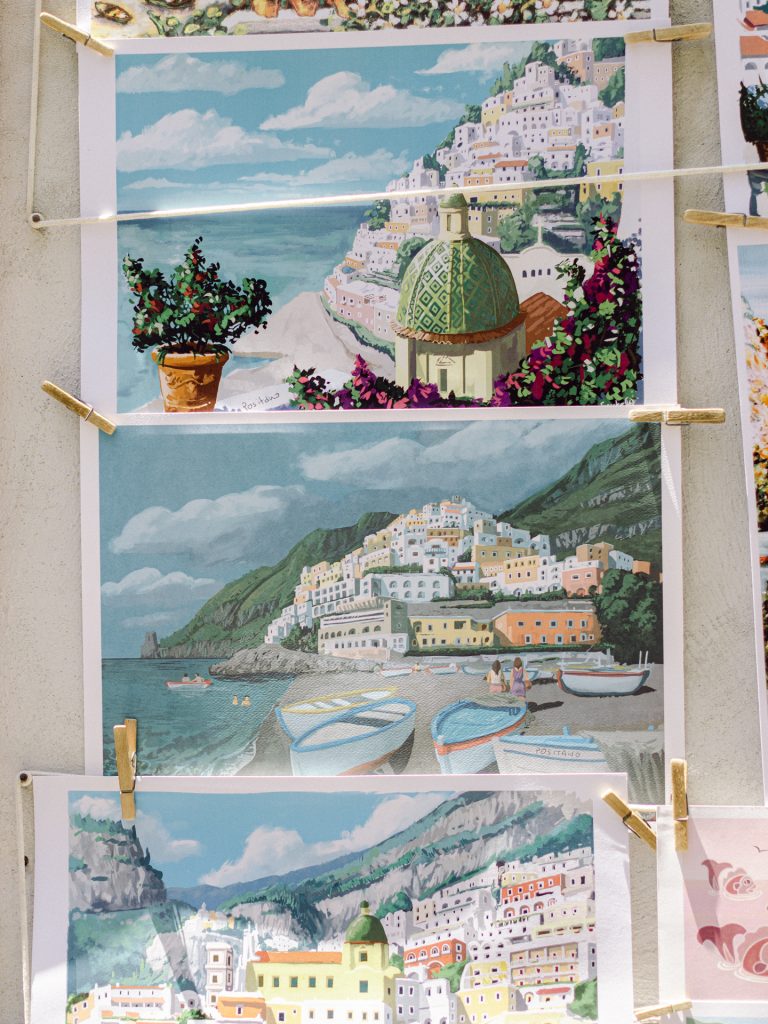
Positano is the most photographed town on the coast — the cascade of pastel buildings reflected in the sea, the beach of La Spaggia Grande, the terraced streets rising steeply above the water. It is extraordinarily beautiful and very crowded. For elopement photography in Positano, the early morning is non-negotiable: the town before 8am has an entirely different quality from the town at midday.
The small town of Praiano — less visited than Positano, quieter, with its own dramatic cliff-edge position — is increasingly one of my preferred locations on the coast. The views from its terraces in both directions along the coastline are extraordinary, and the absence of day-trip crowds gives the day a pace and a quality that Positano in peak season can’t always offer.
Best for: Couples who want blue water, dramatic cliffs, pastel architecture, and the feeling of being perched at the edge of the Mediterranean. Cinematic, warm, distinctly southern Italian.
Best season: May–June (before the summer peak, the flowers are still on the terraces and the sea is clear), September–October (heat subsides, crowds thin, light becomes extraordinary).
What to avoid: July–August in Positano and Amalfi town, when the road traffic can add hours to any journey and the beaches are overwhelmed. Any Saturday in summer.

Rome {#rome}
Rome is the most complex destination on this list — a city so dense with history that almost every street is photographable, but also a city that requires significant local knowledge to use well for elopements. The tourist infrastructure is enormous and ubiquitous, which means that finding space and light and quiet in Rome requires planning.
The locations that work best for elopements in Rome are almost never the famous landmarks themselves, but rather the spaces around, behind, and between them. The key is the early morning — Rome between 5:30am and 7:30am is a different city, with golden light on ancient stone and essentially no other people.
The Roman Forum and Palatine Hill, viewed from the Capitoline Hill at sunrise, produce images that carry the full weight of what Rome is — the most important civilisation the Western world has built, still visible in the stone in front of you. This isn’t a postcard. It’s a reminder that humans have been marking their most important moments against the backdrop of this city for two and a half thousand years.
The Trastevere neighbourhood — the medieval quarter across the Tiber from the centro storico — is the most beautiful part of Rome for an elopement day. Its narrow streets, ochre and terracotta facades, ivy-draped walls, and piazzas are intimate and human in scale. It is also significantly less visited than the main tourist areas, and in the early morning it has a quietness that is rare in Rome.
The Aventine Hill — particularly the Orange Garden (Giardino degli Aranci) at its edge — offers a view across the Tiber to the Trastevere rooftops and the dome of St Peter’s rising behind them that is among the most beautiful in the city. It is open from early morning and, outside tourist peak hours, often nearly empty.
The Borghese Gardens — the most beautiful of Rome’s parks, surrounding the Villa Borghese on the northern edge of the centro storico — are extraordinary in early morning light: long avenues of stone pines, fountains, and the soft green of the park against the sky. The famous view from the Pincian Hill terrace, looking across the Piazza del Popolo to the city beyond, is available at sunrise without any crowds.
Best for: Couples drawn to the weight of ancient history. Those who want their elopement set against the longest human story there is.
Best season: April–May (the city is at its most beautiful before the summer heat), October–November (light is extraordinary, crowds manageable, temperatures perfect).
What to avoid: August, when Romans leave and tourists overwhelm the remaining space. Any day at the Trevi Fountain or Colosseum after 9am.
Puglia
Puglia is the least internationally known of Italy’s major elopement destinations — and that relative obscurity is part of its appeal. The heel of the Italian boot, stretching down to the Adriatic and Ionian seas, has a landscape and an architecture that are unlike anything else in the country: flat coastal plateaux, ancient olive groves, whitewashed trulli (the conical stone dwellings unique to the Itria Valley), and towns of stacked white stone that look, in certain lights, almost North African.
Ostuni — the White City — is built on a hilltop and painted entirely white, creating a visual effect that is extraordinary in the midday light and utterly cinematic at sunset, when the white stone turns gold. The old town, with its baroque cathedral and narrow streets, is beautiful to walk through, and the views from the city walls across the olive groves to the Adriatic are sweeping.
The Valle d’Itria — the inland area between Ostuni and Alberobello — is trulli country: a landscape dotted with the conical white stone dwellings that have been built here for centuries, many of them now converted into extraordinary accommodation. Trulli as an elopement backdrop produce images that are completely unique — intimate, quirky, unmistakably Pugliese.
The Salento peninsula at the tip of the heel offers some of the most beautiful coastal landscape in Italy: the Adriatic coastline near Otranto, with its clear turquoise water and ancient city walls; the rocky Ionian coast near Santa Maria di Leuca at the very southern tip; the baroque city of Lecce, sometimes called the Florence of the south for its extraordinary concentration of baroque architecture in pale golden pietra leccese.
Best for: Couples who want something off the beaten path — raw, warm, ancient, without the luxury-resort aesthetic. Excellent for those who have already done the Amalfi Coast or Tuscany and want something less familiar.
Best season: May–June and September–October. Summer is hot but the evenings are beautiful.
4. The best time of year to elope in Italy
The answer varies significantly by region, but some principles apply almost everywhere in Italy.
The shoulder seasons are almost always better than peak summer for elopement photography. May, June, September, and October offer the best combination of light quality, manageable temperatures, and reasonable crowd levels. The light in Italy in October is something photographers refer to reverently — warm, diffuse, golden in a way that July’s harsh midday sun never is.
Summer (July–August) requires planning, not avoidance. The key is building your day around sunrise sessions and late-afternoon golden hour, with a long midday break. The early summer morning in every Italian destination — Venice, the Amalfi Coast, the Dolomites, Tuscany — is extraordinarily beautiful, and the benefit of long June and July days is that you have more usable light hours than at any other time of year.
Spring (April–May) is frequently the most beautiful season visually. The light is soft and warm without the summer heat. The countryside is green and flowering. The crowds haven’t yet peaked. April in Tuscany, May on the Amalfi Coast, early May on Lake Como when the magnolias and azaleas are in bloom — these are some of the most beautiful conditions I photograph in all year.
Autumn (September–October) is my personal favourite. The light changes in October to something that I find genuinely difficult to describe — warmer, softer, more horizontal, with a golden quality that seems to come from everywhere at once. The summer crowds have thinned. The harvest is happening in the vineyards. The temperature is perfect for wearing a dress or a suit all day.
Winter (November–February) rewards the couple who wants Italy for themselves. Venice in the mist, the Amalfi Coast without tourists, Tuscany with bare vines and frost on the hills — these are extraordinary places in winter, and you will have them in a way that summer visitors never will. The trade-off is cold and unpredictable weather. The reward is an intimacy with these places that no other season can give you.
5. What a real Italy elopement day looks like
One of the most common misunderstandings couples have when they first approach me is that an elopement is a photoshoot with a ceremony attached. I want to offer a different way of thinking about it.
An elopement with me is a designed day. Not a schedule — a flow. A sequence of experiences, each chosen to give you something specific: a particular quality of light, a particular mood, a particular memory. The photography documents that day; it doesn’t construct it.
Below is a representative day for each of my three collections, using three different Italian locations — because Italy is not one place, and the right destination depends entirely on who you are.
Collection 3 — The Elopement Experience (4 hours) A focused morning in Rome
Rome rewards those who arrive before the city does. We meet at 5:45am — the streets are empty, the light is coming in low and golden from the east, and the stone absorbs it in a way that disappears entirely by 9am.
A typical morning moves through three locations I’ve scouted in advance: a ceremony spot at one of the lesser-known viewpoints above the Forum, portraits through the streets of Trastevere while the shutters are still closed and the cats are still in the doorways, and a final half hour on the Gianicolo hill with the whole skyline behind you. I design the sequence around the light, not the clock — if a particular courtyard is doing something extraordinary, we stay. If a location isn’t giving us what I hoped, we move.
By 9:30am you are sitting somewhere beautiful with a cornetto and a cappuccino, and the rest of your day belongs entirely to you. You’ll have a minimum of 400 hand-crafted images. This collection suits couples who want something focused and complete without committing to a full day.
The reason I start this collection at sunrise rather than mid-morning: Rome becomes genuinely difficult to photograph by 9am in summer. The light flattens, the piazzas fill, and what makes the city extraordinary disappears. Early isn’t a hardship here. It’s the whole point.
Collection 2 — The Signature Elopement (8 hours) — most chosen A slow afternoon into sunset in Tuscany — early June
A typical day begins around 2pm at your villa or agriturismo in the Tuscan countryside. At this hour the strongest midday sun is already beginning to soften, and the landscape outside your windows is glowing in that warm, hazy light that makes this region feel almost unreal.
While you get ready, I document the atmosphere of the place you’ve chosen to call home for the week. The details you’ve brought with you. The anticipation in the room. The quiet moments before the day truly begins.
By around 3:30pm you’re dressed, relaxed, and ready to step into the landscape. We might start with a first look beneath the cypress trees on the property, or simply spend some time wandering the grounds together. Some of my favourite photographs are made during this part of the day, before we ever reach the ceremony location.
Around 4pm we leave the villa and begin exploring Val d’Orcia itself. The journey is part of the experience. We stop wherever the landscape feels particularly beautiful that day: a winding road disappearing over a hill, a hidden viewpoint above the valley, a field of wildflowers in spring or golden wheat in late summer. Nothing feels rushed. The goal isn’t to visit as many locations as possible, but to experience Tuscany at the pace it deserves.
By approximately 5:30pm we arrive at your ceremony location. The afternoon light has become softer, the air cooler, and the countryside quieter. Whether it’s a secluded ridge near Monticchiello or a panoramic viewpoint overlooking the valley, this is the moment the entire day has been gently building towards.
After your vows, we continue into the evening without any pressure or strict schedule. Around 6:30pm we might find ourselves wandering through the streets of Pienza, sharing gelato in a quiet piazza, or enjoying an aperitivo overlooking the rolling hills. These moments aren’t breaks from the experience—they are the experience. They’re often the moments couples remember most vividly years later.
As we move toward 7:30pm, the character of the landscape begins to change. Shadows stretch across the valleys, colours become richer, and Tuscany settles into its most beautiful light of the day. We return to the countryside and follow that light wherever it leads us, stopping whenever the scene feels extraordinary.
By 8:30pm, just before sunset, the hills are glowing amber and the cypress trees stand in silhouette against the sky. This final hour feels entirely different from the beginning of the day. Quieter. Slower. More emotional. The photographs are beautiful, but it’s usually the feeling of being there that stays with people long after they’ve gone home.
Coverage concludes around 10pm, as blue hour settles over the valley and the first lights begin appearing in the distant hill towns.
The reason this collection is my most popular is simple: it gives the day enough space to breathe. You’re not rushing between locations or squeezing a ceremony into a narrow window of time. Instead, you’re spending an entire afternoon and evening immersed in one of the most beautiful landscapes in Italy.
The reason this is my most frequently chosen collection: you get two completely different qualities of light on the same day, in the same landscape. Shorter collections can be beautiful; this one is whole.
Collection 1 — The Adventure Elopement (10 Hours) — Lake Como from Morning Light to Blue Hour — April to October
This is the collection for couples who want to experience Lake Como fully rather than simply visit it.
Ten hours gives us enough time to embrace the different moods of the lake throughout the day—the quiet elegance of the morning, the energy of the afternoon, the golden light of sunset, and the atmosphere that settles over the water after dark. Instead of rushing from one location to the next, we have time to let the day unfold naturally.
A typical day begins around 11am at your villa or lakeside hotel. The lake is already alive outside: boats crossing between villages, ferries moving slowly across the water, sunlight dancing on the surface below. While you get ready, I document the environment around you as much as the details themselves. The grandeur of historic interiors, the views from your balcony, the anticipation that builds during those final quiet moments before seeing each other.
By around 1pm, you’re ready for your first look. Perhaps it happens in the gardens of your villa, beneath centuries-old trees overlooking the lake, or on a secluded terrace hidden from view. There is no audience and no pressure. Just a moment to take everything in together before the adventure begins.
From there, we spend the early afternoon exploring the shoreline at a relaxed pace. Around 2pm, we wander through one of the lake’s historic villages, following narrow stone alleyways that suddenly open onto waterfront views. We stop for an espresso in a quiet piazza, discover hidden corners away from the crowds, and allow the experience of being in Italy to shape the day rather than following a rigid schedule.
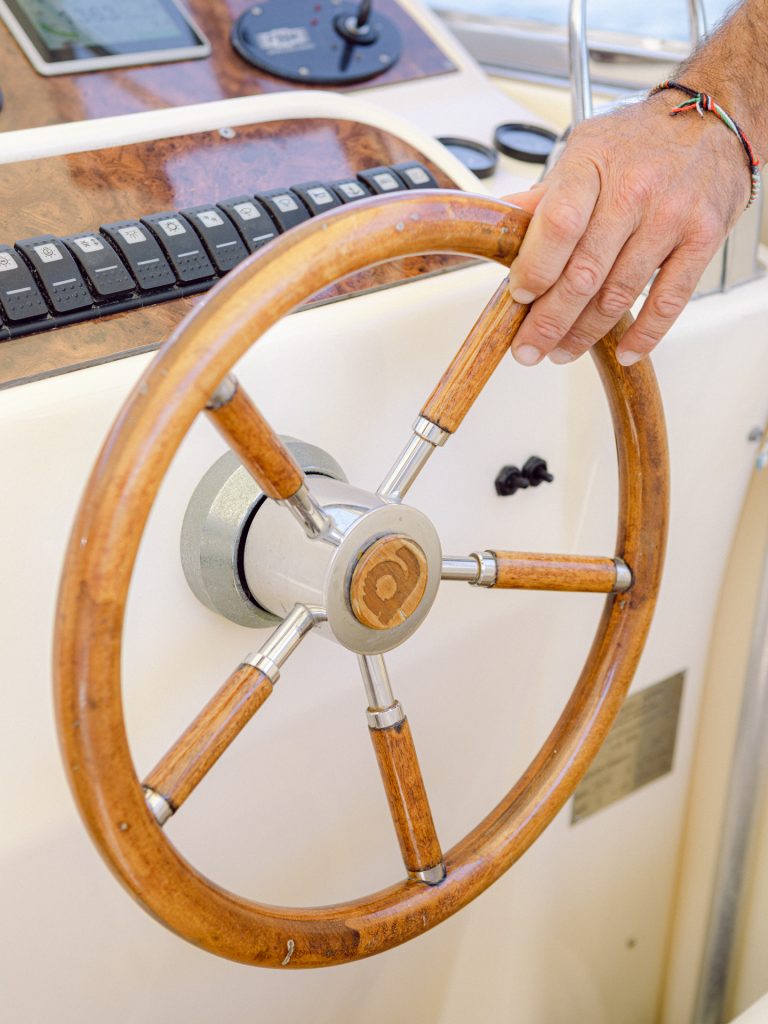
By 4pm, we board a classic wooden boat and leave the shoreline behind.
This is when Lake Como reveals its true scale. The villages become small clusters of colour tucked into the mountainsides. Historic villas emerge from behind cypress trees. The water stretches endlessly in every direction. As we move across the lake, there is time to slow down and absorb it all. Some of the most meaningful photographs happen here, not because of a particular location, but because couples finally stop thinking about the day and start fully living it.
Around 5:30pm, we arrive at your ceremony location. Perhaps it’s a private terrace overlooking the water, a hidden garden attached to a historic villa, or a secluded lakeside spot accessible only by boat. The timing is intentional. The harshness of midday has disappeared, replaced by softer light and calmer water.
You exchange vows with the mountains rising behind you and the lake stretching endlessly ahead.
Afterwards, we celebrate slowly.
Around 6:30pm, there is time for an aperitivo overlooking the water. No rushing. No guests waiting elsewhere. Just a chance to sit together and absorb what has happened. The best elopement days always leave room for these pauses.
As evening approaches, around 7:30pm, we return to the boat and begin following the changing light across the lake. This is one of the reasons couples choose the 10-hour experience. We aren’t confined to a single viewpoint. We can move with the conditions, chasing reflections, mountain silhouettes, and pockets of golden light wherever they appear.
By 8:30pm, Lake Como enters its most beautiful phase of the day. The mountains soften into layers of blue. The villas catch the final glow of sunset. The water becomes almost mirror-like. The atmosphere feels cinematic in a way that is difficult to describe until you’ve experienced it yourself.
As darkness arrives around 9:30pm, the villages begin to illuminate one by one around the shoreline. Tiny lights reflect across the water while the mountains fade into silhouette. This final chapter of the day feels completely different from the bright energy of the afternoon. More intimate. More reflective.
Coverage concludes around 10pm, with the lake glowing beneath the evening sky and the rest of the night still ahead of you.
The reason couples choose this collection is not because it includes more locations or more photographs. It’s because it allows them to experience Lake Como through every stage of the day. From the quiet anticipation of the morning to the stillness of blue hour, the entire experience becomes part of the story.
Custom Multi-Days Collection — Venice at dawn, then the Dolomites the next day — early June
The most ambitious version, and the one that uses Italy’s full range. For couples who want to begin their day on the water and end it in the Alps — or who want a sunrise-to-golden-hour experience across genuinely different landscapes.
We begin at 5am with a private water taxi from your hotel. The Grand Canal at this hour is completely still, the palaces reflected perfectly in water that will be churned by vaporetti within the hour. We disembark at San Giorgio Maggiore for the ceremony — the waterfront terrace faces directly across to Piazza San Marco, and the only sounds are water and the bells of the campanile. Portraits follow through the empty streets of Dorsoduro and across the bridges of the Frari quarter: narrow calli, stone archways, the occasional cat. By 8am the city begins to fill. By then, we have what we came for.
Breakfast at a bacaro near the Rialto market — coffee and cicchetti, the small plates sold from the counter for the market workers — and then you drive north. The landscape shifts from lagoon to plain to foothills to the vertical walls of the Ampezzo valley over two and a half hours. We meet below the Tre Cime di Lavaredo at noon.
The Tre Cime are among the most dramatic formations in the Alps: three vertical pinnacles above meadows that in June are green and full of wildflowers, with snow still possible on the eastern faces. We hike 45 minutes to the classic viewpoint, work for 90 minutes, and then descend to the rifugio for lunch — speck, polenta, altitude. A completely different culinary and physical world from your bacaro breakfast six hours earlier.
The afternoon moves to Lago di Misurina, a turquoise Alpine lake with the Sorapiss massif reflected in it, ten minutes below the Tre Cime. We work through the afternoon and into golden hour, when the Dolomites turn a distinctive pink-red called Enrosadira. Coverage ends at 8pm.
You started the day on the water in Venice and ended it watching the Alps glow. In one day. That is what this collection is for.
This structure also works within a single region — a two days in the Dolomites moving from valley to altitude to lake, or a sunrise-to-golden-hour day in Tuscany and Florence, across three distinct landscapes. The logic is the same: use the full range of light, use the full range of the place.


6. How much does an Italy elopement cost?
I’ve written a detailed, honest breakdown of Venice elopement costs in my Venice Elopement Cost guide, and many of the principles there apply across Italy. Here is the Italy-wide version.
Photography: My collections for Italy elopements start at €3,200 for a 4-hour experience (Collection 3) and go to €6,400 for a 10-hour day (Collection 1). All collections include experience design, location scouting, timeline planning, vendor coordination, and travel within Italy. Not just photography on the day. Full details on my elopement collections page.
Officiant: For a symbolic ceremony, English-speaking officiants in Italy typically charge €300–€700 depending on destination and ceremony length. For legal civil ceremonies, the costs are higher and more variable — expect €800–€1,500 for the ceremony, plus legal document preparation.
Florals: A small elopement bouquet from a local florist typically costs €80–€200. More elaborate arrangements — ceremony arch, scattered petals, floral installation — scale up from there. I can recommend florists in every major destination.
Hair and makeup: Professional hair and makeup artists in Italy typically charge €200–€400 for a bridal session. I work with trusted artists in Venice, Florence, the Amalfi Coast, and Lake Como.
Accommodation: This is often the largest variable in the total budget. A beautiful agriturismo in Tuscany might be €200–€400 per night; a luxury villa on Lake Como or a Grand Canal palazzo in Venice can reach €1,000–€3,000 or more per night. I’m happy to recommend options at every level.
A realistic total for a complete, beautiful Italy elopement — photographer, officiant, florals, hair and makeup, and 2–3 nights of comfortable accommodation — typically falls between €8,000 and €15,000. Simpler elopements with shorter coverage and self-catering accommodation can come in lower; luxury experiences with premium hotels, videography, and elaborate planning can significantly exceed it.
7. Planning your Italy elopement — vendors, logistics, timeline
How far in advance should you book?
For peak season (May–October), I recommend starting the planning process 9–12 months in advance. My availability fills up earlier than most couples expect, particularly for June, September, and October — the months I receive the most enquiries for. For shoulder season and off-peak dates, 4–6 months is often sufficient.
The earlier you book, the more flexibility you have in designing the day. A last-minute booking in peak season often means accepting constraints on location and timing that an early booking would have avoided entirely.
What vendors do you need?
At minimum for a symbolic elopement: a photographer (me) and an officiant. If you want florals, hair and makeup, a private boat, a private chef, or any other element, I can coordinate these on your behalf. I work with trusted vendors across all major Italian destinations — people I know personally and whose work I can vouch for. You don’t need a separate wedding planner for an elopement with me; experience design and vendor coordination are part of what I offer.
What about permits?
Some locations require advance permits for photography. Villa del Balbianello on Lake Como, the Villa Cimbrone gardens in Ravello, some areas of Venice — I know which locations require what and I handle all of this as part of the planning. You will never arrive somewhere I’ve planned to use and discover that photography isn’t permitted.
Transportation within Italy
Italy’s high-speed rail network (Frecciarossa and Italo) connects Milan, Florence, Rome, Naples, and Venice in comfortable journey times. For a Lake Como elopement, Milan is the gateway city — approximately 50 minutes by train. For Tuscany, Florence is the natural base. For the Amalfi Coast, Naples. For Venice, the city has its own station.
For destinations not served by high-speed rail — the Dolomites, rural Tuscany, the Sicilian interior — a rental car is generally necessary, and I can advise on the best logistics for your specific itinerary.
8. What to wear for an Italy elopement
The most important principle: dress for the destination and the season, not for a traditional wedding. An elopement is a personal day, and your clothing should reflect who you actually are rather than what a bridal magazine suggests.
In Venice: cobblestones and narrow bridges mean that very high heels are both impractical and uncomfortable. Opt for kitten heels, block heels, or beautiful flats. The most elegant couples I photograph in Venice are often not wearing traditional bridal gowns — they’re wearing something that moves beautifully in the canal light and doesn’t restrict their walking.
In Tuscany: if you’re walking in vineyards or along country roads, flat or low-heeled shoes are essential. Tuscany’s colour palette — terracotta, gold, green, stone — means that colours which might not be “wedding traditional” work extraordinarily well photographically. A rust-coloured dress in a Chianti vineyard is more beautiful than most white gowns.
In the Dolomites: dress warmly and in layers, and plan for a shoe change if you’re doing any walking to reach a location. A long dress is beautiful in the meadows; practical footwear is necessary to get there.
In Sicily and the Amalfi Coast: lighter fabrics, lighter colours. The heat in summer and early autumn can be significant. Linen, silk, and other breathable fabrics photograph beautifully and keep you comfortable.
One practical note: bring a change of clothes for after the main session if you want to spend the afternoon exploring without being in full wedding attire. Almost all of my couples do this, and it makes the second half of the day feel completely different. Having a stylist for your day can be a great addition to help you create a couple of looks that truly stand out and are worthy of your wedding day.
9. Eloping in Italy with a small group of guests
An elopement doesn’t have to mean just the two of you. Many of my couples bring a small circle — 2 to 15 people — to witness the ceremony and share the day. The spirit of an elopement remains: the day is designed around the couple, not around the guests. But having a handful of people who matter most present changes the photographs in a beautiful way — there is genuine emotion in the room rather than a performance for an audience.
The logistics shift slightly with guests. Larger groups require more attention to movement and timing. Restaurants and private dining need advance booking. Transport between locations needs to accommodate everyone. None of this is complicated, but it changes the planning conversation.
If you’re bringing guests, the collections remain the same — the photography covers the couple as the primary subject, with group images woven in. I can advise on how many guests works well for each destination and how to structure the day to serve both the intimate couple experience and the group celebration.
10. How to choose the right photographer for your Italy elopement
Choosing a photographer for an Italy elopement is different from choosing a photographer for a traditional wedding. The stakes are different. On a traditional wedding day, there are dozens of people around — guests, caterers, coordinators — and the day happens whether the photographer is excellent or merely competent. On an elopement, the photographer is often the only other person present for the most important moments. They are inside the day rather than documenting it from the outside.
This means the relationship matters as much as the portfolio. You need to feel that you can spend 4–10 hours with this person in complete comfort, that they understand what you’re building, and that they will make decisions in the moment — about light, about movement, about timing — that you would have made yourself if you knew what they know.
Questions worth asking any photographer you’re considering for an Italy elopement:
- How long have you been based in or working in Italy? (There is a significant difference between a photographer who visits Italy a few times a year and one who lives here and knows it deeply.)
- How do you handle the planning process? (A photographer who only shows up on the day and takes photographs is a different proposition from one who designs the experience from the beginning.)
- What is your approach to bad weather? (Italy’s weather is variable. A photographer who has only shot in optimal conditions will be unprepared; one who has photographed in every condition will tell you that some of their best images have come on grey, rainy days.)
My answer to all of these: I’ve been based in Venice and photographing across Italy for over eleven years. I design the entire day, not just photograph it. I’ve shot in every weather condition Italy offers.
11. How to get started
If you’ve read this far, you’re serious about eloping in Italy. Here is exactly what happens when you reach out to me.
Step 1 — Tell me about yourselves. Use the contact form on my website or email me directly at info@camillam.it. Tell me the destination you’re considering, your approximate dates, and anything you know so far about what you’re imagining. You don’t need to have anything decided. Most of the best elopements I’ve designed started with a couple who had a feeling but no plan.
Step 2 — We get on a call. I speak with every couple before we work together. This call is for you to ask every question you have and for me to understand who you are — not just logistically, but what kind of day would actually feel like yours. No two Italy elopements I’ve designed have looked the same, and this conversation is where the specificity begins.
Step 3 — We build your day. Based on our conversation, I put together a proposal: locations, timing, vendors I’d recommend, how the day would flow. This is not a fixed itinerary — it is a starting point for a conversation that we’ll continue to refine until the day itself feels exactly right.
Step 4 — You arrive. And the day is already yours.
Ready to start?
Contact me here — I’d love to hear about your Italy elopement.
Or if you’re specifically planning a Venice elopement, read my complete Venice elopement guide first.
Camilla M is an Italian photographer and experience designer based in Venice, photographing weddings and elopements across Italy since 2015.



Leave a Comment
Your email address will not be published. Required fields marked *